
Carolina Reaper
The Carolina Reaper is an ultra-hot cultivar of Capsicum chinense developed by breeder Ed Currie in Fort Mill, South Carolina. First introduced to global prominence in 2013 under the breeding project designation HP22B, the cultivar held the Guinness World Record for the world’s hottest chili pepper for a decade until October 2023. Recognized for its aggressive heat profile, laboratory testing by Winthrop University documented an average pungency of 1,641,183 Scoville Heat Units (SHU).
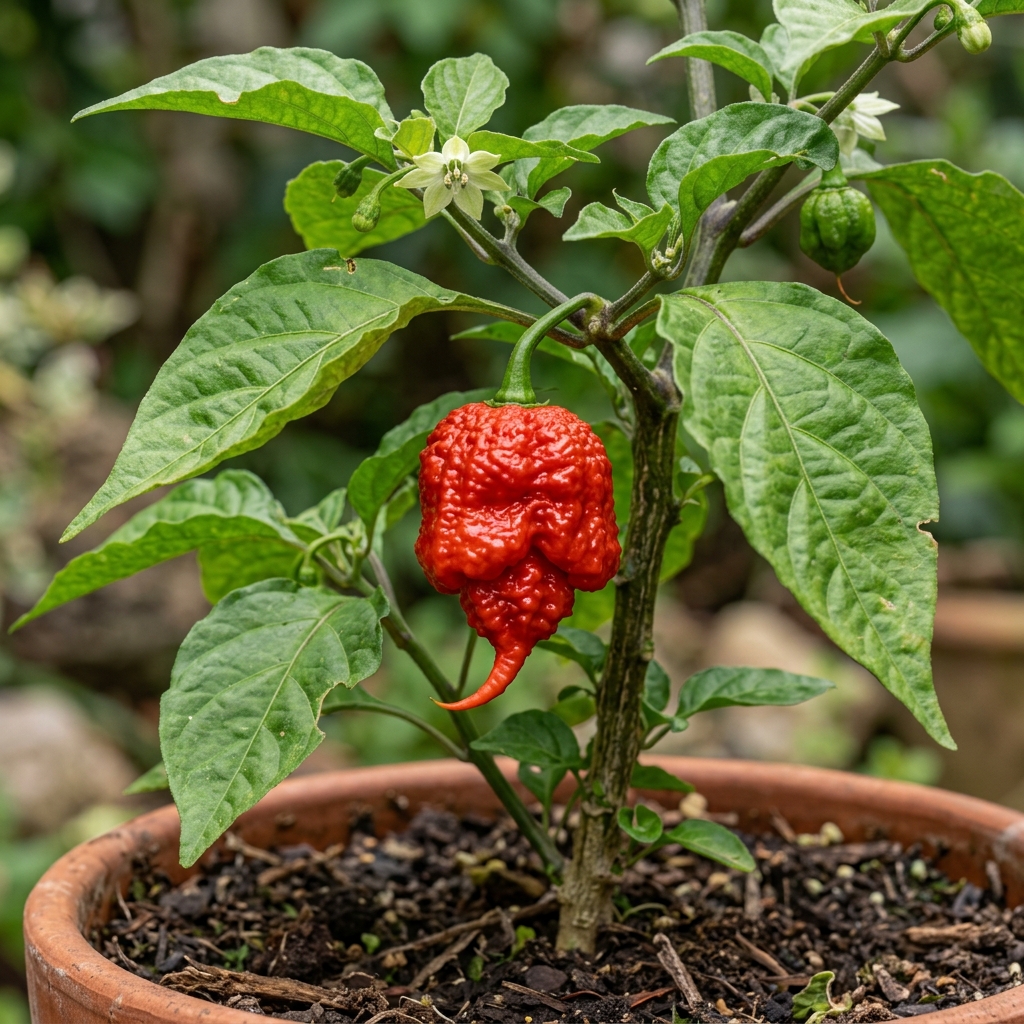
Morphologically distinct from typical chinense varieties, the pod features a heavily rugose, blistered surface ending in a prominent, narrow caudal stinger. Beneath its intense exterior, the ripe red fruit delivers an initial sweet and fruity flavor paired with floral and pungent aromatics. This brief sweetness quickly gives way to a chemically blistering burn concentrated in the throat and mouth, making the pepper a benchmark in extreme superhot chili breeding.
Superhot
Marker position uses a logarithmic scale so mild, hot, and superhot peppers remain visually comparable.
Quick Facts
Structured cultivar data from the current SpeciesAPI record.
Identity & Taxonomy
| Scientific name | Capsicum chinense |
|---|---|
| Species | Capsicum chinense |
| Cultivar | Carolina Reaper |
| Family | Solanaceae |
| Alternate names | HP22B, HP22B Selected |
Genetics & Origin
| Country of origin | United States |
|---|---|
| Region of origin | South Carolina |
| Breeder / originator | Ed Currie |
| Introduced | 2013 |
Heat
| Scoville heat | Up to 2,200,000 SHU |
|---|---|
| Average SHU | 1,641,183 SHU |
| Heat class | Superhot |
| Heat character | Intense, chemically blistering heat with an initial sweet-fruity note followed by prolonged burning. |
| Heat location | Throat and mouth |
Pod & Sensory Traits
| Flavor | Sweet, Fruity |
|---|---|
| Aroma | Fruity, Pungent, Floral |
| Pod shape | Globular with a distinct narrow tail or stinger |
| Pod surface | Rugose, bumpy, and blistered |
| Immature color | Green |
| Mature color | Red |
| Color transition | Green to red |
Plant & Cultivation
| Growth habit | Erect branching shrub |
|---|---|
| Sun | Full Sun |
Uses & Suitability
| Culinary uses | Hot sauces, Chili powders, Extracts |
|---|---|
| Preservation | Drying, Fermentation, Freezing |
Origin and Genetics
The Carolina Reaper was developed by breeder Ed Currie in Fort Mill, South Carolina. During its early development, the cultivar was cataloged under the internal project identifier HP22B, standing for Higher Power, Pot No. 22, Plant B. The cultivar gained official global recognition following its 2013 introduction, holding the title of the world’s hottest chili pepper with Guinness World Records from November 2013 through October 2023.
Botanical Profile
Classified under the species Capsicum chinense within the family Solanaceae, the plant grows as an erect branching shrub bearing green foliage and small white to greenish-white flowers. Its fruit morphology is defined by a globular shape covered in a rugose, bumpy, and blistered surface, terminating at the apex with a distinct, narrow tail or stinger. As the pods mature, they undergo a color transition from solid green to a vibrant, deep red.
Heat Profile
Testing conducted by Winthrop University established an average pungency rating of 1,641,183 SHU, placing the Carolina Reaper firmly in the extreme superhot tier. Peak individual pods have registered measurements exceeding 2,200,000 SHU. The physiological sensation delivers an intense, chemically blistering heat localized primarily in the throat and mouth, marked by an immediate onset that sustains a prolonged burn due to exceptionally high concentrations of capsaicinoids.
Flavor and Aroma
Despite its severe pungency, the pod possesses a distinct aromatic and gustatory profile. The aroma is intensely pungent with noticeable fruity and floral undertones. Upon tasting, the pepper exhibits an initial sweet, fruity flavor before the escalating capsaicinoid burn completely dominates the palate.
Cultivation
The Carolina Reaper performs best when cultivated in full sun, warm climates, and well-drained soil. In addition to its culinary yield, the plant carries moderate ornamental value owing to the visual contrast between its lush green foliage and intensely textured, bright red pods.
Culinary Applications
Due to its extreme heat level, the Carolina Reaper is primarily processed into hot sauces, extracts, and specialty chili powders, where precise dilution allows its underlying fruitiness to be utilized. Common long-term preservation methods for harvest include thermal drying, mash fermentation, and freezing.

Leave A Comment