
Jalapeño
The Jalapeño is a foundational Capsicum annuum cultivar originating from the area surrounding Xalapa in Veracruz, Mexico. Known by regional designations including Cuaresmeño, Chile gordo, and Huachinango, this stable, open-pollinated landrace selection is traditionally harvested while firm and green, though pods ripen fully to a vibrant red. Its manageable pungency spans a reliable range of 2,500 to 8,000 Scoville Heat Units.
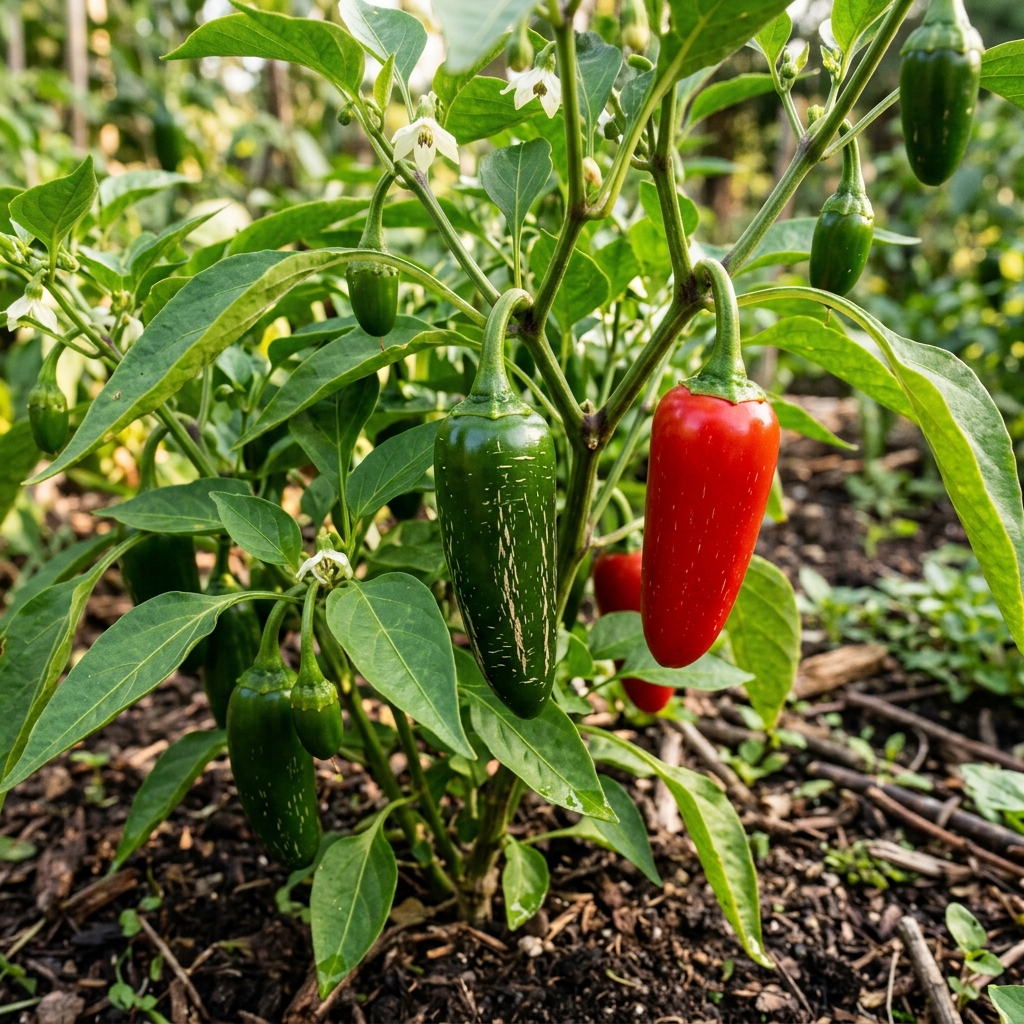
Beyond its versatile heat, the pepper is distinguished by a conical, blunt-tipped silhouette, pendant hanging habit, and an exceptionally thick pericarp. Many mature green pods display fine longitudinal striations or corking across the skin, a trait prized in traditional Mexican agriculture. This substantial wall thickness yields a crisp, vegetal bite that transitions to pronounced sweetness upon ripening, while mature red fruits serve as the basis for traditional chipotle.
Medium
Marker position uses a logarithmic scale so mild, hot, and superhot peppers remain visually comparable.
Quick Facts
Structured cultivar data from the current SpeciesAPI record.
Identity & Taxonomy
| Scientific name | Capsicum annuum |
|---|---|
| Species | Capsicum annuum |
| Cultivar | Jalapeño |
| Family | Solanaceae |
| Alternate names | Jalapeno, Cuaresmeño, Chile gordo, Huachinango |
Genetics & Origin
| Country of origin | Mexico |
|---|---|
| Region of origin | Veracruz |
| Hybrid status | open_pollinated |
Heat
| Scoville heat | 2,500–8,000 SHU |
|---|---|
| Heat class | Medium |
| Heat character | Direct, warm, moderate burn |
| Heat location | Tongue and anterior palate |
Pod & Sensory Traits
| Flavor | bright, grassy, vegetal, sweet when ripe |
|---|---|
| Aroma | fresh green bell pepper, mildly pungent |
| Pod shape | Conical to cylindrical with a blunt apex |
| Pod surface | Smooth with common longitudinal corking or checking lines |
| Orientation | pendant |
| Immature color | green |
| Mature color | red |
| Color transition | Green to dark green, transitioning to red upon full physiological maturity |
Plant & Cultivation
| Growth habit | Erect, branching herbaceous subshrub |
|---|---|
| Sun | Full sun |
Seed Traits
| Seed color | Straw-colored to light tan |
|---|---|
| Open pollinated | Yes |
Uses & Suitability
| Culinary uses | Salsas, Pickling (escabeche), Stuffing (jalapeño poppers), Smoking into chipotle, Roasting |
|---|---|
| Preservation | Pickling, Smoking, Canning, Freezing |
| Sauce suitability | high |
| Drying suitability | low to moderate unless smoked into chipotle due to thick pod walls |
| Stuffing suitability | high |
Origin and Genetics
The Jalapeño takes its name directly from the city of Xalapa (Jalapa), Veracruz, in eastern Mexico, where it has long been cultivated as a cornerstone of regional cuisine. Within Mexico, it is frequently referred to as Cuaresmeño, particularly throughout central regions, as well as Chile gordo or Huachinango depending on the locality and commercial grade. Genetically, it belongs to the species Capsicum annuum and exists as a broad, stable, open-pollinated cultivar group from which numerous commercial selections and horticultural strains have been developed.
Botanical Profile
The plant grows as an erect, branching herbaceous subshrub with standard green foliage and solitary white flowers. Pods develop in a pendant orientation, forming conical to cylindrical shapes characterized by a distinctly blunt apex. The exterior surface is typically smooth but frequently exhibits fine longitudinal checking lines known as corking (or cuerudo).
During development, fruit color shifts from bright green to dark green before reaching full physiological maturity at bright red. Internally, the pepper produces straw-colored to light tan seeds supported within a thick-walled pericarp that retains substantial structural integrity during handling and processing.
Heat Profile
The Jalapeño is classified as a medium-heat pepper, registering between 2,500 and 8,000 SHU on the Scoville scale. The pungency delivers a direct, warm burn centered primarily on the tongue and anterior palate. Pungency within this window can fluctuate naturally depending on environmental factors, irrigation stress during the fruiting cycle, and overall pod maturity.
Flavor and Aroma
When harvested at the immature green stage, the Jalapeño carries a crisp, bright, and grassy profile accompanied by a distinct vegetal aroma reminiscent of fresh green bell pepper with mild pungent undertones. As the pod completes its transition to full red maturity, sugars concentrate within the flesh, adding a noticeable sweetness that balances the pepper’s underlying warmth.
Cultivation
Cultivation requires full sun exposure and warm, well-draining soil to support steady vegetative growth and continuous flowering. Because it is an open-pollinated variety, stable seed can be saved from mature red fruits grown in isolation from other compatible Capsicum annuum crops.
Culinary Applications
Thanks to its dense, juicy walls, the Jalapeño is exceptionally versatile across fresh, cooked, and preserved preparations. It is a premier choice for table salsas, roasting, and hollowed-out stuffing applications such as jalapeño poppers. The thick fruit walls make standard air-drying impractical, but they lend themselves perfectly to pickling (escabeche), canning, and freezing. In traditional preservation, fully ripened red jalapeños are slowly wood-smoked and dried to produce chipotle, imparting an intensely smoky depth to marinades and braises.

Leave A Comment