
Habanero
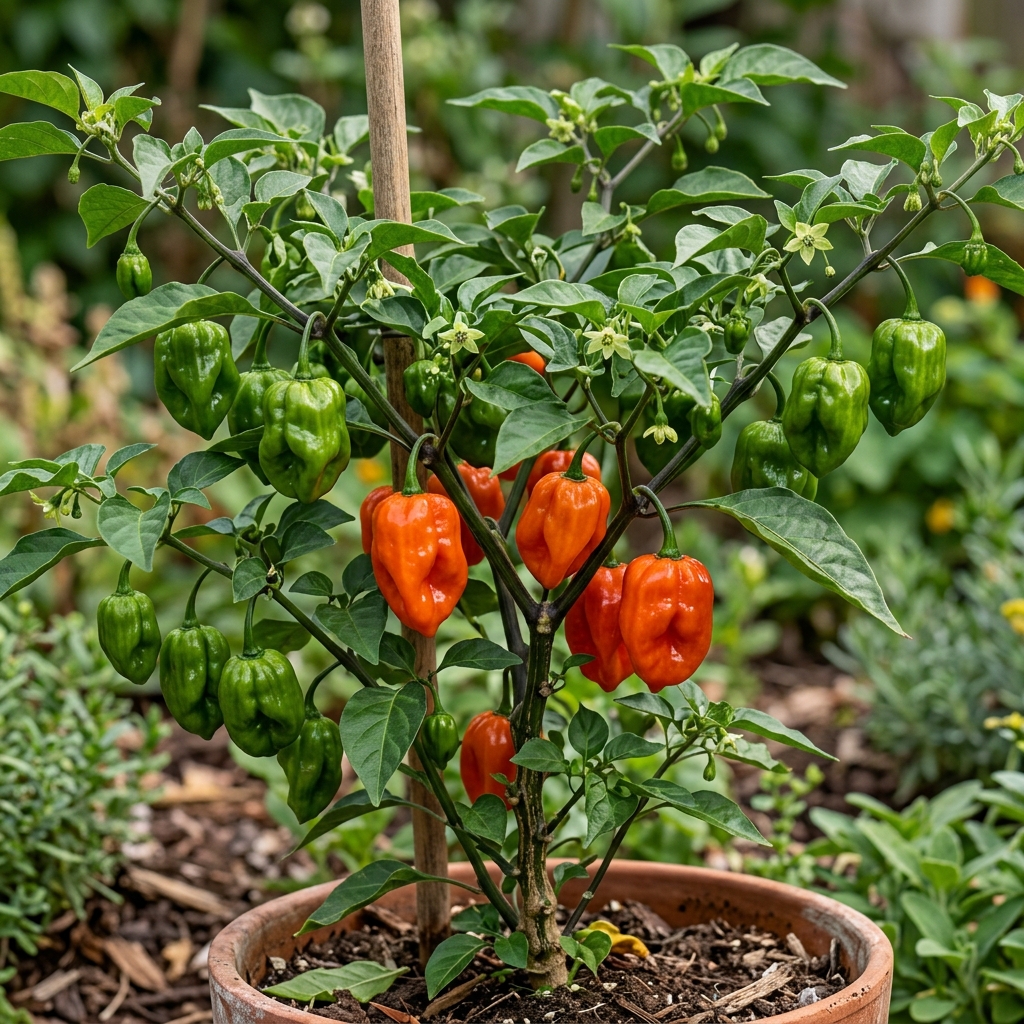
The Habanero is a cornerstone cultivar of the species Capsicum chinense, historically and commercially anchored in the Yucatán Peninsula of Mexico. Renowned for its distinctive lantern-shaped pods that mature from green to bright orange, this open-pollinated pepper delivers a substantial pungency rating between 100,000 and 350,000 Scoville Heat Units. While its name etymologically traces to Havana, Cuba, the Yucatán Peninsula remains its primary agricultural center and holds a Protected Designation of Origin for the crop.
Beyond its sharp heat, the cultivar is defined by an intricate balance of tropical, fruity, and floral flavors paired with an apricot-like aroma. Its thin-walled, slightly wrinkled fruits hang pendently from compact, branching shrubs, creating high culinary versatility for hot sauces, marinades, and fresh salsas. This pairing of rapid, long-lasting pungency with pronounced aromatic sweetness distinguishes the classic orange Habanero as a benchmark variety within the nightshade family.
Very Hot
Marker position uses a logarithmic scale so mild, hot, and superhot peppers remain visually comparable.
Quick Facts
Structured cultivar data from the current SpeciesAPI record.
Identity & Taxonomy
| Scientific name | Capsicum chinense Jacq. |
|---|---|
| Species | Capsicum chinense |
| Cultivar | Habanero |
| Family | Solanaceae |
| Alternate names | Orange Habanero, Chile Habanero |
Genetics & Origin
| Country of origin | Mexico |
|---|---|
| Region of origin | Yucatán Peninsula |
| Hybrid status | open_pollinated |
Heat
| Scoville heat | 100,000–350,000 SHU |
|---|---|
| Heat class | very_hot |
| Heat character | sharp, building, long-lasting |
| Heat location | throat and tongue |
| Heat onset | rapid |
| Heat duration | persistent |
Pod & Sensory Traits
| Flavor | fruity, tropical, sweet, floral, pungent |
|---|---|
| Aroma | fruity, floral, apricot-like |
| Pod shape | lantern |
| Pod surface | slightly wrinkled, undulating |
| Orientation | pendent |
| Immature color | green |
| Mature color | orange |
| Color transition | green to orange |
Plant & Cultivation
| Growth habit | compact, branching shrub |
|---|---|
| Sun | full sun |
Seed Traits
| Seed color | straw to cream |
|---|---|
| Open pollinated | Yes |
Uses & Suitability
| Culinary uses | hot sauces, salsas, marinades, seasoning |
|---|---|
| Preservation | drying, fermentation, freezing, pickling |
| Sauce suitability | high |
| Drying suitability | moderate |
| Stuffing suitability | low |
Origin and Genetics
The Habanero is a stable, open-pollinated cultivar belonging to the species Capsicum chinense Jacq. within the family Solanaceae. Etymologically, the name reflects historical ties to La Habana (Havana), Cuba, though its primary evolutionary, historical, and commercial nexus is the Yucatán Peninsula in Mexico. The variety carries a formal Protected Designation of Origin recognizing the unique agricultural tradition and climatic conditions of the Yucatán region.
Botanical Profile
Plants grow as compact, branching shrubs with standard green foliage and small, greenish-white flowers. The fruits display a classic lantern pod shape with thin walls and a slightly wrinkled, undulating outer surface. Borne pendently from nodal clusters, the pods undergo a standard color transition, beginning green when immature and ripening to a vibrant orange. Internal seeds are straw to cream in color.
Heat Profile
The Habanero is classified as very hot, with a laboratory-measured range of 100,000 to 350,000 Scoville Heat Units (SHU). The heat character features a rapid onset, producing a sharp, building burn that settles prominently on the throat and tongue. Typical of high-capsaicin Capsicum chinense varieties, the sensation delivers persistent, long-lasting pungency rather than a fleeting prickle.
Flavor and Aroma
Alongside its intense capsaicin delivery, the Habanero is prized for a distinct aromatic profile. The fruit features fruity, floral, and apricot-like aromas that lead directly into sweet, tropical, and pungent taste notes. This complex aromatic signature prevents the pepper from delivering one-dimensional heat, making it a foundational profile in hot pepper breeding and gastronomy.
Cultivation
Habanero plants thrive in warm climates with full sun exposure and well-drained soil. Due to their compact branching growth habit, they are well-suited for both container cultivation and greenhouse environments. For growers saving seed, plants should be physically isolated from other Capsicum chinense accessions to preserve genetic purity and prevent unwanted cross-pollination.
Culinary Applications
The Habanero is extensively utilized in commercial and artisanal hot sauces, fresh table salsas, marinades, and general seasoning. It possesses high suitability for sauce making due to its bold flavor and thin walls, though those same thin walls give it low utility for stuffing. For long-term preservation, the pods respond well to fermentation, pickling, and freezing, with moderate suitability for dehydration and drying.

Leave A Comment