
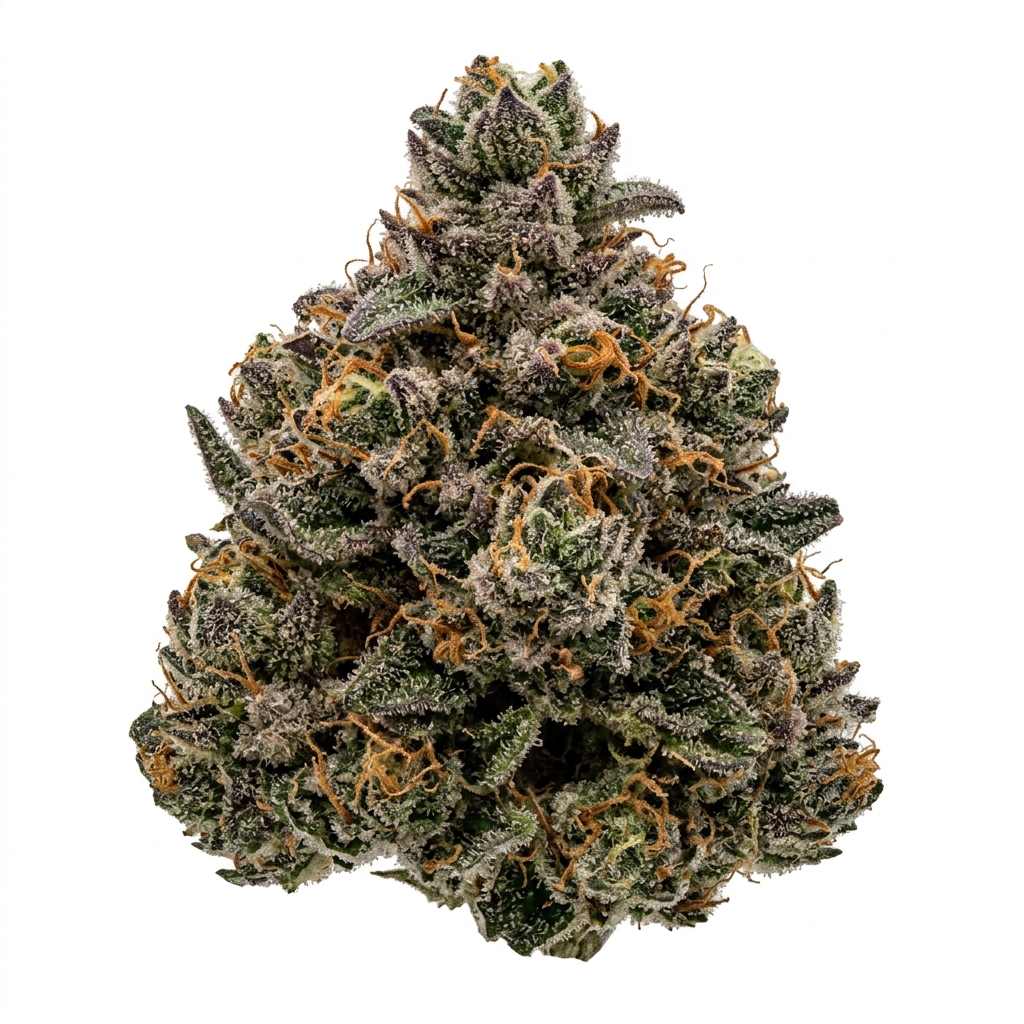
Sunset Spice
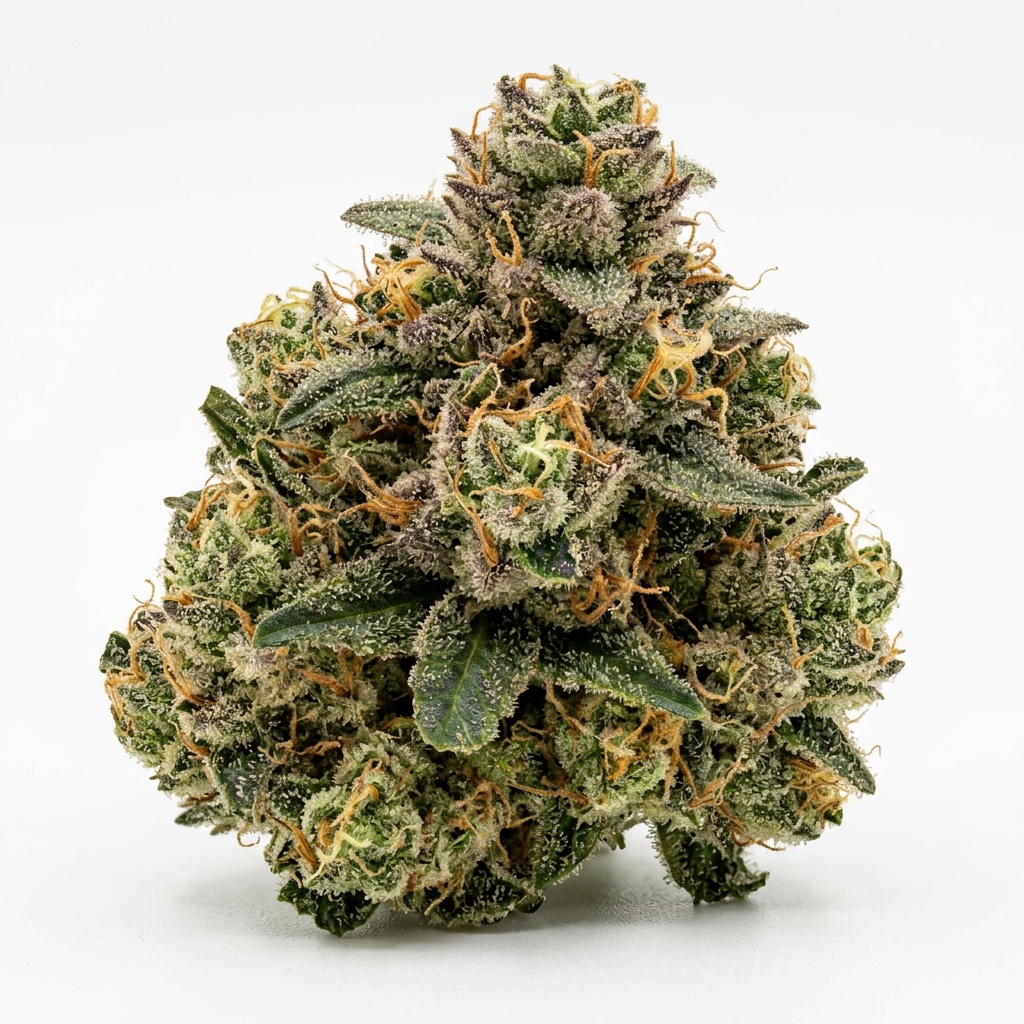
Sunset Spice is a hybrid cannabis cultivar known for its complex aromatic profile that bridges rich dessert sweetness with warm, pungent herbal spice. Developed from Sunset Sherbet crossed with an undisclosed pollen donor, it produces dense, conical floral clusters dusted in heavy trichomes and accented by deep purple calyxes. Its overall character brings together bright citrus and earthy undertones with a well-rounded balance of cerebral clarity and physical ease.
Culturally regarded as a versatile option suitable for both daytime and evening settings, Sunset Spice typically tests with moderate-to-potent cannabinoid concentrations. While genetic and classification details vary slightly across breeders and dispensaries, it is consistently recognized for its resinous presentation, distinctive terpene bouquet, and approachable growth characteristics.
Origin and Genetics
Sunset Spice originates in the United States, bred primarily from Sunset Sherbet crossed with an unknown spicy hybrid or landrace cultivar. Because the exact secondary parent remains unconfirmed across commercial records, seed and clone providers often present slight variations in lineage. Some seed bank listings record the cross as Sunset Sherbet paired with Girl Scout Cookies (GSC), while others cite the broader ancestral lineage of Sunset Sherbet itself (GSC x Pink Panties). Morphologically and behaviorally, Sunset Spice is most widely categorized as a balanced 50/50 hybrid, though some retail dispensary menus describe it as indica-dominant.
Cannabinoid and Terpene Profile
Laboratory data and breeder listings report dried flower THC levels typically ranging between 18% and 22% THC, with an average concentration near 20%. CBD levels remain low, generally measuring under 1%, while minor cannabinoids like CBG often test between 0.5% and 1.2%.
The cultivar’s aromatic and flavor signatures are shaped by a dominant blend of beta-caryophyllene, limonene, and myrcene, with linalool appearing as a notable secondary terpene. This terpene composition delivers a warm bouquet characterized by sharp black pepper, fresh citrus peel, earthy pine, and sweet berry undertones over a creamy, herbal base.
Aroma and Flavor
On the nose, Sunset Spice presents a pungent blend of sweet citrus and rich earth, complemented by an unmistakable layer of warm baking spice and woody pine. When consumed, the flavor reflects its aromatic complexity, opening with creamy berry and zesty citrus notes before finishing with a sharp, peppery bite and lingering herbal earthiness.
Reported Effects
Community feedback and breeder descriptions document a balanced onset that begins within 5 to 10 minutes of inhalation. Users commonly report an initial wave of gentle cerebral euphoria, uplifted mood, and creative focus. As the experience develops over 2 to 3 hours, the mental stimulation smoothly transitions into calm physical relaxation and muscle relief. At standard amounts, the cultivar retains mental clarity, though elevated consumption can induce pronounced physical heaviness and drowsiness.
Reported Therapeutic Uses
Medical cannabis patients and community sources frequently document using Sunset Spice for managing chronic stress, muscle tension, mild chronic pain, and anxiety. Others report using it in the evening to stimulate appetite or assist with sleeplessness. These community-reported applications are based on personal use reports and do not establish that the cultivar treats, cures, or prevents any medical condition.
Cultivation Characteristics
Sunset Spice is a photoperiod cultivar with a flowering time of 56 to 63 days (approximately 8 to 9 weeks). It thrives in warm, sunny Mediterranean climates, performing reliably indoors, outdoors, and in greenhouse environments. Indoors, plants reach a moderate height between 3.0 and 4.3 feet, yielding approximately 450 to 500 g/m². Outdoor growers can expect plants reaching up to 5.9 feet, with harvest windows falling in late September to early October in the Northern Hemisphere and yields between 550 and 650 grams per plant.
The plant exhibits sturdy lateral branching capable of supporting its heavy floral mass. Because the colas grow dense and compact, growers are advised to maintain active canopy airflow and reduce late-stage relative humidity. Exposure to mild nighttime temperature drops during late bloom frequently triggers vivid anthocyanin expression, turning calyxes a rich, deep purple.



Leave A Comment