
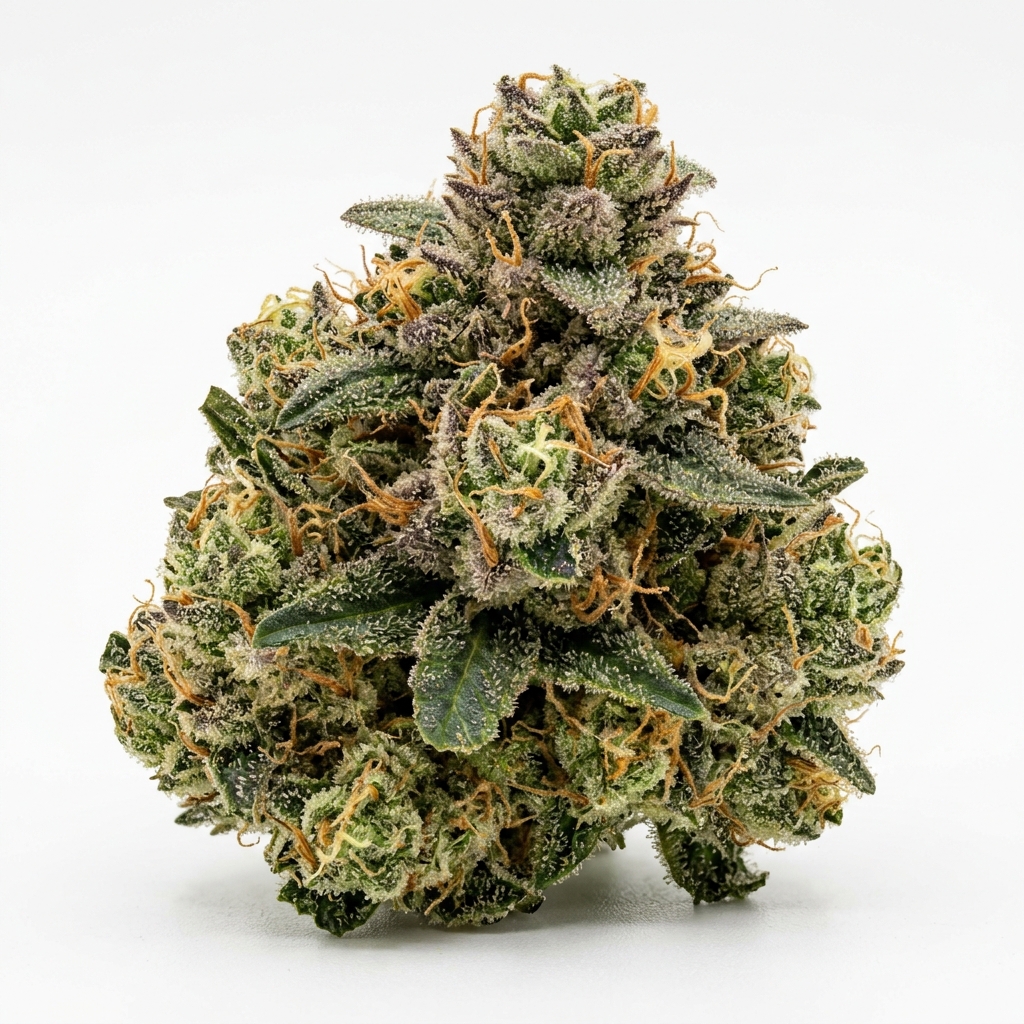
Modified Goat
Modified Goat is a hybrid cannabis cultivar created by crossing the pungent, relaxing powerhouse GMO (Garlic Cookies) with the bright, uplifting classic Golden Goat. Bred by Weedys in Monroe, Michigan, and introduced around 2022, the variety has gained attention in legal markets for merging distinct, contrasting terpene profiles. The result is a robust plant that balances sharp, sour citrus candy notes with the savory, heavy diesel and garlic-dough funk inherited from its parentage.
Cultivated commercially under various dispensary labels including Find and Grassroots, Modified Goat offers a complex profile paired with substantial resin production. Its dense floral clusters express high trichome density and a nuanced blend of uplifting cerebral euphoria followed by calming physical ease, making it a versatile option for both daytime focus and evening relaxation.
Origin and Genetics
Modified Goat was developed by the Michigan-based breeder Weedys, who crossed the savory cultivar GMO (also known as Garlic Cookies) with Golden Goat. This intentional pairing combines two legendary genetic lines with starkly different sensory and experiential profiles. While primary breeder data classifies Modified Goat as an even 50% indica / 50% sativa hybrid, retail packaging and commercial dispensary listings occasionally label specific batches as either indica-leaning or sativa-leaning depending on the market and phenotypic expression.
Cannabinoid and Terpene Profile
Laboratory testing of dried flower batches frequently reveals potent cannabinoid totals, with uninfused flower commonly testing between 25% and 28.6% THC, while total THCA levels in commercial batches occasionally surpass 30%. Analytical profiles also reflect trace amounts of minor cannabinoids, including CBG, CBC, and THCV.
The terpene profile of Modified Goat is led by limonene, beta-caryophyllene, and beta-myrcene, with supporting concentrations of humulene, linalool, alpha-pinene, beta-pinene, and alpha-bisabolol. This specific chemical array bridges the spicy, earthy depth of caryophyllene with the vibrant citrus punch of limonene.
Aroma and Flavor
The sensory profile of Modified Goat is defined by a clash of sweet, sour, and savory elements. The initial aroma features strong notes of sweet and sour citrus candy, often likened to tart confections, which quickly gives way to underlying layers of creamy gas, heavy diesel, earthy dough, and subtle spice. On the palate, the smoke or vapor delivers a rich combination of sour candy and sweet citrus on the inhale, anchored by a lingering diesel and earthy spice finish.
Reported Effects
Consumers report that Modified Goat delivers a fast-acting, multi-phase experience. Inhalation is typically followed within minutes by an uplifting cerebral euphoria, marked by a cheerful mood and creative focus. As the session progresses, a soothing physical ease sets in, gently relaxing the musculature without immediate, heavy sedation at moderate doses. Higher consumption, however, is reported to lean into deeper full-body calm and mild drowsiness, with effects lasting between 2 and 3 hours.
Reported Therapeutic Uses
In community and dispensary reviews, consumers have reported using Modified Goat to help navigate stress, everyday anxiety, chronic pain, muscle tension, insomnia, and depressive moods. These reported applications are based entirely on observational consumer feedback rather than formal medical trials, and such reports do not establish that the cultivar treats, cures, or prevents any medical condition.
Cultivation Characteristics
Modified Goat grows with a medium height and vigorous lateral branching, demonstrating a moderate stretch of 1.5x to 2x during the early vegetative-to-bloom transition. It performs well in indoor, greenhouse, and mild temperate outdoor environments, featuring a flowering window of 63 to 70 days (roughly 9.5 weeks). Outdoor growers typically harvest during early to mid-October in the Northern Hemisphere.
The cultivar produces dense, bulky bud clusters coated in a heavy layer of trichome resin, accented by bright to olive-green calyxes, occasional purple undertones, and vibrant orange-to-amber pistils. Because of the density of its floral nodes, cultivators recommend proactive canopy management, strategic defoliation, and controlled relative humidity during late bloom to safeguard against mold development.


Leave A Comment