
Marglobe
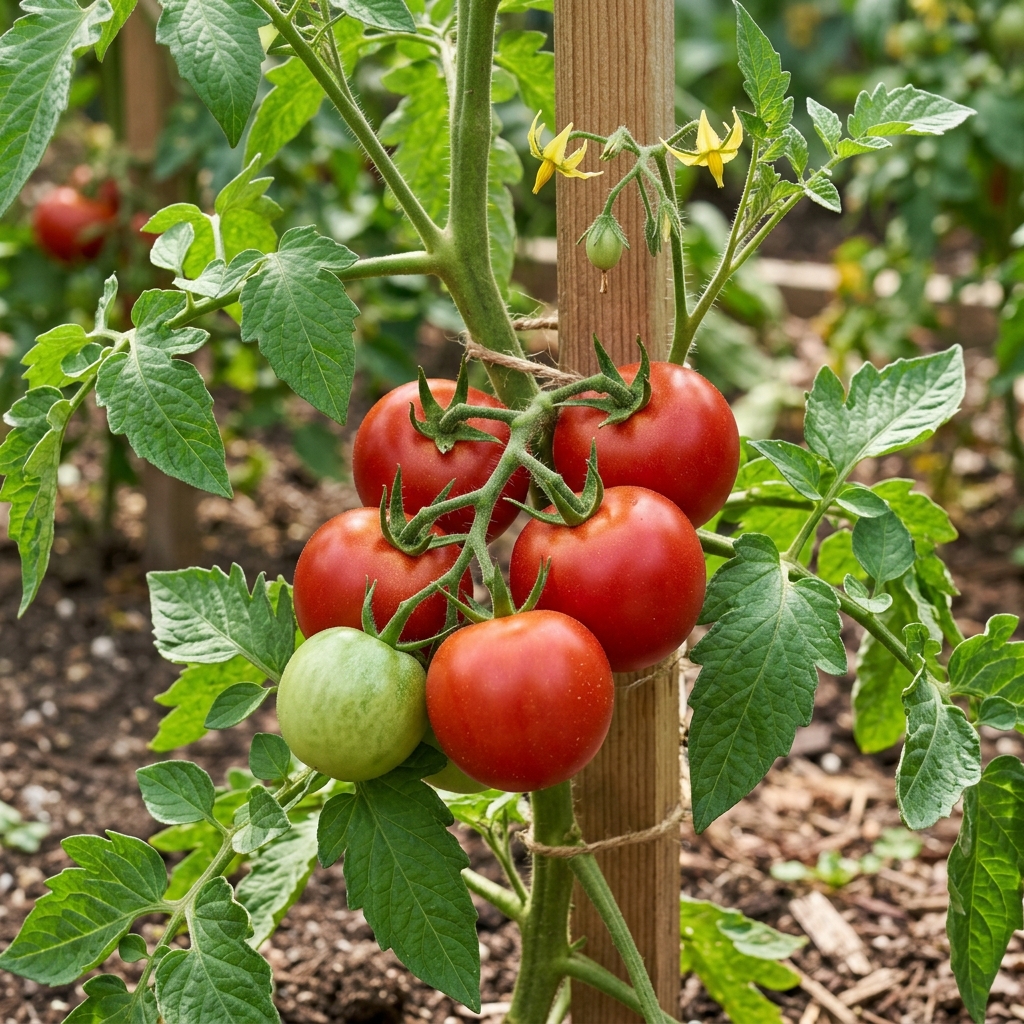
Marglobe is a historic open-pollinated red tomato (Solanum lycopersicum) bred by Fred J. Pritchard of the United States Department of Agriculture and officially released in 1925. Originating from a deliberate cross between ‘Marvel’ and ‘Globe’, this heirloom variety produces medium-sized, smooth globe-shaped fruit on determinate vines bearing regular foliage and yellow flowers.
Distinguished by its historic breeding for disease defense, Marglobe exhibits specific resistance to Fusarium wilt (race 1) and nailhead spot. Beyond its performance in the field, the variety’s crack-resistant red fruit became a cornerstone of twentieth-century commercial and home production, eventually serving as a direct parent to the widely grown Rutgers cultivar.
Origin and Genetics
Marglobe was developed in the United States by Fred J. Pritchard of the USDA and introduced to growers in 1925. Bred from a cross of the varieties ‘Marvel’ and ‘Globe’, it was stabilized as an open-pollinated heirloom cultivar. Marglobe established a major foundation for subsequent commercial tomato breeding programs, most notably serving as a direct parent in the development of the Rutgers tomato.
Botanical Profile
The plant exhibits a determinate growth type with standard regular leaf foliage and small yellow blossoms. Its medium-sized fruit is categorized as a true globe type, characterized by a smooth outer surface with no ribbing. As the fruit develops, it transitions from an immature green to a uniform red skin and matching red interior flesh, displaying notable natural resistance to cracking.
Disease Resistance
Bred specifically to overcome destructive soil-borne and foliar pathogens of its era, Marglobe possesses verified resistance to Fusarium wilt (Fusarium oxysporum f. sp. lycopersici race 1). It also provides resistance against nailhead spot caused by Alternaria tomato, traits that made it an essential release for regional field production.
Cultivation
Marglobe is well adapted for field growing and requires placement in full sun. Because of its determinate habit, the plants achieve a defined mature structure suited to traditional open-ground beds.
Culinary Applications
With its balanced globe shape and crack-resistant structure, Marglobe is well suited for fresh slicing as well as home preservation. The uniform flesh and classic red coloration have historically made it a dependable selection for whole-pack and processed canning.



Leave A Comment