

Bulbz
Bulbz is an indica-dominant cannabis cultivar bred by Dark Heart Genetics and popularized across commercial dispensaries under Curaleaf’s Find. and Grassroots labels. Commonly recognized as a selected cut of Zesty Garlic Cookies, Bulbz traces its primary lineage to a cross between Foreign Fortune Cookies and GMO. The cultivar is notable for blending the pungent, savory umami depth of its Chemdawg and Girl Scout Cookies heritage with an elevated citrus-forward terpene profile.
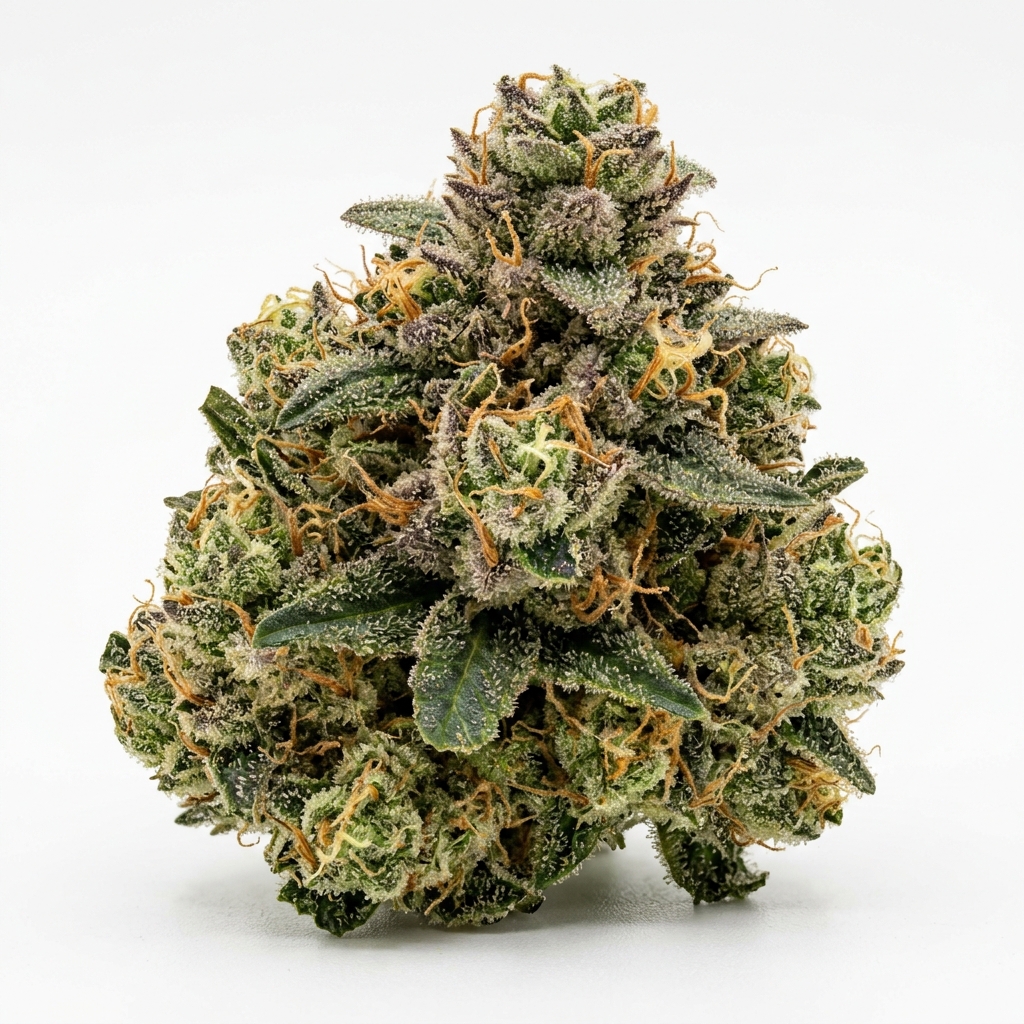
Known for its heavy resin output and distinctively zesty, garlicky aroma, Bulbz delivers pronounced physical relaxation and heavy body tranquilization. Its buds showcase dense, olive-green calyxes accented by subtle purple shades and bright amber pistils, offering consumers an evening-oriented profile geared toward deep unwinding and couch-lock comfort.
Genetics and Origin
Bulbz was developed by Dark Heart Genetics and introduced into commercial markets in 2023. Breeder documentation and dispensary records identify the cultivar as a specialized selection of Foreign Fortune Cookies x GMO, also known as Zesty Garlic Cookies. This parentage infuses the heavy, sulfurous, and earthy funk of GMO with the sweetened, complex cookie notes of Foreign Fortune Cookies.
Across various retail markets, some minor genetic discrepancies exist in consumer listings. While most official catalogs document it as the Zesty Garlic Cookies cut, occasional third-party menus have conflated Bulbz with Grape Gas x White Runtz or Stardawg x Northern Lights. However, laboratory terpene breakdowns and breeder releases consistently align with the Foreign Fortune Cookies and GMO lineage.
Cannabinoid and Terpene Profile
Commercial certificates of analysis for Bulbz flower regularly demonstrate robust potency, with laboratory-tested delta-9 THC and THCA levels typically falling between 18% and 28%+, and total active cannabinoids (TAC) frequently ranging between 24% and 30%. Batches also show consistent minor cannabinoid presence, such as CBGA (0.5% to 0.7%) and CBG (0.1% to 0.35%), alongside trace amounts of THCVA.
The terpene profile of Bulbz is predominantly shaped by limonene, beta-myrcene, and beta-caryophyllene. Secondary contributing terpenes include linalool, beta-pinene, alpha-pinene, humulene, caryophyllene oxide, camphene, and alpha-bisabolol. This specific chemical arrangement balances bright, volatile monoterpenes with peppery, grounding sesquiterpenes.
Aroma and Flavor
Bulbz is distinguished by its pungent and savory aromatic bouquet. The initial aroma produces heavy notes of roasted garlic, skunk, and damp earth, punctuated by a pronounced, zesty citrus kick. Breaking apart the dense nugs releases deeper layers of spicy pepper, sweet dough, and subtle herbal undertones.
On the palate, the flavor mirrors the aroma with a mix of savory garlic and sweet cookie notes upfront, followed by a lingering citrus zest, earthy spice, and mild herbal bitterness upon exhale.
Reported Effects
Consumers report that Bulbz provides an onset of warm, full-body tranquility that begins within 5 to 10 minutes of inhalation. The cerebral effect is calming and euphoric without inducing racing thoughts, making it well-suited for late-afternoon or nighttime consumption.
As the session progresses over 2 to 3 hours, the experience settles into deep physical sedation, frequently leading to couch-lock and sleepiness. Because of its heavy, sedating nature, it is primarily chosen for quiet evenings and unwinding before bed.
Reported Therapeutic Uses
In community feedback and dispensary self-reports, consumers frequently reach for Bulbz to manage symptoms related to chronic pain, insomnia, muscle tension, stress, and nausea. Note that these are patient- and source-reported experiences and do not constitute established clinical proof that this cultivar treats or prevents any medical condition.
Cultivation Characteristics
Bulbz exhibits typical indica-dominant growth habits, forming compact, bushy plants with sturdy lateral branches and moderate internodal spacing. It adapts well to controlled indoor environments, responding favorably to standard canopy management and maintaining natural resilience against common indoor pests and molds.
The cultivar features an indoor flowering window of 56 to 65 days (approximately 9 weeks), producing moderate to high yields of trichome-dense flowers. Outdoor growers in the Northern Hemisphere typically reach harvest between early and mid-October. The cured buds are chunky and dense, displaying deep olive-green tones, occasional purple hues, fiery amber pistils, and a thick, frosted layer of glandular trichomes.



Leave A Comment