
Fish Pepper
The Fish Pepper is a historic African American heirloom variety of Capsicum annuum originating from the Mid-Atlantic and Chesapeake Bay regions of the United States. Historically cultivated for use in regional oyster and crab houses, this open-pollinated chili yields smooth, conical pods with a medium-to-hot rating ranging between 5,000 and 30,000 SHU.
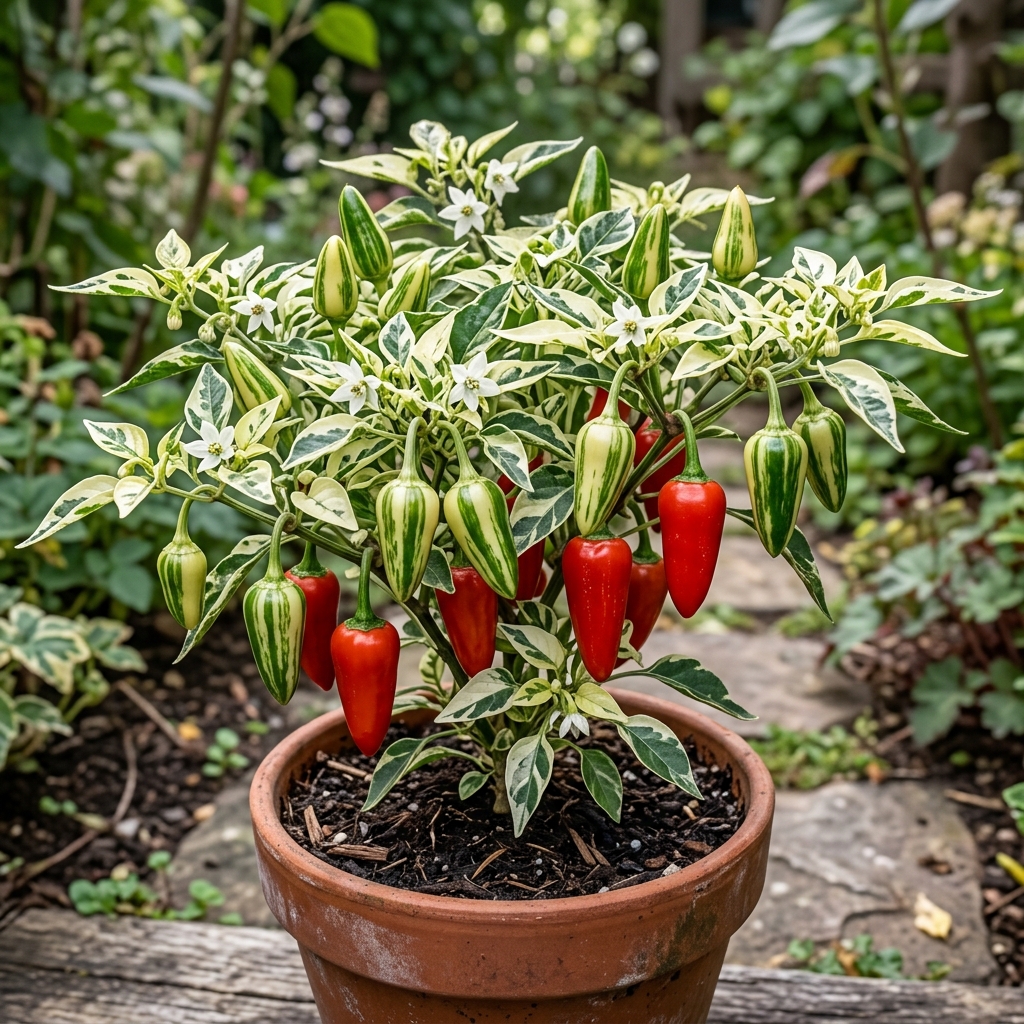
Beyond its culinary history, the variety is celebrated for its striking chimeral variegation, bearing green-and-white mottled foliage alongside striped immature fruit. The pods transition from cream with green stripes through orange to solid red at full maturity, a characteristic that traditionally allowed cooks to add heat to delicate white sauces and seafood dishes without discoloring the base.
Origin and Genetics
The Fish Pepper is a heritage open-pollinated cultivar deeply rooted in the African American culinary traditions of the Chesapeake Bay area. The variety was preserved for modern cultivation by food historian William Woys Weaver, who maintained seeds originally shared by artist Horace Pippin with Weaver’s grandfather during the 1940s. Genetically, the cultivar’s signature variegation is a recessive trait, remaining stable across generations when plants are isolated from other Capsicum annuum varieties.
Botanical Profile
Plants exhibit a compact bushy growth habit characterized by ornamental foliage patterned in variegated green and white. The variety produces white flowers followed by smooth, conical pods that grow in a pendant orientation. The immature fruit showcases chimeral striations of cream and green before gradually ripening through orange to an eventual solid red upon reaching full maturity.
Heat Profile
Fish Peppers possess a medium to hot pungency profile, typically measuring between 5,000 and 30,000 Scoville Heat Units (SHU). The heat level provides a noticeable, vibrant kick comparable to common culinary hot peppers, making it adaptable across varying heat tolerances.
Flavor and Aroma
The flavor profile of the Fish Pepper is defined by a crisp, tangy, and peppery bite. When harvested at the immature cream-and-green stage, the pods provide a clean, sharp heat, whereas fully ripened red pods offer a slightly richer, classic chili pepper sweetness alongside their heat.
Cultivation
This variety thrives under full sun and requires well-drained soil for optimal vigor. Due to its compact growth habit and high ornamental value, it is well-suited for container gardening as well as traditional garden beds. Gardeners saving seed must isolate Fish Pepper from other C. annuum cultivars to reliably preserve its stable, recessive variegation patterns.
Culinary Applications
Historically indispensable in Mid-Atlantic seafood cookery, immature cream-colored pods were prized in oyster houses and crab boils for seasoning white sauces without turning the sauce green or red. In modern kitchens, Fish Peppers are frequently used in fresh salsas, pickling recipes, custom hot sauces, and traditional seafood seasonings, or dried for decorative and culinary spice blends.



Leave A Comment