
Pimiento Pepper
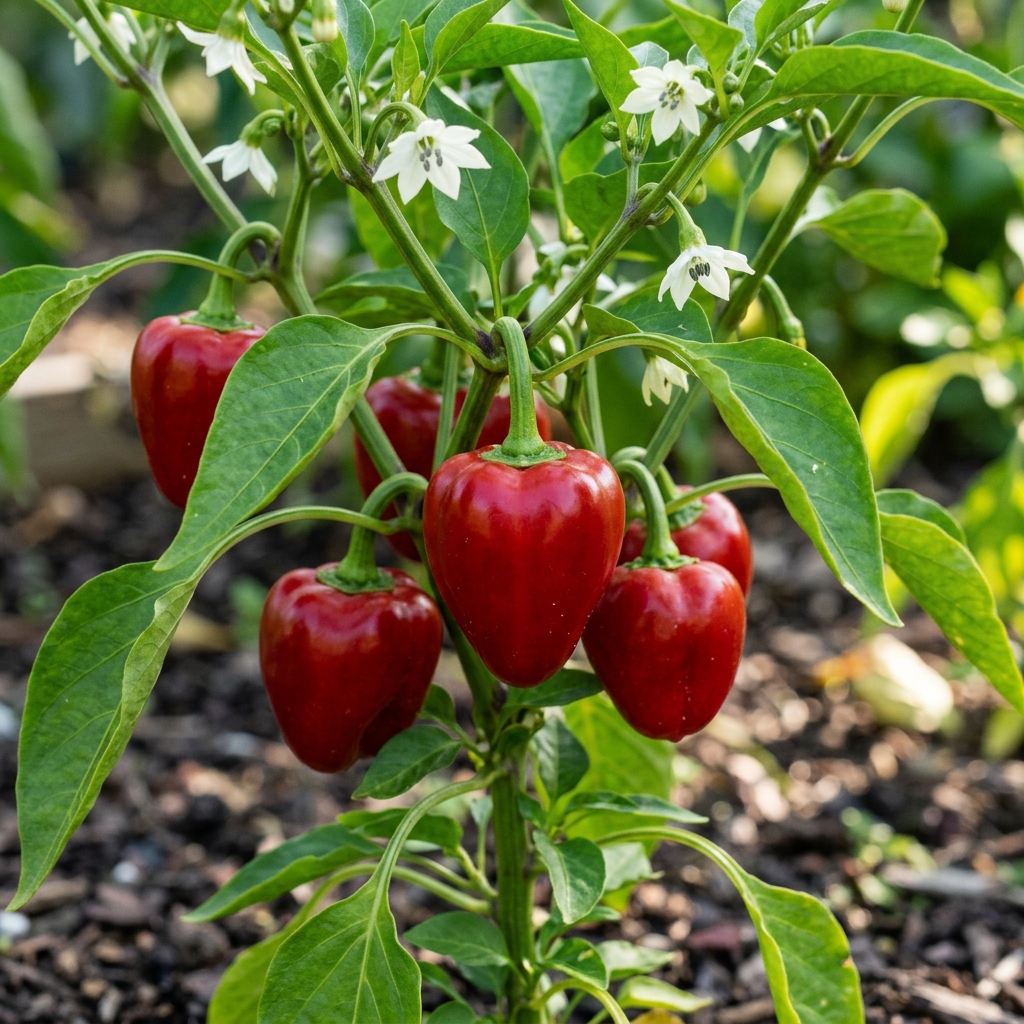
The Pimiento Pepper, often spelled pimento, is a sweet and aromatic cultivar of Capsicum annuum originating from Spain and the Mediterranean basin. Registering a negligible heat level of 100 to 500 Scoville Heat Units, this pepper is defined by its pendant, heart-shaped fruit and exceptionally thick, succulent pericarp walls that transition from deep green to rich red at full maturity.
Prized for its high natural sugars and mild, fruity flavor profile, the pimiento is most widely recognized as the classic stuffing inside Spanish green olives and as the core ingredient in pimento cheese. Botanically, it represents a distinct sweet morphotype within the nightshade family (Solanaceae) and should not be confused with allspice (Pimenta dioica), despite sharing an overlapping common name.
Origin and Genetics
The Pimiento Pepper traces its horticultural lineage to Spain and the broader Mediterranean basin. Belonging to the species Capsicum annuum within the family Solanaceae, it was cultivated and selected specifically for sweet flavor, thick flesh, and a cordate pod shape rather than pungency.
In botanical literature, “Pimiento” serves as both a common name and a recognized morphotype classification. It is distinct from unrelated spices such as Pimenta dioica (allspice), with which it occasionally shares vernacular naming in English.
Botanical Profile
Plants produce green foliage and solitary white flowers typical of Capsicum annuum. The developing fruit grows in a pendant orientation, forming a distinct heart-shaped pod with a smooth, glossy outer surface. Immature pods start green before ripening to a vibrant, uniform red.
One of the most defining structural attributes of the pimiento is its thick, succulent wall. This dense pericarp gives the fruit a firm texture that retains moisture and structural integrity during processing and cooking.
Heat Profile
The Pimiento Pepper occupies the lowest tier of the Scoville scale, typically measuring between 100 and 500 SHU. Its pungency is negligible to very mild, allowing the natural sweetness and aromatic compounds to dominate the palate without noticeable capsaicin burn.
Flavor and Aroma
Defined by high natural sugar levels, the pimiento offers a sweet and fruity flavor complemented by a classic sweet pepper aroma. Its thick flesh provides a juicy, crisp bite when raw, while roasting and preserving enhance its rich, sweet undertones.
Cultivation
Pimiento peppers thrive when grown in a warm climate with access to full sun. Optimal development of foliage and thick-walled pods occurs in fertile, well-drained soil conditions that support steady growth throughout the season.
Culinary Applications
Due to its dense walls and high sugar content, the pimiento is exceptionally versatile in preservation and preparation. It is famously preserved through canning and pickling, serving as the traditional red filling for stuffed Spanish green olives and the centerpiece of Southern pimento cheese spreads.
The variety is also widely used for fresh stuffing, fire roasting, and dehydration into sweet paprika powder, where its deep red pigmentation and aromatic sweetness provide both color and mild flavor.



Leave A Comment