
Takanotsume Pepper
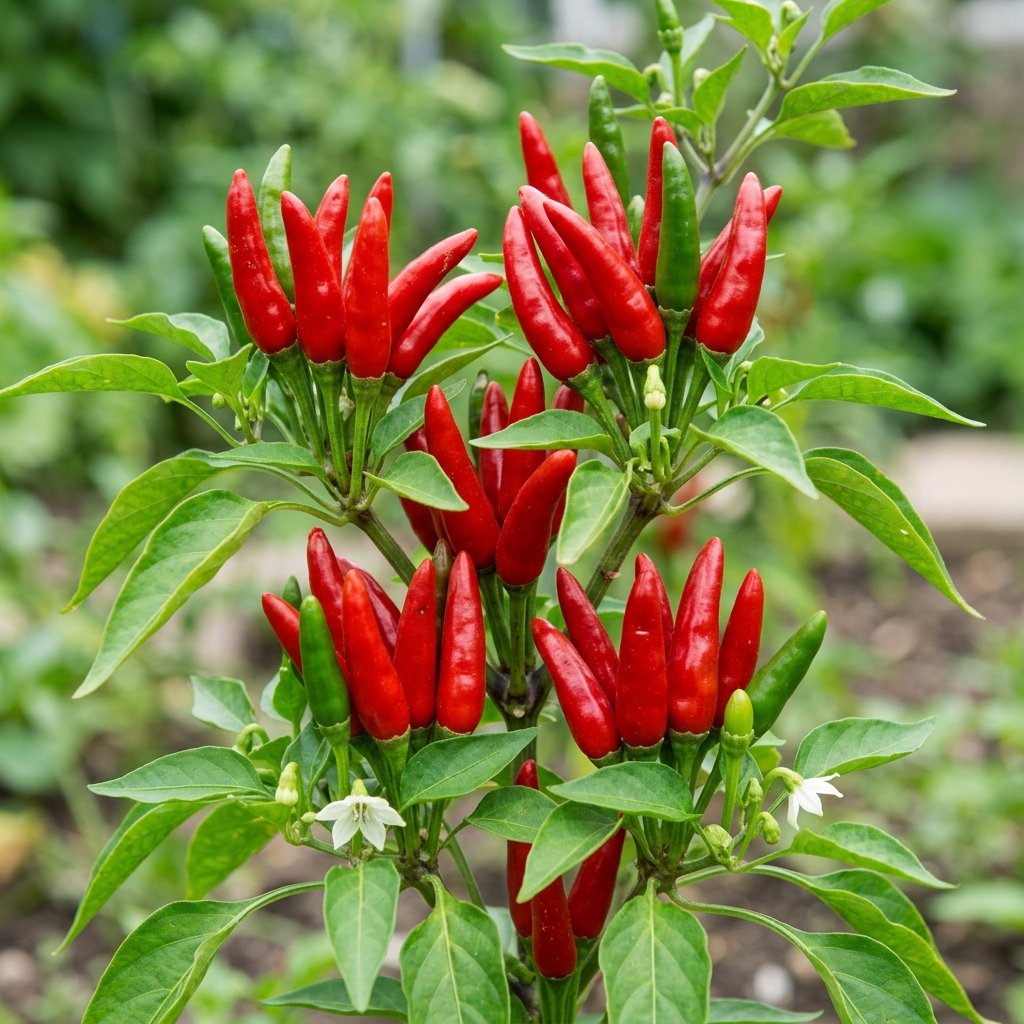
The Takanotsume pepper, commonly known as the Japanese Hawk’s Claw, is a traditional open-pollinated cultivar of Capsicum annuum originating in Japan. Celebrated for its unique architecture, the plant bears dense clusters of erect, upward-pointing fruits that transition from deep green to a vivid bright red upon full maturity.
Distinguished by its compact bushy growth habit and thin-walled, talon-like pods, Takanotsume provides a direct, rapid heat on the tongue paired with a clean, subtly sweet finish. Its exceptional drying qualities have established it as an indispensable staple of Japanese cuisine, serving as the foundational ingredient for classic spice blends like shichimi togarashi and ichimi togarashi.
Origin and Genetics
Takanotsume is a stable, open-pollinated heirloom belonging to the Capsicum annuum species from Japan. Its common name, which translates to “Hawk’s Claw” or “Eagle Claw,” refers directly to the distinctive curved, talon-like shape of the upright fruit clusters. As a self-pollinating annual, it produces straw-yellow seeds and requires physical isolation from other C. annuum varieties to prevent cross-pollination and maintain cultivar purity.
Botanical Profile
The plant exhibits a compact bushy habit with green foliage and single white flowers at the nodes. It is recognized for its prolific yields of smooth, thin-walled, elongated claw-shaped pods. Unlike pendant pepper varieties, Takanotsume fruit develops in an erect orientation, pointing skyward in tight groupings that provide high ornamental value alongside culinary utility.
Heat Profile
Takanotsume is classified within the medium to hot heat scale. It is characterized by a rapid onset of sharp, direct pungency focused primarily on the tongue. In horticultural literature, its heat level is traditionally estimated between 15,000 and 30,000 Scoville Heat Units (SHU), delivering the clean, biting heat typical of traditional Asian drying peppers.
Flavor and Aroma
Beyond its initial piquant punch, Takanotsume carries a clean and subtly sweet flavor profile. The pods possess a pungent, lightly fruity aroma that intensifies as the fruit matures from green to deep red, making it well-suited for applications where pure heat is desired without overwhelming savory undertones.
Cultivation
This cultivar performs best in a warm climate under full sun and in well-drained soil. Because of its manageable size and upright fruiting structure, Takanotsume is well-suited for container gardening as well as greenhouse production, where it reliably produces abundant yields across the growing season.
Culinary Applications
Due to its thin pericarp walls, Takanotsume has excellent drying suitability and is extensively processed into flakes and powders. It is the primary chili component in Japanese condiments such as pure chili powder (ichimi togarashi) and seven-spice blend (shichimi togarashi). Whole pods are also commonly employed in stir fries, pickling preparations, and infused culinary oils.



Leave A Comment