

Amish Paste
Amish Paste is a historic open-pollinated heirloom tomato (Solanum lycopersicum) originating from the Amish community in Lancaster County, Pennsylvania. Preserved by gardener Thomas H. Coyne and widely distributed through Seed Savers Exchange in the late 1980s, this indeterminate vining cultivar produces medium-to-large red fruits renowned for their solid substance and sparse seed cavities.
Unlike standard commercial processing varieties that grow on compact determinate bushes, Amish Paste continues vining throughout the season while yielding plum- to oxheart-shaped fruits with smooth skin and dense, meaty flesh. Its sweet and rich flavor makes it a versatile dual-purpose cultivar, performing equally well when sliced fresh or cooked down into thick sauces and preserves.
Origin and Genetics
Amish Paste originated within the agricultural Amish community of Lancaster County, Pennsylvania. The cultivar was acquired by Pennsylvania gardener Thomas H. Coyne, who maintained the line before sharing it with Seed Savers Exchange. Following its introduction to broader gardening circles in the late 1980s, it became one of the most widely recognized heirloom processing tomatoes. As an open-pollinated selection, its genetic traits remain stable, allowing growers to save true-to-type seed across generations.
Botanical Profile
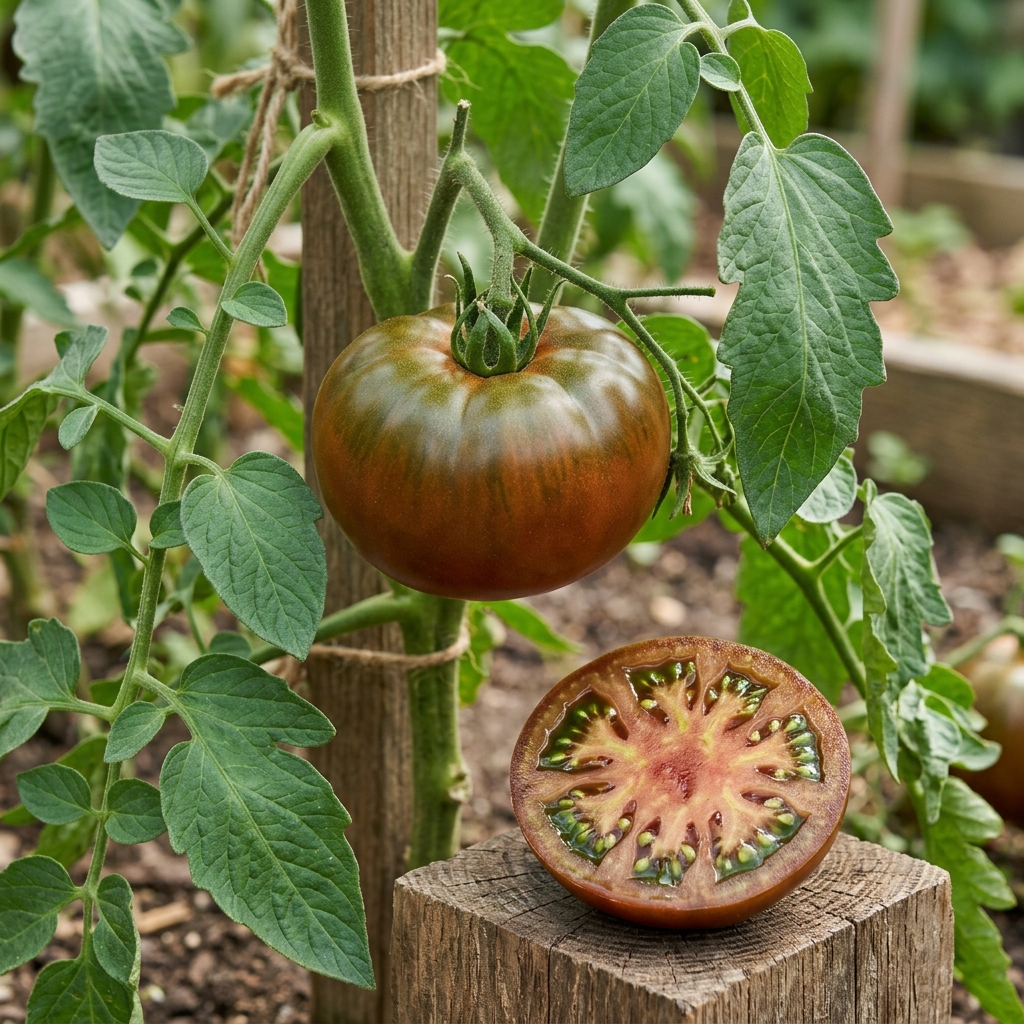
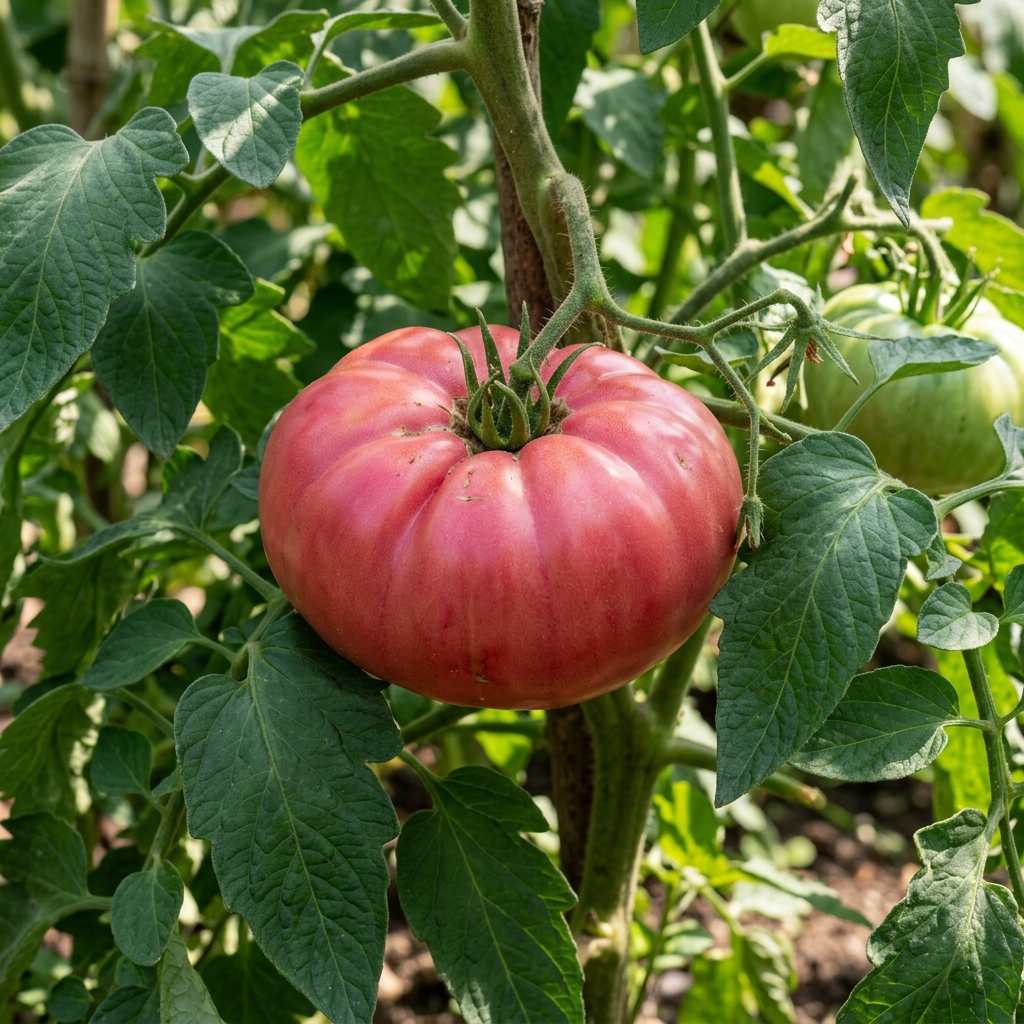
The plant exhibits an indeterminate vining habit with standard regular-leaf green foliage and yellow flowers. Its fruits belong to the medium-to-large size class, ripening from an immature green to a uniform mature red. Fruit morphology on the same vine often displays natural variability, transitioning between a blocky plum profile and a slightly ribbed acorn or oxheart shape. Inside, the red flesh is exceptionally meaty and dense, containing few seeds and minimal free gel compared to standard table varieties.
Cultivation
Due to its continuous vining growth habit, Amish Paste requires sturdy trellising, tall cages, or staking to support its heavy fruit load and expansive foliage. It is fully suited to open field cultivation and develops optimal fruit quality and flavor when grown in full sun.
Culinary Applications
Although classified primarily as a paste tomato, Amish Paste has a distinctively rich, sweet flavor that expands its kitchen utility beyond conventional processing types. Its thick, low-moisture flesh cooks down rapidly, making it suitable for paste, rich marinara sauces, and whole-pack home canning. Additionally, its solid interior allows for clean slicing in fresh dishes, and prepared harvests are well-suited for long-term preservation via freezing.



Leave A Comment