
Sweet 100
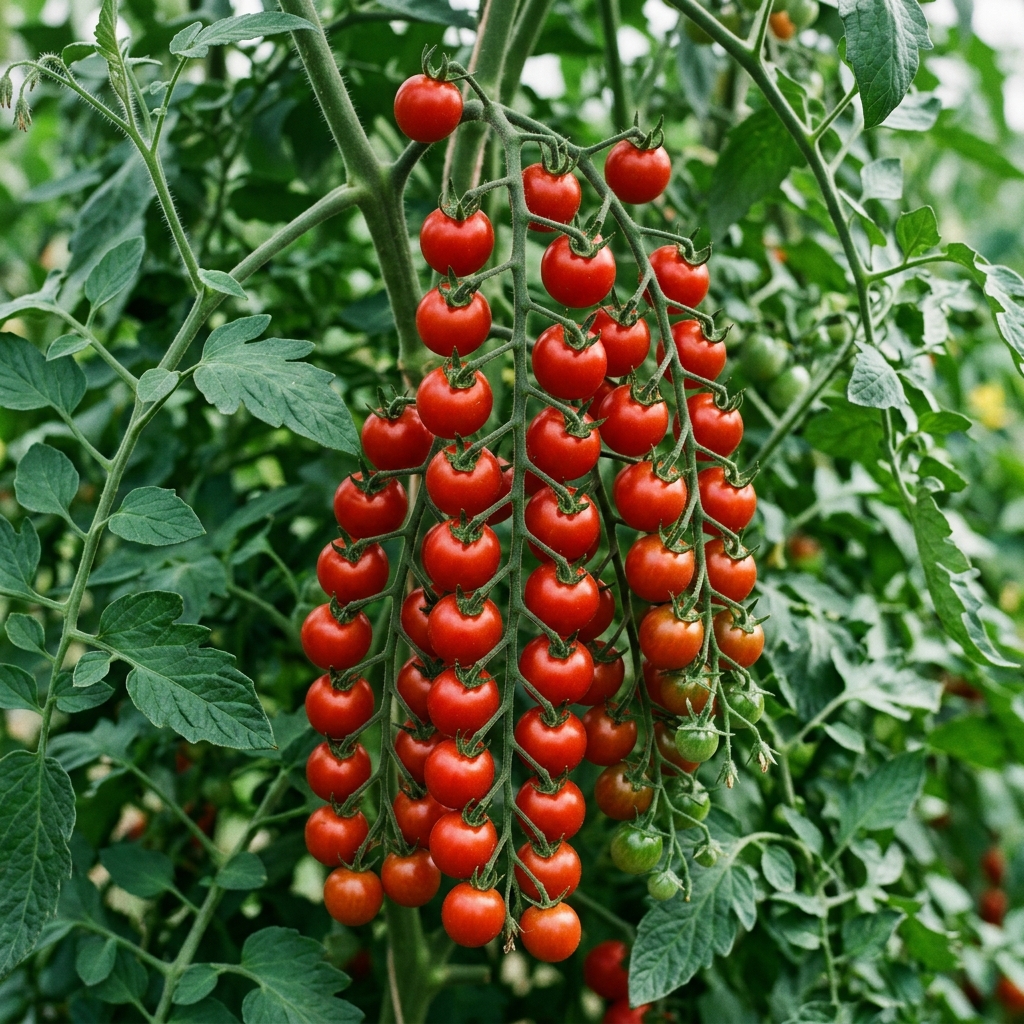
The Sweet 100 tomato (Solanum lycopersicum ‘Sweet 100’) is a classic F1 hybrid cherry tomato developed in Japan by Sakata Seed Corporation and introduced in 1973. Characterized by its vigorous indeterminate vining habit and regular green foliage, this modern hybrid produces round, smooth red cherry tomatoes that transition from green to a vivid, glossy red upon reaching full maturity.
Renowned for its exceptional yield, Sweet 100 bears expansive, branched compound trusses that can yield between 50 and 100 small fruits per cluster under optimal conditions. The two-locule fruits feature juicy red flesh with a distinctly sweet, fruity flavor balanced by low to moderate acidity, though their delicate, thin skins make them prone to cracking during moisture fluctuations.
Origin and Genetics
Introduced in 1973 by Japan’s Sakata Seed Corporation, Sweet 100 represents a landmark modern F1 hybrid in small-fruited tomato breeding. Because it is an F1 hybrid, seed saved from its fruit will not come true to type in successive generations. The cultivar is also the original predecessor to ‘Super Sweet 100’, an updated line later bred with added disease resistance.
Botanical Profile
Vines exhibit a strong climbing, indeterminate growth habit with regular green foliage and standard yellow blossoms. The round cherry fruits develop with smooth skins and no ribbing, ripening evenly to a solid red across the shoulders and body. Internally, each fruit contains two locules with juicy red flesh encased in a notably thin skin.
Growth and Performance
Sweet 100 is recognized for its high productivity, driven by the formation of long, cascading compound trusses that hold dozens of individual fruits. Under favorable conditions, single clusters can bear 50 to 100 or more cherry tomatoes. However, the cultivar exhibits low cracking resistance; its thin skin and high sugar concentration leave the fruit vulnerable to concentric and radial splitting when soil moisture fluctuates.
Flavor and Aroma
The sensory profile of Sweet 100 is characterized by intense sweetness and rich fruitiness. Its low to moderate acidity provides enough balance to support the high sugar levels, making it a benchmark for dessert-style cherry tomatoes.
Cultivation
Due to its rampant vining habit and heavy truss production, Sweet 100 requires full sun and sturdy support systems, such as tall cages or heavy-duty stakes. It performs well in both field and greenhouse environments. Because of its large indeterminate structure, it is not suitable for standard container cultivation.
Culinary Applications
Sweet 100 is primarily grown for fresh eating, salads, and snacking. Its high juice content, thin skin, and small size make it ideal for whole consumption, while it is unsuitable for paste, sauce, slicing, or stuffing uses.



Leave A Comment