
Cacho de Cabra Pepper
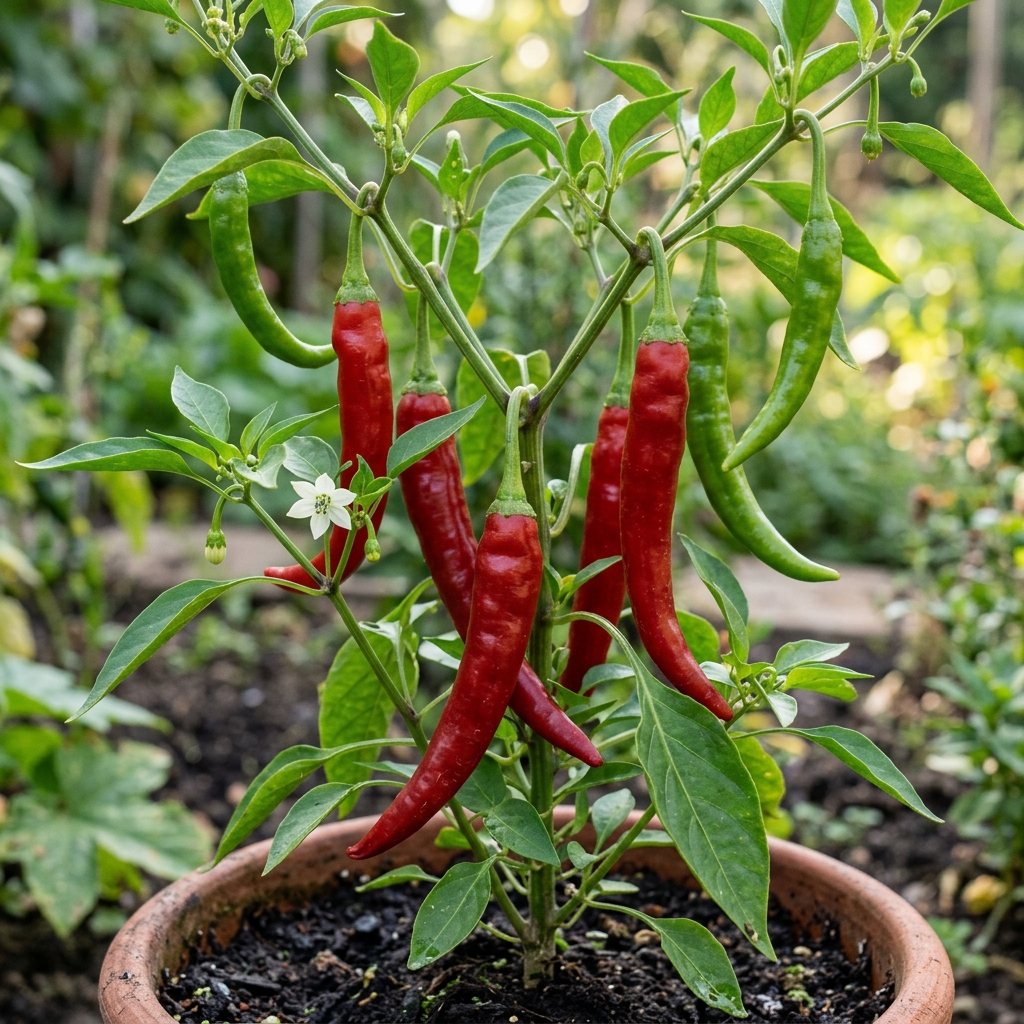
The Cacho de Cabra Pepper is a traditional landrace of Capsicum annuum cultivated in the Araucanía and Biobío regions of central and southern Chile by Mapuche indigenous farmers. Named ‘Goat’s Horn’ for its distinctive curved, conical pods that taper to a sharp point, this open-pollinated chili produces pendant fruit that mature from vibrant green to a rich deep red.
Renowned for its cultural and gastronomic significance, the pepper serves as the foundational component of merkén, a traditional Chilean seasoning crafted by wood-smoking, drying, and grinding the pods with toasted coriander seeds and sea salt. Its balance of earthy, fruity notes and medium heat makes it exceptionally suited for curing, dehydration, and artisanal spice production.
Origin and Genetics
Cacho de Cabra is an established open-pollinated landrace preserved over generations by Mapuche smallholder farming communities in Chile’s Araucanía and Biobío regions. Because the variety is maintained across varied regional microclimates and small plots rather than commercial monoculture, individual accessions display natural intra-landrace diversity in fruit curvature, length, and heat intensity. While the descriptive name translates to ‘Goat’s Horn’ in Spanish and is applied colloquially to several horn-shaped chili varieties throughout Latin America, the Chilean Mapuche chili is the recognized reference cultivar for the name.
Botanical Profile
The plant exhibits an upright, branching shrub growth habit clad in standard green foliage and produces typical white Capsicum annuum flowers. Pods develop in a pendant orientation, forming elongated, conical, horn-like shapes with a tapered tip. The pod surface ranges from smooth to slightly wrinkled, supported by thin to medium pericarp walls and containing straw- to pale-cream-colored seeds. During maturation, the pods undergo a complete transition from green to deep red.
Heat Profile
The Cacho de Cabra pepper delivers a medium heat level that registers as mild to moderately hot on the palate. Pungency can vary noticeably between individual harvests due to the genetic breadth inherent to open-pollinated landraces and fluctuating environmental conditions during the growing cycle.
Flavor and Aroma
Fresh and cured pods are characterized by an earthy, fruity, and slightly sweet flavor profile accompanied by a pungent, earthy aroma. These organoleptic properties are especially prominent when the chili is exposed to gentle heat or wood smoke, which enhances its natural sweetness and deep savory qualities.
Cultivation
Adapted to the environmental conditions of central and southern Chile, Cacho de Cabra grows best in full sun and well-drained soil within warm temperate to Mediterranean climates. The open-pollinated nature of the landrace allows growers and community seed savers to maintain stable seed lines adapted to local soils and seasonal patterns.
Culinary Applications
The foremost culinary application of Cacho de Cabra is the production of merkén (or merquén), an iconic Chilean spice blend. The ripe red pods are traditionally sun-dried, wood-smoked over open fires, and ground into coarse flakes or fine powder alongside sea salt and toasted coriander seeds. Beyond merkén, the thin-to-medium walls of the pepper make it an ideal candidate for general dehydration, powdered spice mixes, and traditional Chilean seasoning pastes.



Leave A Comment