
Cascabel Pepper
The Cascabel pepper is an open-pollinated heirloom cultivar belonging to the species Capsicum annuum, originating from central and northern Mexico. Also known regionally as chile bola in its fresh form or the “rattle chile,” it earns its primary name from the Spanish word for “little bell” or “rattle.” As the small, spherical-to-cordate pods dry, the seeds detach internally and freely rattle when shaken within the intact, brittle fruit wall.
Prized primarily as a dried spice pepper, Cascabel delivers a gentle, mellow pungency rating between 1,000 and 3,000 Scoville Heat Units. Unlike intensely fiery Mexican chiles, this variety is sought after for its complex culinary character, pairing mild warmth with distinct nutty, woody, and earthy notes that enhance complex sauces, broths, and traditional regional salsas.
Origin and Genetics
Cascabel is a traditional Mexican landrace heirloom cultivated extensively across central and northern Mexico. Categorized as a stable, open-pollinated selection of Capsicum annuum, the cultivar has been maintained over generations for its distinct round pod morphology and reliable drying characteristics.
Botanical Profile
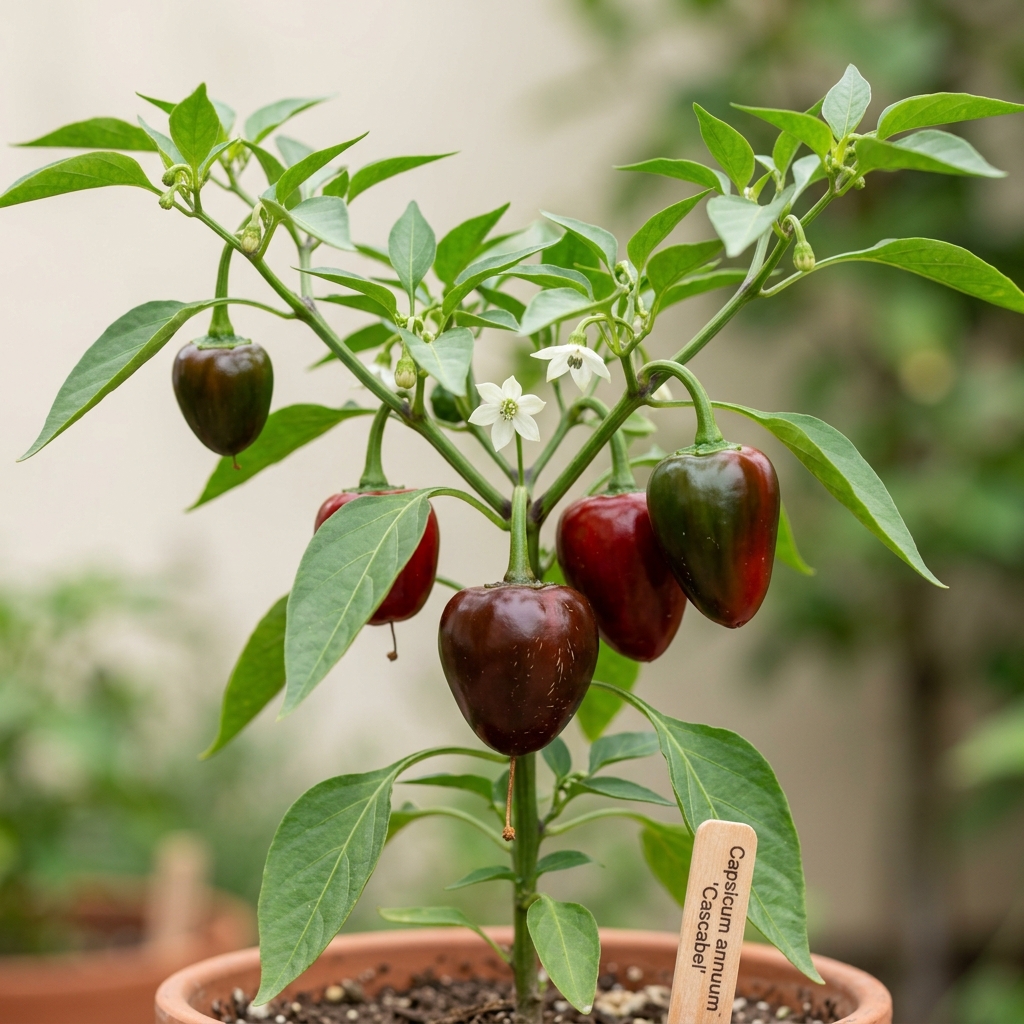
The plant grows as an erect, branching shrub bearing standard green foliage and single white flowers at each reproductive node. Fruits develop with a pendant orientation, forming spherical to cordate pods with medium-thin pericarp walls. Immature pods emerge green, ripening into a deep, glossy dark red before curing into a dark brownish-red shade with a leathery texture. Upon complete dehydration, the interior placenta releases the tan seeds, leaving them loose within the hollow cavity.
Heat Profile
Positioned on the mild-to-medium tier of the Scoville scale, Cascabel tests between 1,000 and 3,000 SHU. Its heat character is defined by a soft, nutty warmth that integrates smoothly into food without overpowering accompanying ingredients or producing a harsh initial burn.
Flavor and Aroma
Cascabel pods are renowned for an aromatic and complex flavor profile dominated by nutty, woody, and earthy undertones, complemented by a mild natural sweetness and subtle smoky accents. These qualities become concentrated during the dehydration process, making the dried pods far more aromatic than when fresh.
Cultivation
As a warm-climate Capsicum annuum, Cascabel thrives in locations with full sun exposure and fertile, well-drained soil. The open-pollinated plants perform best in extended warm growing seasons, yielding pendant clusters that dry well either on the plant or after harvest.
Culinary Applications
Cascabel is predominantly utilized in its dried state, showing exceptional suitability for drying, powdering, and flaking. The dried pods are frequently toasted lightly and blended into traditional table salsas, marinades, rich moles, and braising liquids for stews and soups, imparting a reddish-brown color, full-bodied earthy flavor, and gentle heat.



Leave A Comment