
Charleston Hot Pepper
The Charleston Hot Pepper is an open-pollinated Capsicum annuum cultivar developed in Charleston, South Carolina, by Richard L. Fery and P.D. Dukes of the USDA Agricultural Research Service. Released in 1995, this pungent cayenne-type chili delivers a sharp heat profile measuring between 70,000 and 100,000 Scoville Heat Units, positioning it well above standard commercial cayenne varieties in terms of overall pungency.
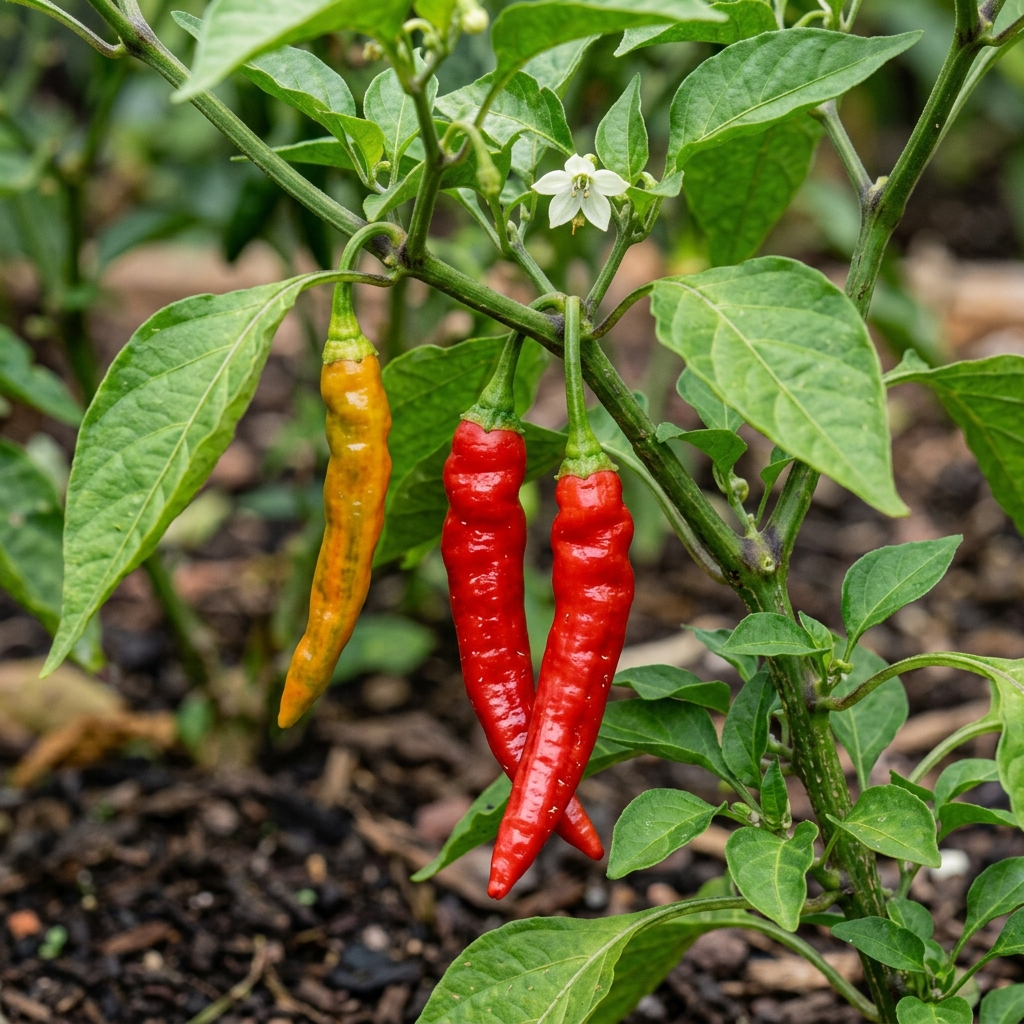
Bred from crosses involving Carolina Cayenne, the cultivar is prized for its high resistance to the southern root-knot nematode (Meloidogyne incognita). As the pendant pods mature along its upright branches, they exhibit a striking progression from green to yellow, orange, and finally bright red, making it both an effective culinary pepper for hot sauce and drying and a visually dynamic garden specimen.
Origin and Genetics
The Charleston Hot pepper was bred by Richard L. Fery and P.D. Dukes at the USDA-ARS U.S. Vegetable Laboratory in Charleston, South Carolina. Officially introduced in 1995, this stable, open-pollinated selection arose from breeding lines involving Carolina Cayenne. Breeders utilized recurrent selection to combine desirable cayenne fruit qualities with genetic resistance against destructive soil pests.
Botanical Profile
Plants display an upright growth habit with standard green foliage and solitary white flowers typical of Capsicum annuum. The fruits are elongate and slender with a distinctly wrinkled surface and thin pericarp walls. Hanging in a pendant orientation, the pods undergo a multi-stage color transition, shifting from green to yellow, through orange, and finishing in an intense bright red upon full maturity.
Heat Profile
Rated in the very hot category, Charleston Hot ranges from 70,000 to 100,000 SHU on the Scoville scale. The pungency delivers a sharp, direct burn that is primarily concentrated across the tongue and throat. This elevated heat concentration makes it substantially more potent than conventional cayenne peppers used in commercial production.
Flavor and Aroma
The flavor profile is characterized by a direct, pungent and peppery bite without heavy sweetness. Its classic cayenne profile provides clean, unmasked heat that integrates well into seasoned spice blends and vinegar-based condiments.
Cultivation
Charleston Hot thrives in growing environments with full sun and well-drained soil. Its primary agronomic advantage is robust resistance to the southern root-knot nematode (Meloidogyne incognita), allowing it to maintain strong plant health and yield in soils where susceptible pepper varieties suffer significant root damage.
Culinary Applications
Because the fruits have thin internal walls, they are exceptionally well-suited for drying, flakes, and powders. They are also widely utilized in fresh hot sauce formulations, home canning, and vinegar pickling, imparting both vibrant red color and intense heat to processed foods.



Leave A Comment