

Cherokee Green
Cherokee Green is an open-pollinated heirloom selection of Solanum lycopersicum discovered in 1997 by breeder Craig LeHoullier in Raleigh, North Carolina. Growing on vigorous indeterminate vines with regular foliage, this variety originated as a spontaneous green-fleshed color mutation discovered in a planting grown from saved Cherokee Chocolate seed.
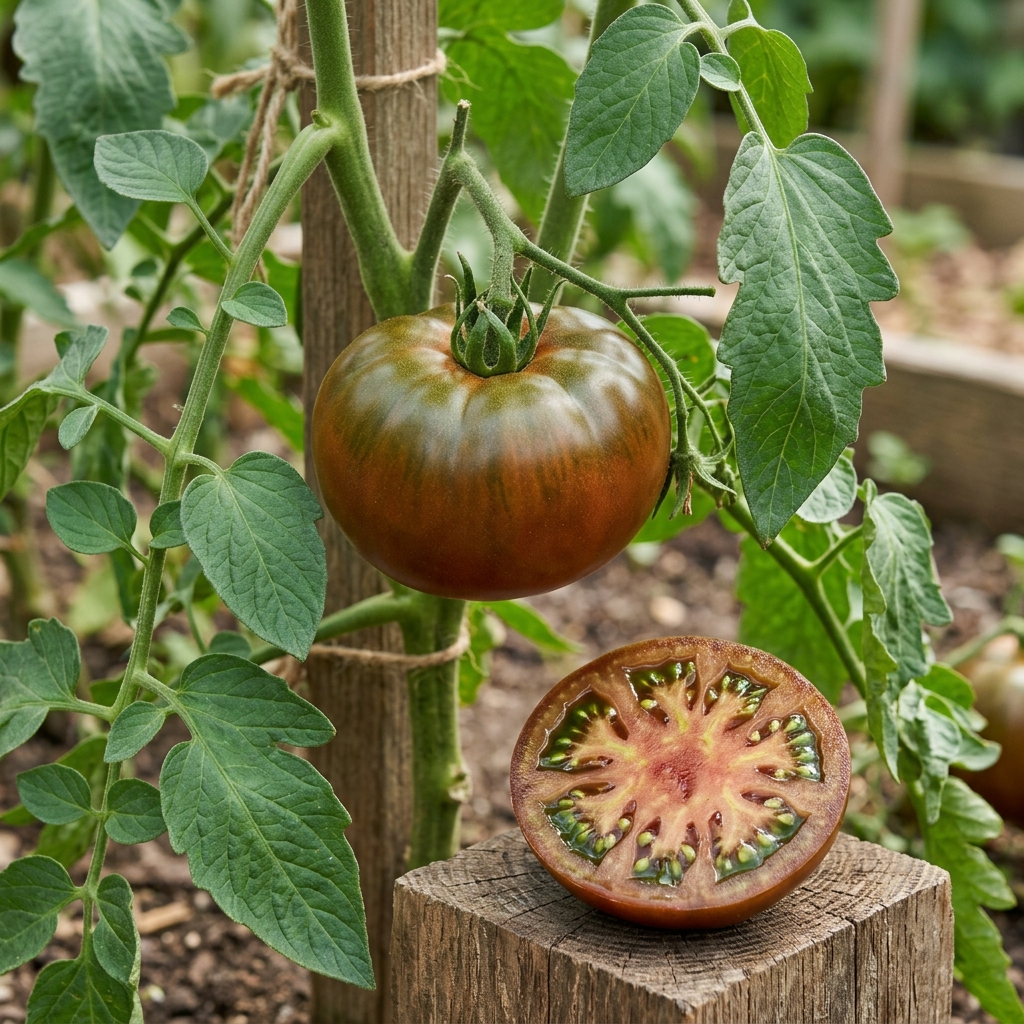
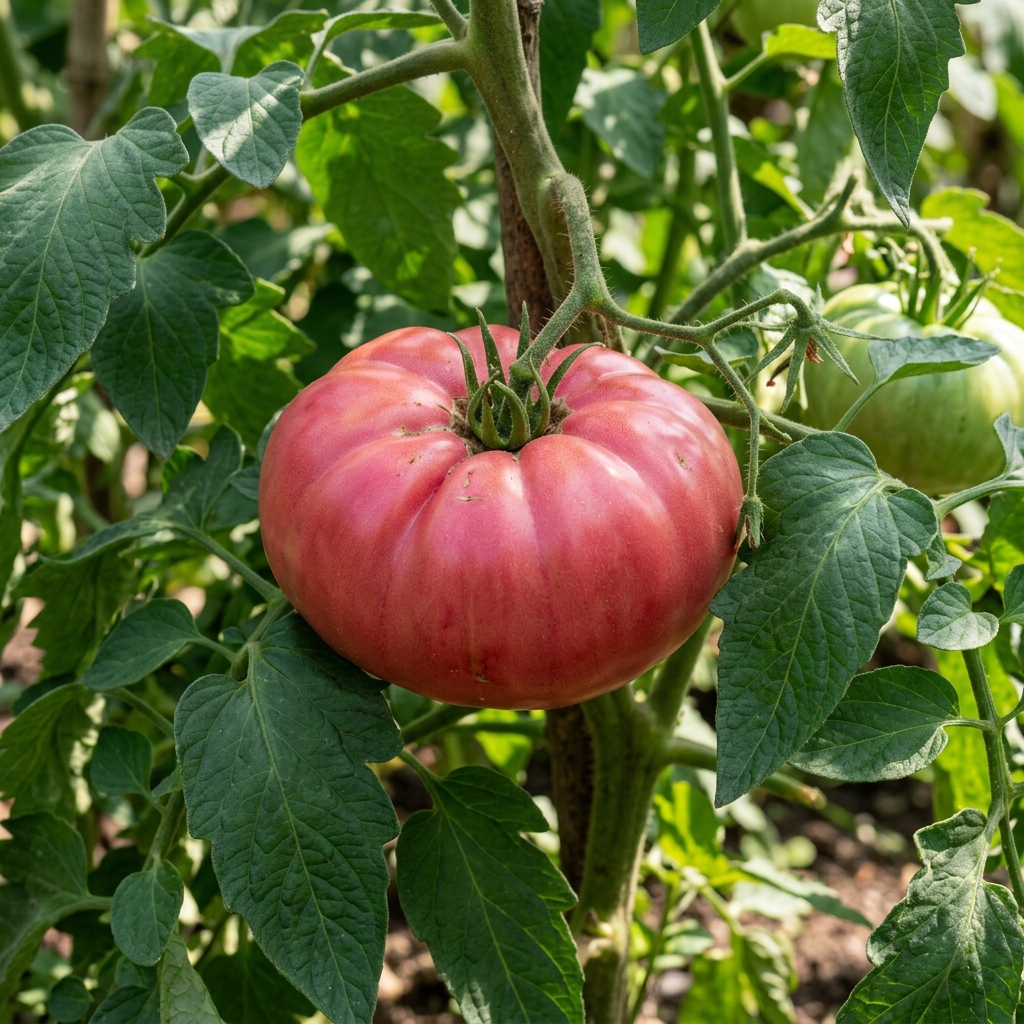
Categorized as a large oblate beefsteak fruit, Cherokee Green is recognized for remaining green inside even when fully ripe. The exterior skin signals peak harvest by shifting from pale green to a warm amber-yellow blush, yielding a well-balanced sensory profile characterized by sweet, rich, and tangy notes.
Origin and Genetics
Cherokee Green was identified in 1997 in Raleigh, North Carolina, by garden writer and tomato breeder Craig LeHoullier. The cultivar originated as a spontaneous, stable color mutation found among a planting of rogue seedlings grown from saved Cherokee Chocolate seed. As an open-pollinated heirloom selection, it faithfully reproduces its distinctive green-fleshed trait across subsequent generations.
Botanical Profile
The plant exhibits an indeterminate growth habit paired with standard regular foliage. It bears medium-to-large oblate beefsteak fruits that undergo a characteristic color transition during maturation. While immature fruits are uniformly green, fully mature fruits retain dense green internal flesh while the outer skin takes on a subtle amber-gold cast.
Flavor and Aroma
Cherokee Green is celebrated for a complex, full-bodied taste profile. Its flesh delivers a combination of sweet, rich, and tangy flavor notes, carrying over the depth commonly associated with its Cherokee lineage into a green-when-ripe fruit.
Cultivation
This open-pollinated variety thrives best under full sun conditions. Given its indeterminate growth habit, the vines continue extending and setting fruit throughout the growing season, accommodating regular seed-saving practices typical of stable heirloom selections.
Culinary Applications
Because of its large size and dense interior structure, Cherokee Green is primarily valued for fresh eating. It serves as an exceptional variety for slicing and salads, where its bright green interior and amber-tinted margins provide a distinct visual presentation alongside traditional red and yellow cultivars.



Leave A Comment