
Costeño Pepper
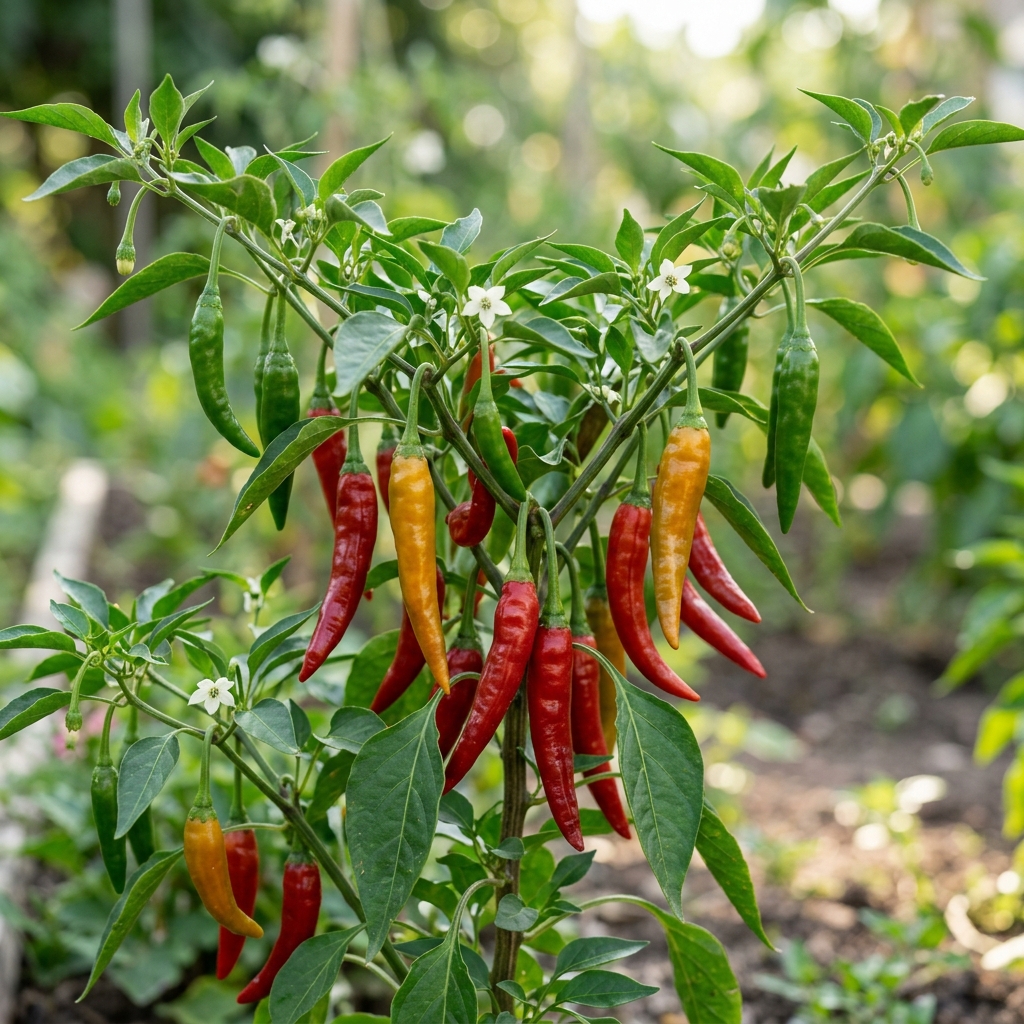
The Costeño pepper is an open-pollinated traditional landrace of Capsicum annuum native to southwestern Mexico, particularly the states of Oaxaca and Guerrero. Grown extensively across the Costa Chica region, this variety produces slender, elongated conical pods that hang pendant on bushy plants and mature from green to either vivid red or warm yellow.
Distinguished by a medium heat level and exceptionally thin pod walls, the Costeño is purpose-grown for sun-drying and fine milling. Its culinary significance centers on its signature earthy, fruity, and nutty flavor profile, making it a definitive staple in regional Mexican sauces, salsas, and Oaxacan moles.
Origin and Genetics
The Costeño chili is an open-pollinated landrace deeply tied to the agricultural traditions of Oaxaca and Guerrero in southwestern Mexico. Selected over generations in the Costa Chica region, the variety exists primarily in two regional color selections: Costeño Rojo and Costeño Amarillo. Both variants maintain the same genetic lineage within Capsicum annuum, sharing plant architecture and culinary roles while offering distinct mature fruit pigmentations.
Botanical Profile
Plants display a bushy growth habit with standard green foliage and small white flowers. The fruits develop in a pendant orientation, forming elongated conical pods that taper gradually to a point. The pod exterior ranges from smooth to slightly wrinkled, encasing tan seeds within thin fruit walls. As the fruit develops, it transitions from an immature green to fully ripe tones of red or yellow-orange depending on the specific landrace selection.
Heat Profile
Costeño peppers register a balanced medium heat profile. This moderate pungency is characteristic of traditional Mexican culinary landraces, providing enough warmth to structure complex cooked dishes without overpowering subtle ingredient pairings.
Flavor and Aroma
The flavor profile of the Costeño pepper is marked by pronounced earthy, fruity, and nutty notes. When handled fresh or prepared for cooking, the pods release an earthy and pungent aroma that intensifies upon drying and toasting.
Cultivation
Adapted to the coastal and low-altitude climates of southwestern Mexico, Costeño chili plants perform best in a warm climate under full sun conditions. Optimal vegetative growth and fruit set require well-drained soil to support healthy root development and steady fruit maturation.
Culinary Applications
The Costeño pepper is renowned as a primary ingredient in traditional Oaxacan and Guerrero moles, table salsas, and regional seasonings. Because the fruit has naturally thin walls, it exhibits high suitability for sun-drying and subsequent processing into dry seasoning powders and thick sauce bases.



Leave A Comment