
Dundicut Pepper
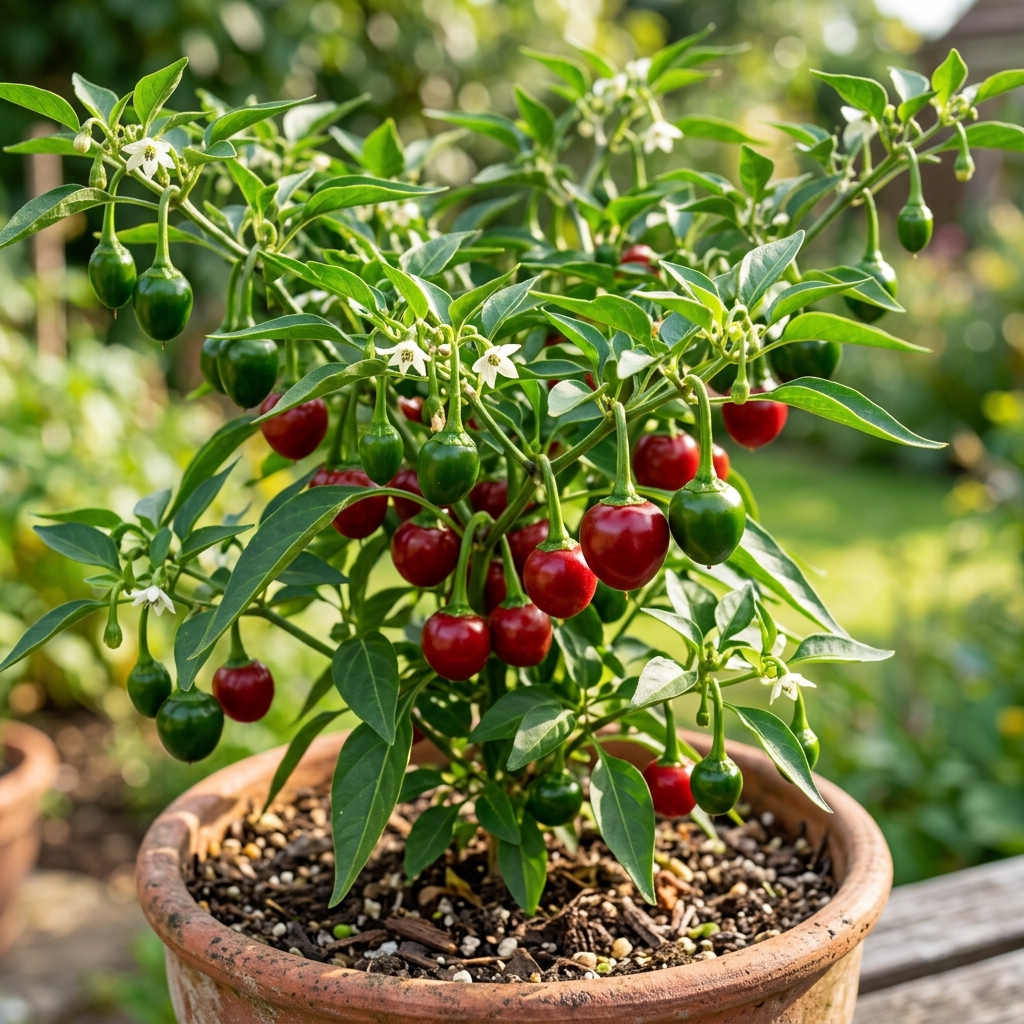
The Dundicut pepper is an open-pollinated chili originating from the Sindh region of Pakistan, commonly classified under Capsicum frutescens. Known regionally by designations including Gol Mirch and Dandi Cut, the cultivar produces small, smooth, globose to teardrop-shaped fruits that ripen from green to dark red. It delivers a direct, sharp pungency measuring between 30,000 and 65,000 Scoville Heat Units, making it a foundational hot pepper in regional agriculture.
What distinctly sets the Dundicut apart from standard elongated South Asian landraces is its compact, spherical pod shape paired with a naturally thin pericarp. This physical structure allows the fruit to undergo rapid sun-drying without spoiling, cementing its status as a major commercial drying pepper in Pakistan. Once dried or crushed, its earthy and pungent flavor provides targeted heat for whole-pod tempering and ground spice mixtures.
Origin and Genetics
The Dundicut pepper originated in the Sindh region of Pakistan, where it developed as a stable, open-pollinated landrace. It is recognized under several regional names, including Dandi Cut and Gol Mirch, the latter reflecting its distinctive round morphology. Botanically, the variety is predominantly classified as Capsicum frutescens, though select agricultural literature and regional accessions categorize it within Capsicum annuum.
Botanical Profile
The plant exhibits a bushy growth habit with standard green foliage and produces small white flowers. Its pendant fruits are small and spherical to teardrop-shaped with a smooth outer surface. As the crop ripens, pods transition from green to vibrant red and deep dark red. Internally, the pepper features tan seeds and a noticeably thin fruit wall, which promotes fast, uniform desiccation.
Heat Profile
Yielding a medium-hot intensity, the Dundicut pepper ranges from 30,000 to 65,000 SHU. Its heat character is defined as sharp and immediate, delivering the direct pungency characteristic of South Asian drying chilies without prolonged onset delays.
Flavor and Aroma
The Dundicut offers a distinctly earthy and pungent flavor profile accompanied by a sharp, peppery aroma. Because it lacks excessive sweetness or heavy fruitiness, its flavor integrates cleanly into savory and spiced preparations where unadulterated heat and roasted undertones are desired.
Cultivation
Adapted to the arid and semi-arid conditions of Sindh, the Dundicut pepper requires full sun, warm temperatures, and well-drained soil. The open-pollinated variety exhibits strong environmental resilience, showing notable heat tolerance and drought tolerance during the growing cycle.
Culinary Applications
Dundicut peppers are a staple in Pakistani and South Asian cooking, frequently utilized both fresh and dehydrated. Due to their thin pericarps, they are primarily subjected to sun-drying and powdering for commercial spice markets. In traditional cooking, whole dried pods are bloomed in hot oil or ghee during tadka (tempering), infused into curries, processed into pickling recipes, or crushed into regional spice blends.



Leave A Comment