

Eva Purple Ball
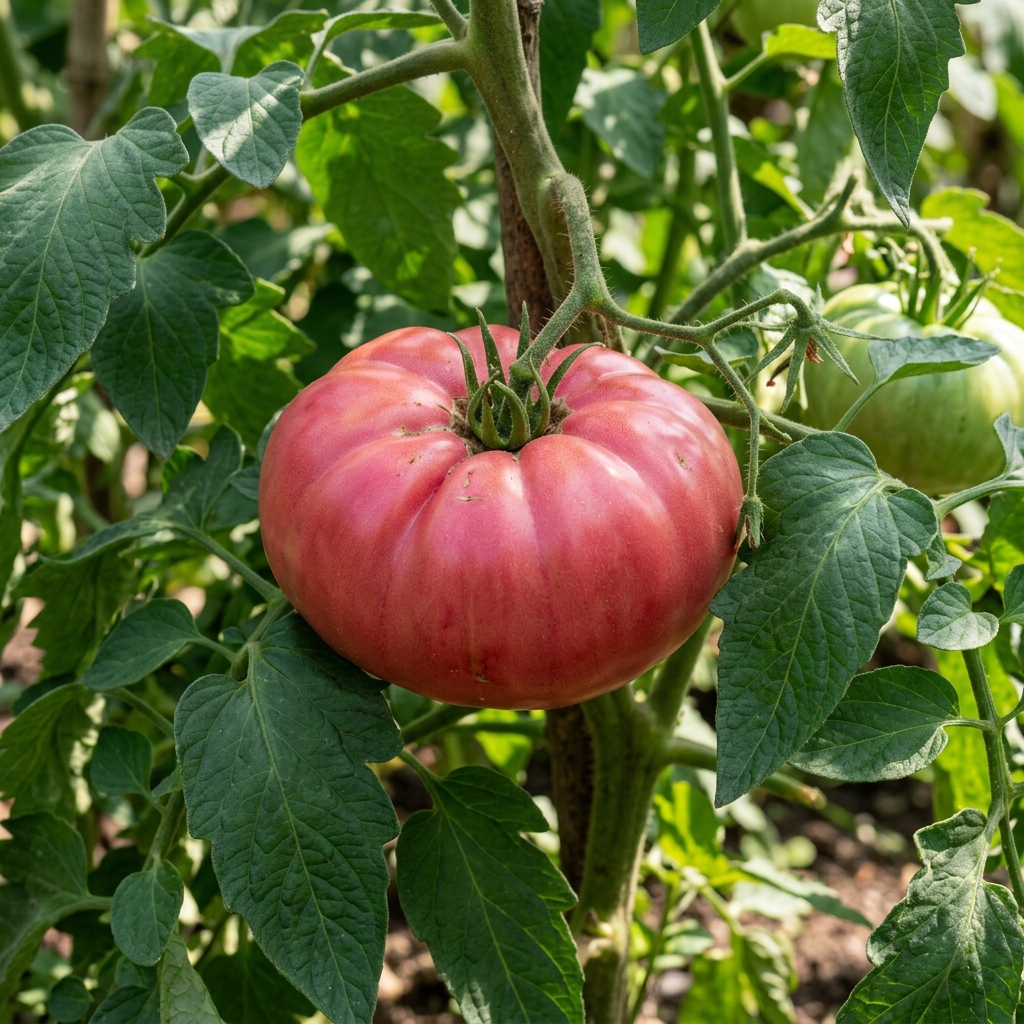
Eva Purple Ball is a late 19th-century German heirloom tomato (Solanum lycopersicum) originating from the Black Forest region. This open-pollinated, indeterminate variety produces uniform, medium-sized globe fruits characterized by smooth, blemish-free skin that ripens from green to a distinct pink to purple-pink hue.
Distinguished by its exceptional cracking resistance and high productivity, this cultivar performs reliably in challenging hot and humid field conditions where other heirloom slicers often struggle. The fruits feature juicy pink flesh with a sweet, balanced flavor, making them well suited for fresh slicing, salads, and canning.
Origin and Genetics
Eva Purple Ball (also known as Eva’s Purple Ball or Eva Purpur Ball) is a stable, open-pollinated heirloom cultivar originating in the late 1800s in the Black Forest region of Germany. The line was maintained through family stewardship and later shared with tomato authority Carolyn Male by Joe Bratka, whose grandfather originally brought the seeds from Germany.
Botanical Profile
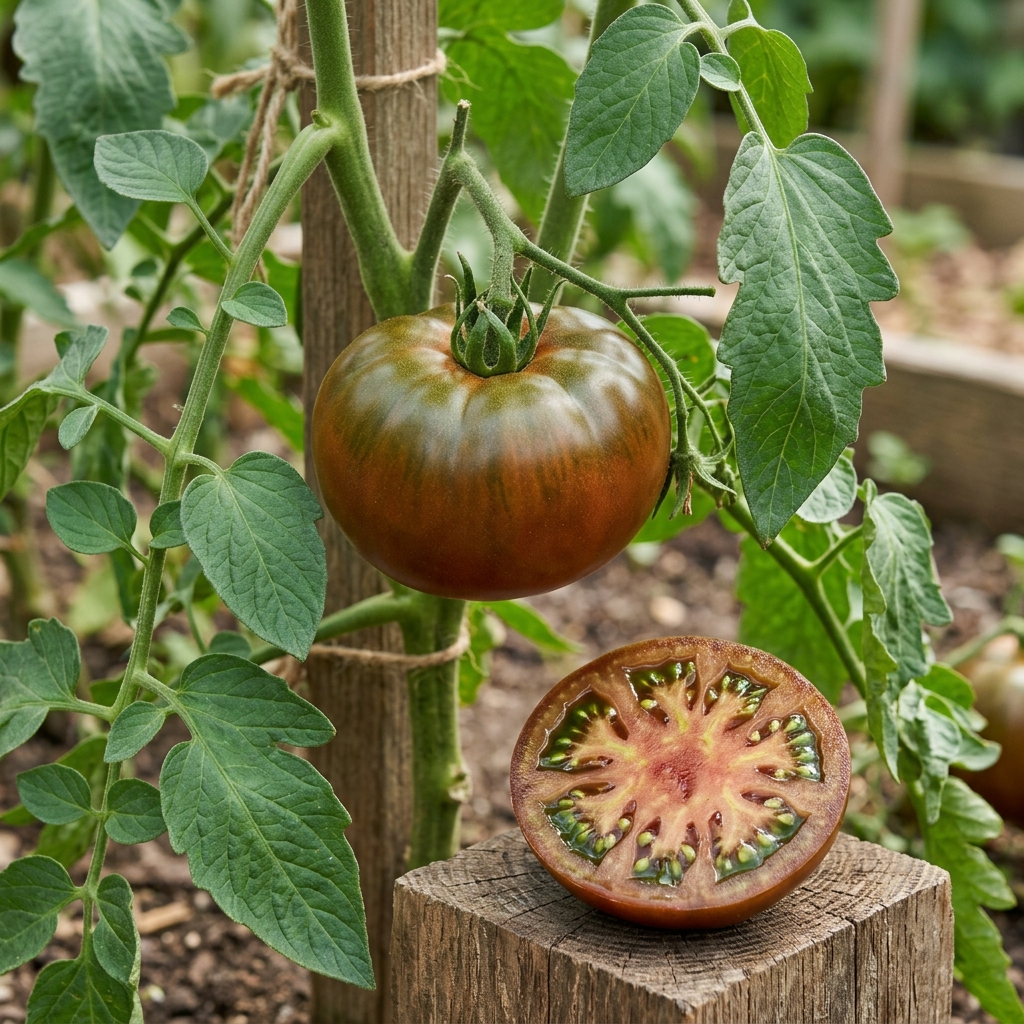
The plant features an indeterminate growth habit with standard regular foliage and produces yellow blossoms. Its medium-sized, globe-shaped fruits develop with a completely smooth surface free of shoulder ribbing. As the fruit matures from green to its signature pink to purple-pink color, it develops juicy pink interior flesh that maintains structural integrity on the vine.
Growth and Performance
Cultivated in full sun field settings, Eva Purple Ball is recognized for delivering a consistently high yield. It exhibits outstanding performance in high heat and humidity, setting it apart from many traditional heirlooms. A key agronomic strength is its high resistance to cracking, ensuring clean, uniform fruit development throughout the season.
Culinary Applications
With its sweet and balanced flavor and juicy consistency, Eva Purple Ball is primarily utilized as a fresh slicing tomato and salad ingredient. Its uniform globe structure and durable skin also make it suitable for canning, while it is not adapted for use as a paste or stuffing tomato.



Leave A Comment