

Fushimi Pepper
The Fushimi Pepper (Capsicum annuum), also known as Fushimi Togarashi, is an open-pollinated heirloom sweet chili originating from the Fushimi district in Kyoto Prefecture, Japan. Cultivated since the Edo period, it belongs to the revered group of designated traditional Kyoto vegetables known as Kyo-yasai. The plant produces elongated, thin-walled, wrinkly pods that hang pendently from an upright bushy framework, transitioning from glossy green to bright red as they mature.
Unlike many other East Asian culinary peppers, the Fushimi pepper is completely non-pungent, registering 0 Scoville Heat Units with no capsaicin heat under standard conditions. It is frequently distinguished from the related Shishito pepper by its longer, more slender profile and dependable sweetness. With its tender skin, crisp texture, and mild, grassy flavor, it is traditionally harvested green for tempura, grilling, and stir-frying.
Origin and Genetics
The Fushimi pepper is a historic landrace developed through continuous selection in the Fushimi district of Kyoto, Japan. Documented since the Edo period, it holds official designation as a Kyo-yasai, a classification reserved for recognized traditional vegetables of Kyoto Prefecture. The cultivar remains a stable, open-pollinated heirloom maintained through generations of local cultivation.
Botanical Profile
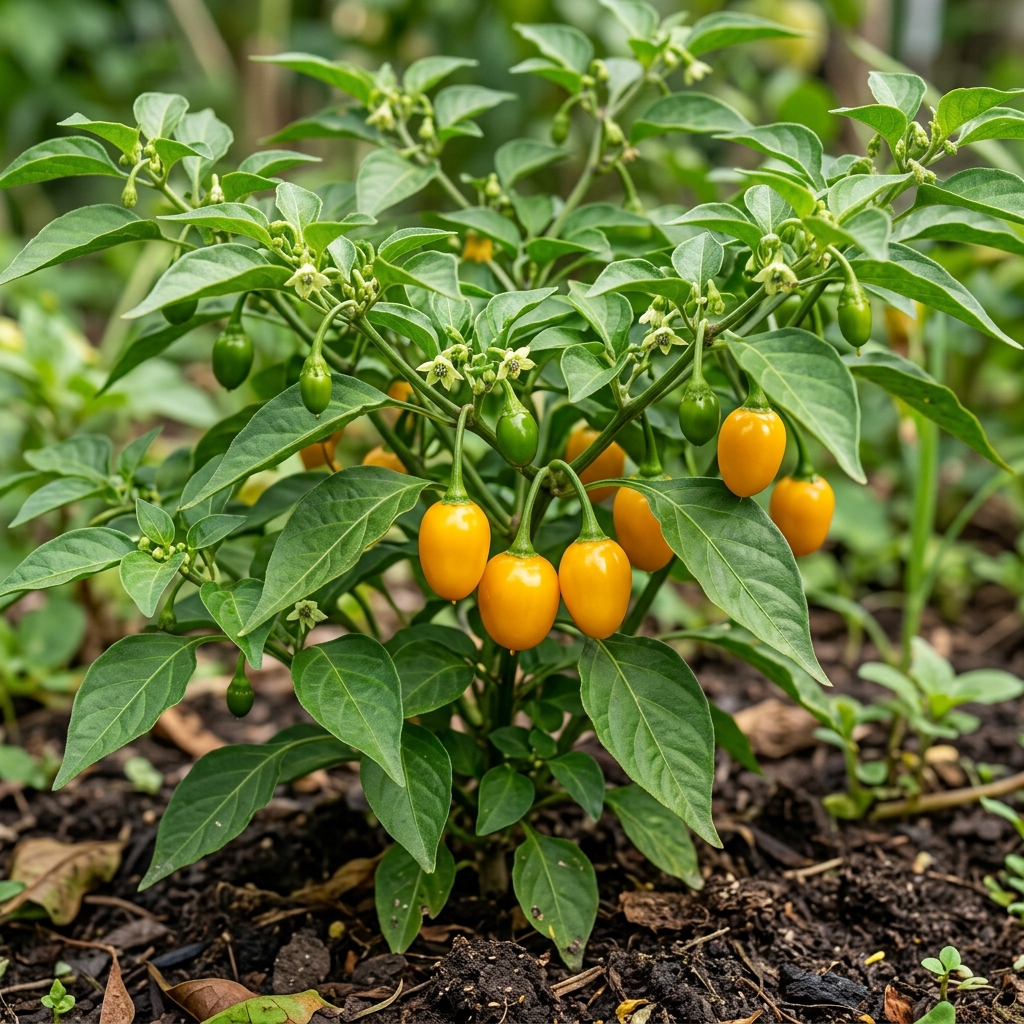
Belonging to Capsicum annuum, Fushimi plants exhibit an upright, bushy growth habit adorned with green foliage and simple white flowers. The pods are notably elongated, slender, and often twisted with a distinctly wrinkled surface and thin pericarp walls. The fruits develop in a pendent orientation, emerging glossy green before ripening fully to vibrant red.
Heat Profile
Fushimi is a completely sweet chili that rates at 0 Scoville Heat Units (SHU). Under standard growing conditions, the cultivar lacks capsaicin entirely. While visually comparable to Shishito peppers, Fushimi is differentiated by its consistent lack of spontaneous pungency, providing reliable zero-heat flavor in culinary use.
Flavor and Aroma
Fresh Fushimi pods offer a sweet and grassy flavor characterized by a light, vegetal profile and a crisp, crunchy bite. The thin walls yield easily when eaten raw or cooked, accompanied by a clean, fresh aroma lacking any acrid sharpness.
Cultivation
Cultivating Fushimi requires full sun exposure and loose, well-drained soil. The open-pollinated plants produce standard pendent fruit clusters along an upright branch structure.
Culinary Applications
In traditional Japanese cuisine, Fushimi peppers are predominantly picked while immature and green. Their thin skin and sweet flesh make them ideal for quick-cooking methods such as tempura, grilling, and stir-frying, as well as braising into tsukudani. They can also be eaten raw as a crunchy snack or preserved through pickling and freezing.



Leave A Comment