
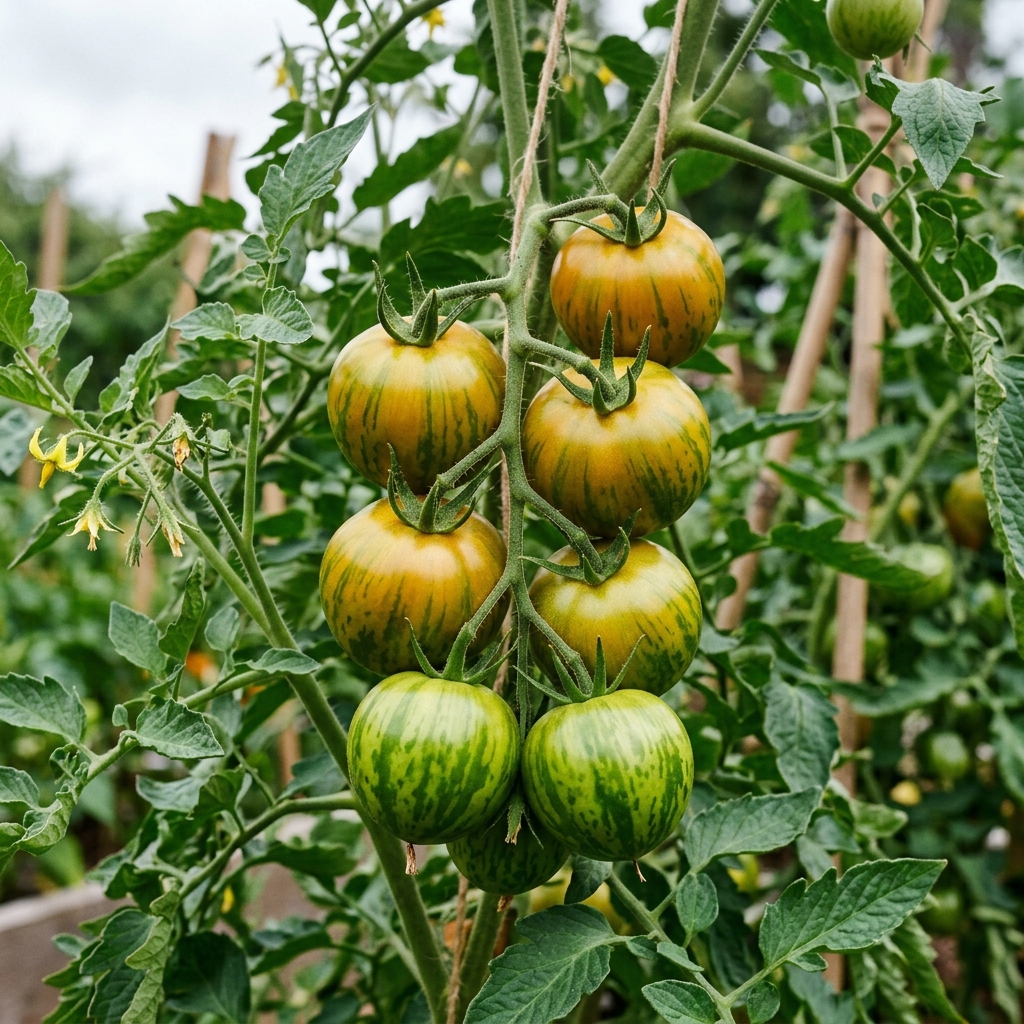
Green Zebra
Green Zebra is an open-pollinated, indeterminate cultivar of Solanum lycopersicum developed by breeder Tom Wagner in Everett, Washington. Introduced in 1983, this modern heirloom climbing vine bears regular green foliage and produces distinctive small-to-medium saladette tomatoes. The smooth, globose fruits are defined by an emerald-green interior and vibrant striped skin, establishing the cultivar as one of the most recognizable green-fleshed tomatoes in contemporary horticulture.
Unlike standard red varieties, Green Zebra signals ripeness through a subtle shift as its pale green background warms to an amber-gold base beneath dark green stripes. The juicy green flesh provides a brisk, tangy and zesty flavor that balances sharp acidity with sweet undertones. Its reliable seed stability and dramatic visual contrast make it a prized selection for fresh culinary preparations and ornamental garden displays.
Origin and Genetics
Green Zebra was bred by Tom Wagner in Everett, Washington, and released in 1983. Wagner developed the variety from crosses involving four open-pollinated heirloom lines, including green-fruited selections. Categorized as a modern heirloom, the cultivar is genetically stable and open-pollinated, allowing growers to save true-to-type seed when blossoms are isolated from cross-pollination.
Botanical Profile
The plant exhibits an indeterminate climbing habit characterized by standard regular foliage and yellow flowers. Its smooth, globose fruits fall into the saladette class and lack ribbing. As the fruit develops, immature light green skin with dark green stripes ripens into an amber-gold exterior accented by vibrant green striping and green shoulders. Internally, the tomato features emerald green, juicy flesh.
Flavor and Aroma
The flavor profile of Green Zebra is distinctly tangy and tart. It is known for a brisk, zesty acidity that is rounded out by sweet notes, offering a sharp taste profile that contrasts with sweeter, low-acid red cultivars.
Cultivation
Green Zebra is well-suited for field production and requires full sun and well-drained soil. Because of its climbing indeterminate growth, plants require sturdy trellising or support throughout the season. Identifying ripeness requires close observation, as the green fruit does not turn red; harvest readiness is indicated when the background color transitions from pale green to warm amber-gold and the fruit yields slightly to gentle touch.
Culinary Applications
Due to its vibrant coloration and firm, juicy texture, Green Zebra is primarily utilized in fresh culinary applications. It is well-suited for slicing, green salsas, tossed salads, and decorative garnishes. While effective for fresh preparation, it is not used as a paste tomato.



Leave A Comment