
Marmande
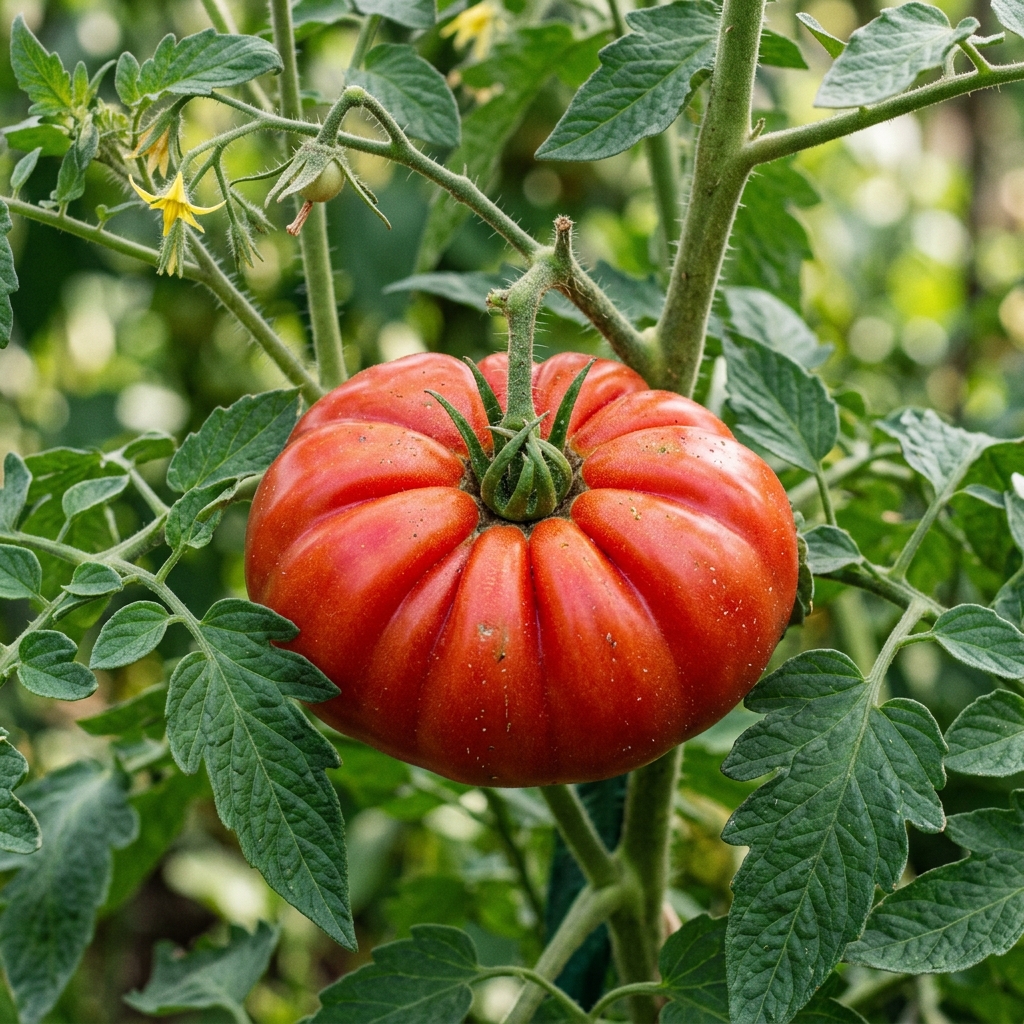
The Marmande tomato (Solanum lycopersicum) is an open-pollinated heirloom beefsteak cultivar originating from the commune of Marmande in Nouvelle-Aquitaine, France. Bred by the historic seed firm Vilmorin-Andrieux, this traditional selection develops on a semi-determinate vine with regular green foliage and standard yellow flowers. It produces large, oblate red fruits defined by characteristic shoulder ribbing and dense, meaty internal flesh.
Unlike many large-fruited beefsteaks that require long, hot summers, Marmande is notable for its early maturity and ability to set fruit in cooler temperate spring conditions. The variety yields moderately lobed fruit with a balanced sweet and tangy profile and rich aromatic qualities. Because it is stable and open-pollinated, it remains an enduring standard for home gardeners and market growers seeking reliable early-season slicing tomatoes.
Origin and Genetics
Marmande originated in the Lot-et-Garonne department of southwestern France, introduced by the French seed house Vilmorin-Andrieux. It is a stable, open-pollinated heirloom maintained in national and international germplasm repositories. While modern commercial derivatives and hybrids exist under names such as Marmande VR or Super Marmande, the original Marmande remains a distinct, true-to-type semi-determinate beefsteak variety suitable for standard seed-saving isolation practices.
Botanical Profile
The plant produces regular leaf green foliage with typical yellow solanaceous blossoms. Morphologically, the fruits are classified as large oblate beefsteaks featuring moderate ribbing that forms distinct lobes radiating outward from the stem attachment. As the fruit ripens, it transitions from solid green to a uniform deep red across both the skin and shoulders. Internally, the flesh is thick, red, and distinctly meaty.
Growth and Performance
Marmande exhibits a semi-determinate growth habit, allowing it to produce a concentrated set of fruit on manageable vines. A standout performance characteristic is its moderate cold tolerance, enabling earlier fruit set and ripening than most comparable large-fruited beefsteaks. Overall yield is moderate, delivering dependable harvests across varied temperate growing environments.
Flavor and Aroma
The sensory profile of Marmande is defined by a balanced acidity and sweetness. The flesh provides an aromatic, full-bodied tomato flavor described as sweet and tangy, complemented by its dense, solid texture that holds together well when sliced.
Cultivation
Marmande is adapted to both open-field and greenhouse cultivation. It performs best when planted in full sun within well-drained soil. Because the variety is open-pollinated, growers can save seed from true-to-type plantings using standard isolation distances to prevent cross-pollination with other tomato cultivars.
Culinary Applications
Due to its meaty texture and pronounced flavor, Marmande is well-suited for fresh slicing, table salads, and culinary stuffing. It also cooks down effectively for fresh sauces and warm culinary preparations, though it is not classified as a dedicated paste tomato.



Leave A Comment