
Puya Pepper
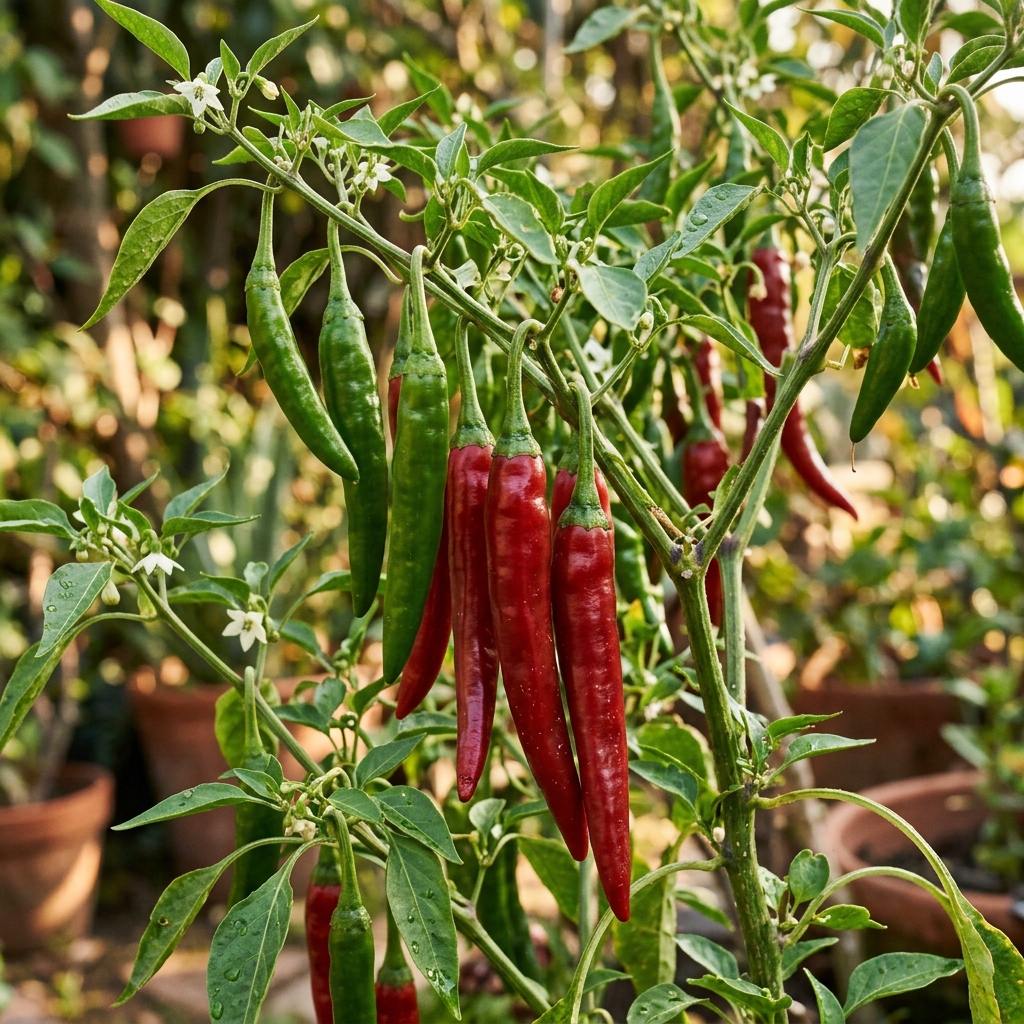
The Puya pepper (also known as Chile Puya or Chile Pulla) is an open-pollinated chili cultivar belonging to the species Capsicum annuum. Native to Central Mexico, this variety produces elongated, conical pods that transition from glossy green to a deep crimson red upon ripening. Delivering a moderate pungency between 5,000 and 8,000 Scoville Heat Units, it serves as a staple ingredient in regional Mexican cuisine.
Often compared to the closely related Guajillo, the Puya pepper is distinguished by its smaller, narrower frame and noticeably sharper heat. Its thin pericarp makes the fruit exceptionally suited for whole-pod drying and processing into fine powders. Beyond heat, the variety is celebrated for a complex flavor profile that blends bright berry undertones and tangy notes with an earthy, lightly smoky aromatic depth.
Origin and Genetics
Originating in Central Mexico, the Puya pepper is a traditional landrace variety within the Capsicum annuum species. It is an open-pollinated and genetically stable cultivar maintained across generations of domestic cultivation. While sharing genetic and morphological similarities with larger Mexican drying chiles, the Puya maintains distinct phenotypic markers that set it apart in both agricultural production and culinary use.
Botanical Profile
The plant exhibits an erect, branching shrub habit with standard green foliage and solitary white flowers typical of Capsicum annuum. Its fruits grow in a pendant orientation, developing as smooth, elongated, tapering pods. As the fruit matures, it transitions in color from green to a rich, deep red. The pods possess thin cell walls and contain cream-colored seeds. When dried, the skin takes on a leathery, wrinkled texture and a deep crimson-to-burgundy hue.
Heat Profile
Puya peppers fall squarely into the medium heat classification, consistently registering between 5,000 and 8,000 SHU on the Scoville scale. The heat character is described as sharp and moderate. In Mexican culinary tradition, the Puya is frequently utilized as a bridge chile, offering more pronounced pungency than the milder Guajillo while remaining milder than high-heat varieties like Chile de Árbol.
Flavor and Aroma
The flavor profile of the Puya pepper is defined by a balance of fruity and light berry undertones accompanied by tangy and earthy nuances. When dried, its aroma intensifies, exhibiting notes of fruit, earth, and subtle smokiness. This distinct fruit-forward complexity allows it to add depth and dimension to complex dishes without overwhelming companion ingredients.
Cultivation
Puya pepper plants thrive in warm climates with access to full sun and well-drained soil. Because the cultivar is open-pollinated, growers can save the cream-colored seeds from mature, fully ripe deep-red pods to maintain true-to-type plantings across successive seasons.
Culinary Applications
Due to its thin pericarp, the Puya pepper has exceptionally high drying suitability and is predominantly prepared as a dried whole chile, flake, or ground spice. In regional Mexican cooking, whole dried pods are typically toasted, rehydrated, and pureed into smooth bases for moles, enchilada sauces, marinades, stews, and salsas. It is also ground into spice blends for seasoning meats and broths. Because of its narrow shape and thin walls, it is not used for stuffing.



Leave A Comment