
Rocotillo Pepper
The Rocotillo pepper is a mild, open-pollinated landrace belonging to the Capsicum chinense species, historically cultivated in Puerto Rico and parts of the Caribbean. Unlike its notoriously fiery habanero relatives, the Rocotillo delivers a very gentle warmth registering between 1,500 and 2,500 Scoville Heat Units, making it a rare example of a low-pungency cultivar within a predominantly hot species.
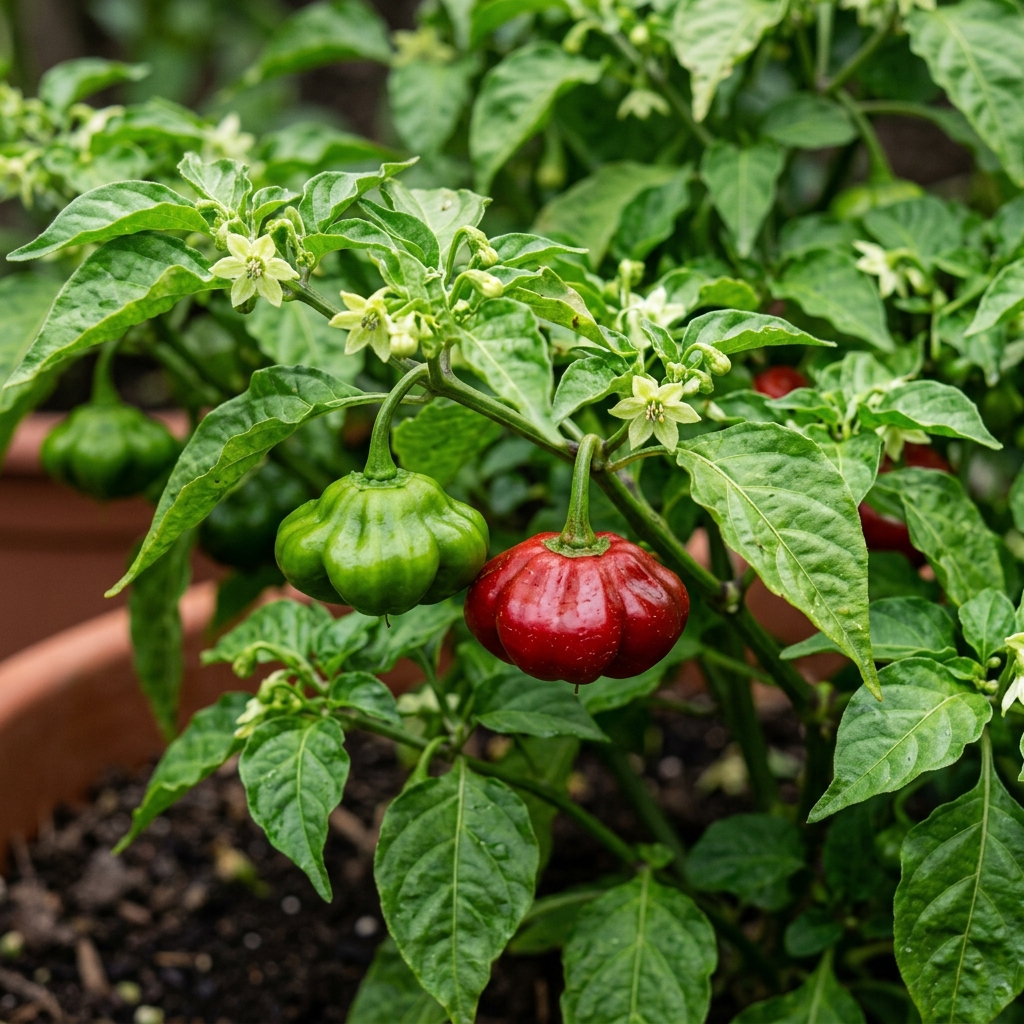
Visually recognized by its flattened, squash-like pattypan shape with ribbed and undulating lobes, the fruit ripens from green to a deep red. Rocotillo is prized for retaining the characteristic floral and tropical chinense aroma alongside sweet, fruity flavors, allowing growers and cooks to capture quintessential Caribbean pepper essence without high capsaicin heat.
Origin and Genetics
The Rocotillo is a stable, open-pollinated landrace pepper indigenous to Puerto Rico and broader Caribbean agricultural traditions. As a member of the nightshade family (Solanaceae), it belongs botanically to Capsicum chinense.
Despite its phonetic similarity to the South American Rocoto (Capsicum pubescens), the authentic Puerto Rican Rocotillo shares no genetic lineage with that black-seeded highland species. In the commercial seed trade, accessions labeled Rocotillo have occasionally been misidentified or mixed with Capsicum baccatum strains, though genuine landrace accessions are verified as Capsicum chinense.
Botanical Profile
Rocotillo plants exhibit a bushy growth habit characterized by classic C. chinense botanical markers. Foliage consists of green, subtly crinkled leaves, and the plant sets multiple white to greenish-white flowers per node. The calyx features the characteristic annular constriction typical of the species.
The fruits hang in a pendant orientation and display a distinctive flattened, pattypan or squash-like habanero morphology. Pod surfaces are prominently ribbed, slightly lobed, and undulating. Throughout maturation, the pods undergo a standard color transition, starting deep green and ripening fully into rich, deep red.
Heat Profile
Rocotillo occupies the mild to low pungency bracket of the Scoville scale, typically measuring between 1,500 and 2,500 SHU. This stands in sharp contrast to the blistering heat common among most Capsicum chinense cultivars.
The heat delivery is non-stinging and gentle, manifesting as a mild, lingering warmth focused primarily across the tongue and the back of the palate. This restrained capsaicin level makes it approachable for fresh preparation and broad culinary use.
Flavor and Aroma
The flavor profile of the Rocotillo is defined by pronounced sweet and tropical fruitiness. When cut, it releases a potent floral and fruity aroma that mirrors traditional habanero peppers, delivering full aromatic complexity without aggressive spiciness.
Cultivation
Rocotillo thrives when cultivated in warm climates with full sun exposure and well-draining soil. As an open-pollinated landrace, it reliably produces true-to-type seed when isolated from cross-pollination with other Capsicum chinense varieties.
Culinary Applications
In Puerto Rican and Caribbean cooking, the Rocotillo is a traditional seasoning component often incorporated into sofrito bases, fresh salsas, and mild hot sauces where fruitiness is desired without overwhelming heat. The pods are equally suitable for fresh slicing and raw consumption. For long-term preservation, the harvested peppers can be pickled, frozen, or fermented.



Leave A Comment