
Roma
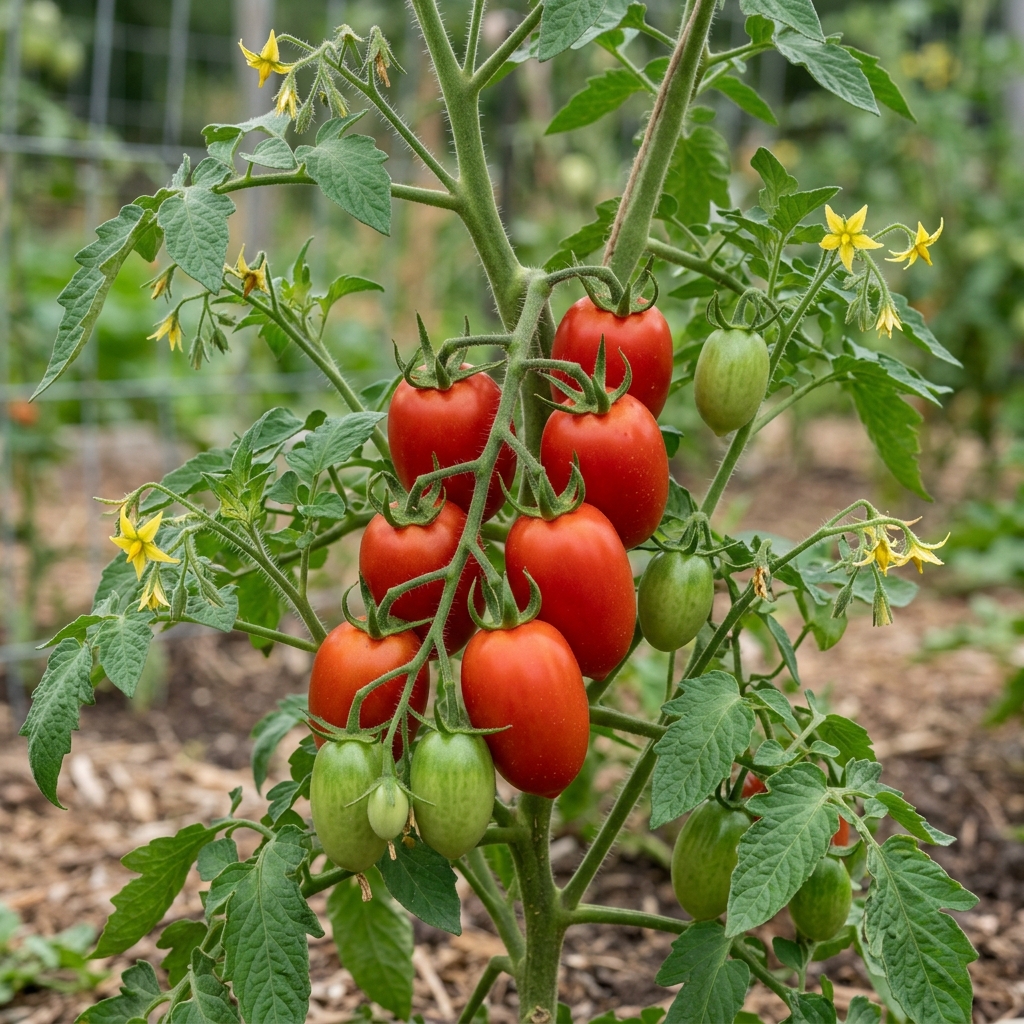
The Roma tomato is a classic open-pollinated determinate cultivar developed by William S. Porte at the USDA Agricultural Research Service in Beltsville, Maryland, and officially released in 1955. Belonging to the species Solanum lycopersicum, the plant produces medium-sized, plum-shaped red paste tomatoes known for their smooth exterior, uniform shoulders, and dense internal structure.
Bred from crosses involving San Marzano, Pan American, and Red Top, Roma is distinguished by its low moisture content, thick pericarp walls, and two-loculed interior containing few seeds. Its heavy, concentrated fruit set and strong cracking resistance have made it an enduring agricultural benchmark for processing, drying, and canning.
Origin and Genetics
The Roma cultivar was developed by William S. Porte at the USDA Agricultural Research Service facilities in Beltsville, Maryland, and introduced to growers in 1955. Its pedigree represents a deliberate breeding effort combining the Italian paste characteristics of San Marzano, the Fusarium resistance of Pan American, and the firm processing traits of Red Top. Roma is an open-pollinated, genetically stable variety. It is distinct from the later selection designated ‘Roma VF’, which incorporates additional resistance to Verticillium wilt.
Botanical Profile
Plants exhibit a determinate growth habit with standard regular-leaf foliage and small yellow blossoms. The fruits develop into a characteristic plum shape with smooth, unribbed skin and uniform shoulders, transitioning from green to a deep red upon maturity. Internally, the fruit possesses a thick skin, dense red flesh, and exactly two locules, resulting in minimal seed counts and exceptionally low free liquid compared to standard slicing tomatoes.
Growth and Performance
As a determinate selection, Roma concentrates its flowering and fruit load within a defined window, producing a high yield of uniform fruit. The firm structural integrity of the fruit walls provides high cracking resistance on the vine, protecting the harvest against splitting under fluctuating conditions.
Disease Resistance
Roma possesses confirmed genetic resistance to Fusarium wilt (Fusarium oxysporum f. sp. lycopersici race 1). This protective trait was introduced into the lineage through its Pan American parentage, offering baseline protection against a common soil-borne vascular pathogen.
Flavor and Aroma
The flavor profile of Roma is characterized by a mild and acidic balance. Because the variety produces dense, low-moisture flesh rather than abundant gelatinous seed cavities, the fruit delivers a clean, concentrated tomato base without excessive watery dilution.
Cultivation
Roma performs reliably in full sun environments and is well suited for standard field planting as well as container cultivation due to its self-terminating, compact growth habit. Its concentrated maturity cycle makes it practical for synchronized seasonal harvesting.
Culinary Applications
Owing to its meaty structure and low moisture, Roma is an industry standard for paste, sauce, and canning preparations. The thick walls hold their structure well during processing and dehydration. Because the fruit is dry and firm, it is poorly suited for fresh slicing or salads, functioning primarily as a dedicated processing and culinary cooking tomato.



Leave A Comment