
Sandia Pepper
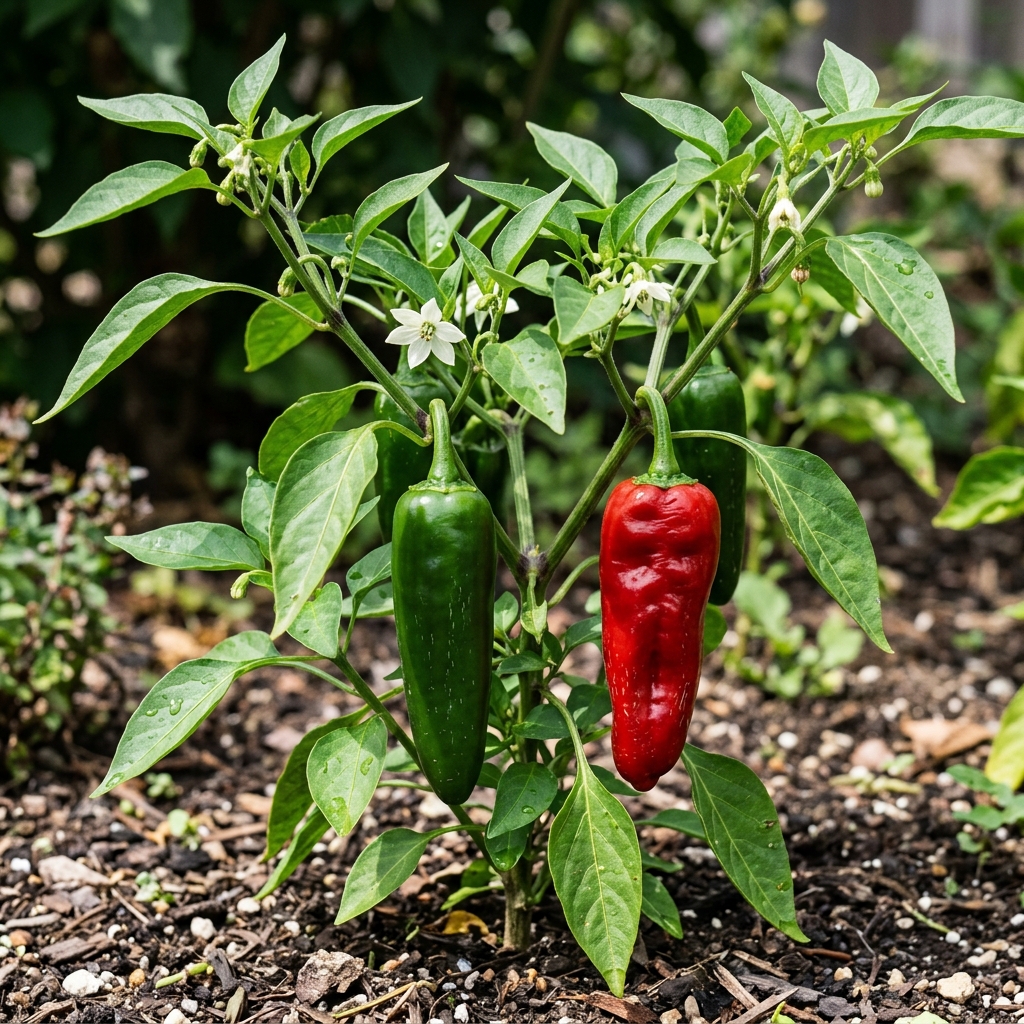
The Sandia pepper is a classic New Mexico pod-type cultivar of Capsicum annuum bred by Roy E. Harper and released by the New Mexico State University Agricultural Experiment Station in 1956. Originating in Las Cruces, New Mexico, this open-pollinated chile produces elongated, flattened-conical pods that transition from dark green to deep red. It delivers a moderate heat level, typically ranging between 1,500 and 3,000 Scoville Heat Units.
Originally introduced under the designation Sandia A, the cultivar was selected to provide a more pungent alternative to milder New Mexico types such as NuMex 6-4. Renowned as a versatile dual-use chile, Sandia is prized both for harvesting green to flame-roast and stuff, as well as allowing pods to fully ripen into vibrant red fruit for sun-drying, red chile sauces, and powders.
Origin and Genetics
The Sandia pepper was developed in Las Cruces, New Mexico, by breeder Roy E. Harper at the New Mexico State University Agricultural Experiment Station. Released in 1956, its lineage stems from an intentional cross involving the foundational cultivar NuMex No. 9 and a native New Mexican landrace chile. Initially designated as Sandia A, the open-pollinated cultivar established a genetically stable standard for medium-heat New Mexico pod-type chiles.
Botanical Profile
Sandia grows as an upright, branching herbaceous shrub with green foliage and solitary white flowers typical of Capsicum annuum. The plant bears pendant, elongated pods featuring a flattened-conical structure with an apex that ranges from pointed to slightly blunt. The pod surface is smooth to slightly undulating with medium wall thickness, transitioning from deep green during the immature phase to a rich, uniform red at full maturity.
Heat Profile
Sandia falls into the Medium heat category, registering between 1,500 and 3,000 Scoville Heat Units. This pungency level sits noticeably higher than mild New Mexico selections like NuMex 6-4, providing a pronounced, traditional Southwestern warmth without overpowering the natural fruit flavors.
Flavor Profile
The flavor of the Sandia chile is predominantly earthy and pungent when harvested green. As the pods mature to full red, the pungency remains while the flesh develops subtle sweet undertones, making both stages of maturity distinct in flavor composition.
Cultivation
As a warm-season crop, Sandia requires full sun and well-drained soil conditions for optimal growth. Plants exhibit the sturdy, upright architecture characteristic of landrace-derived New Mexico cultivars. Because Sandia is a stable open-pollinated cultivar, seeds can be saved from mature fruit to produce true-to-type plants in subsequent seasons.
Culinary Applications
Sandia is a classic dual-purpose cultivar with exceptional culinary versatility. When harvested green, its medium wall thickness makes it ideal for flame-roasting, peeling, preparing chile rellenos, and blending into fresh salsas or green chile sauces. Ripe red pods are traditionally preserved through dehydration for grinding into pure chile flakes and ground powder, or simmered into rich red chile sauces. Common preservation methods include roasting and freezing, drying, and canning.



Leave A Comment