
Santaka Pepper
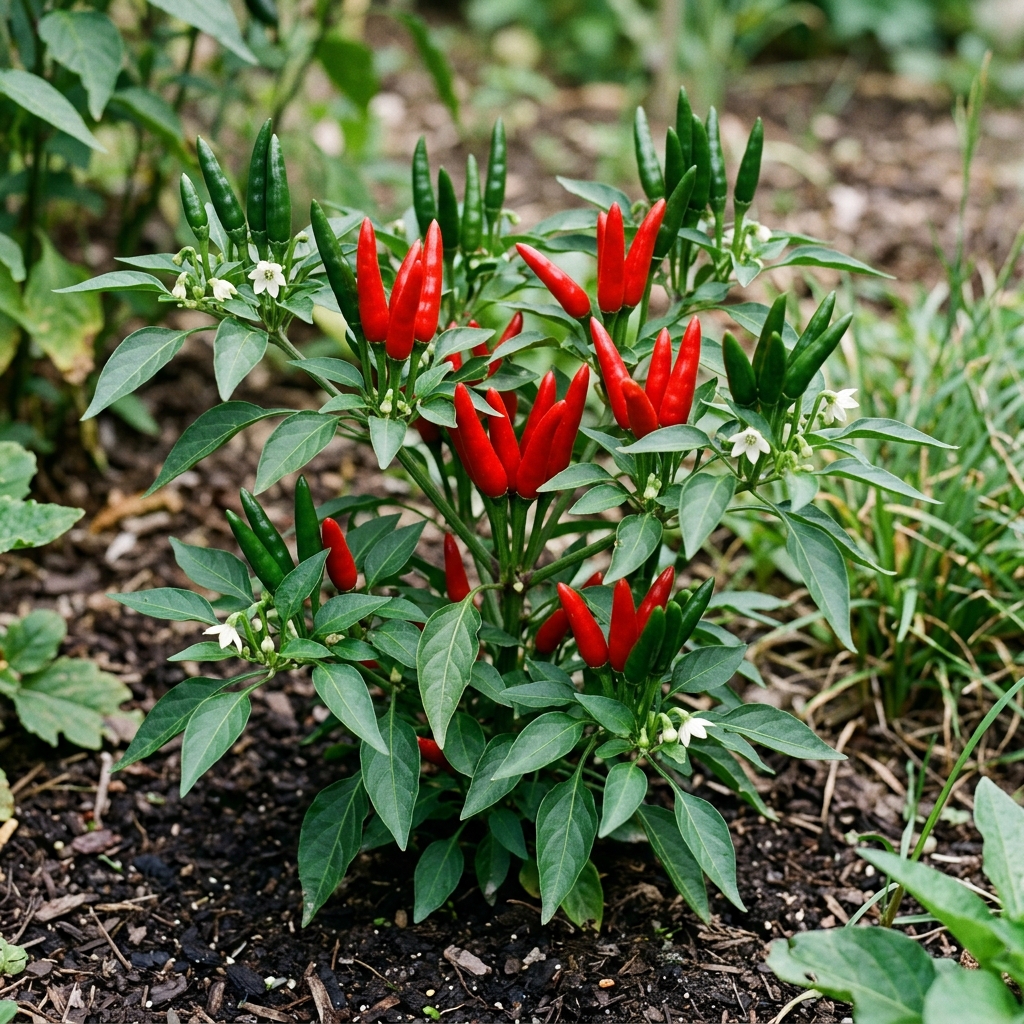
The Santaka Pepper is a hot, open-pollinated cultivar of Capsicum annuum originating from Japan. Distinctive in its growth habit, this variety produces smooth, conical pods that grow in erect, upward-pointing clusters above compact green foliage. As the fruit matures from green to bright red, it develops a direct, sharp heat rating between 40,000 and 50,000 Scoville Heat Units.
Santaka is prized for both culinary performance and strong ornamental appeal. Unlike pendant chili varieties, its upright pod presentation creates a striking visual display on compact bush plants. Because the pods have notably thin walls, they are exceptionally suited for air drying, crushing into flakes, and milling into fine seasoning powders for traditional Japanese dishes and hot spice blends.
Origin and Genetics
The Santaka pepper is a stable, open-pollinated landrace selection belonging to the Capsicum annuum species. Developed in Japan, it represents a traditional Asian pepper form selected for concentrated pod clusters, reliable heat, and excellent post-harvest drying properties.
Botanical Profile
Plants grow as a compact upright bush featuring standard green foliage and solitary white flowers. The distinguishing morphological hallmark of Santaka is its erect fruit orientation, where clusters of conical, smooth-skinned pods point directly upward toward the sun rather than hanging downward.
Pods possess thin pericarp walls and follow a clean green to red color transition as they reach physiological maturity. This combination of dense branching, high pod set, and bright mature coloration gives the cultivar substantial value as an ornamental plant in addition to its food crop status.
Heat Profile
Santaka is classified firmly in the Hot heat scale, generating between 40,000 and 50,000 SHU. Its heat character is sharp, direct, and pungent, providing immediate warmth without prolonged buildup.
Flavor and Aroma
The flavor profile is characterized by a clean, pungent, and peppery taste. Lacking heavy sweetness or thick fruitiness, its straightforward chili flavor delivers clean pungency that integrates seamlessly into savory seasonings.
Cultivation
Santaka performs best in a warm climate with access to full sun and well-drained soil. Due to its naturally compact and upright growth habit, it is well-suited for container gardening as well as greenhouse production, where warm temperatures support even flowering and fruit ripening.
Culinary Applications
Because of its thin pericarp, Santaka has excellent drying suitability and is commonly preserved whole, processed into crushed chili flakes, or ground into fine powders. In culinary preparations, it is widely utilized across Japanese cuisine, noodle dishes, stir-fries, and dry spice blends. The thin walls make it poorly suited for stuffing, but allow it to rehydrate rapidly or infuse heat into cooking oils and broths.



Leave A Comment