
Urfa Biber
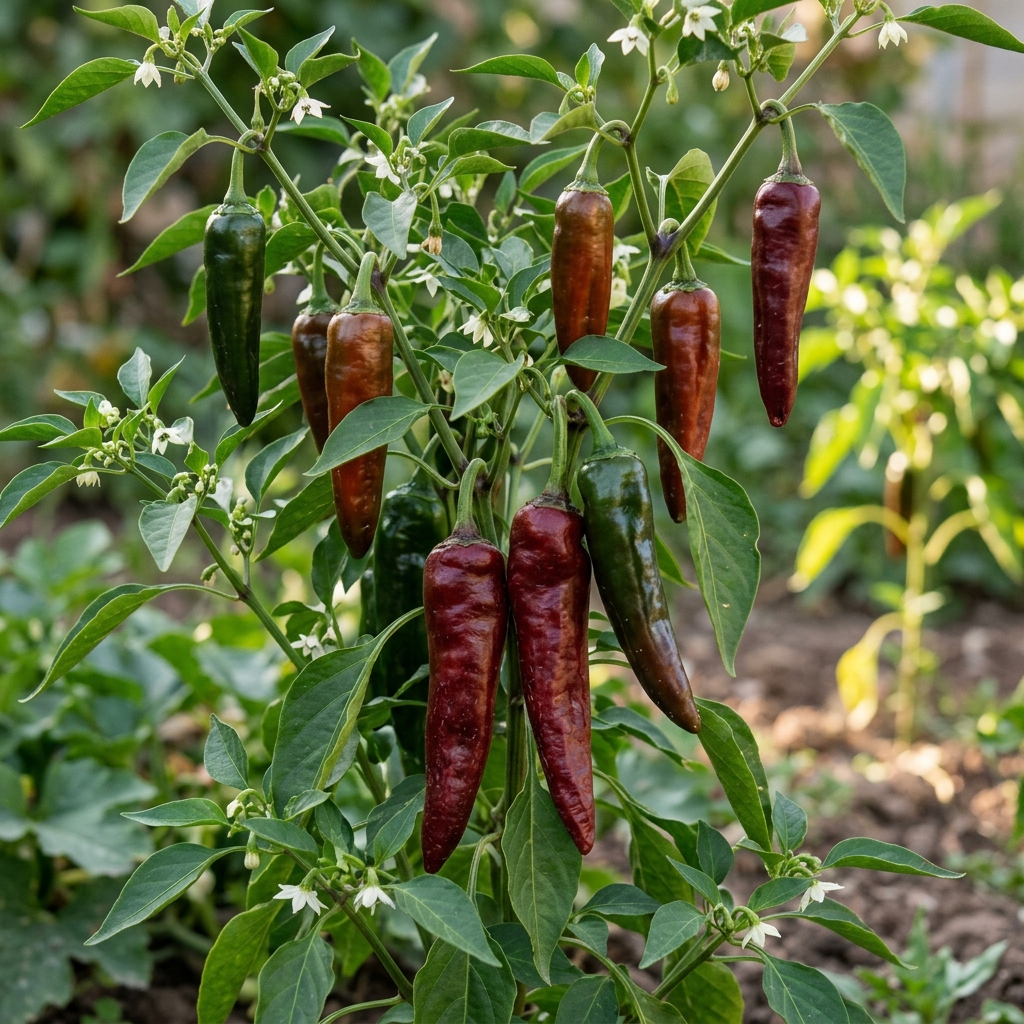
Urfa Biber, also known as the Isot pepper, is a traditional Capsicum annuum landrace native to the Şanlıurfa region of Southeastern Anatolia, Turkey. Cultivated as an open-pollinated variety, the plant produces pendant, conical to elongated pods that transition from green to a deep, glossy dark red upon maturity. Holding a registered Turkish geographical indication, the pepper has long served as an essential pillar of regional Anatolian agriculture and culinary culture.
What truly sets Urfa Biber apart is its labor-intensive post-harvest sweat-curing technique, where pods alternate between intense daytime sun-drying and nocturnal wrapping in fabric sacks. This deliberate oxidation and enzymatic browning transforms the red flesh into rich, purplish-black flakes. The resulting spice delivers a slow-building, lingering medium heat characterized by complex notes of smoke, dried fruit, chocolate, and earth rather than sharp pungency.
Origin and Genetics
Urfa Biber is an open-pollinated landrace native to the Şanlıurfa province in the Southeastern Anatolia Region of Turkey. As a stable variety preserved through generations of local seed saving, it holds official recognition as a registered Turkish geographical indication. While frequently compared to regional chilis such as Maraş or Aleppo pepper, Urfa Biber is distinguished by its darker color, lower moisture, and distinct flavor developed through local processing traditions.
Botanical Profile
The plant features standard green foliage and solitary white flowers typical of Capsicum annuum. Its fruits grow in a pendant orientation, displaying a conical to elongated shape with a smooth to slightly wrinkled surface and medium wall thickness. On the vine, the pods mature from bright green to a deep dark red or maroon. The signature burgundy-black or purple-black color associated with Urfa Biber is achieved post-harvest through heat-sweating and sun-curing rather than field maturation.
Heat Profile
Urfa Biber provides a moderate heat level with a slow-building, warm onset that lingers across the palate and back of the throat. While commercial batches fluctuate based on curing style and preparation, culinary literature often references its warmth between 30,000 and 50,000 Scoville Heat Units. The heat character avoids the sharp, immediate bite of raw chilis, developing instead as a mellow, resonant backdrop to its aromatic qualities.
Flavor and Aroma
The sensory identity of Urfa Biber is defined by deep, non-pungent complexity. It presents dominant flavors of raisin-like sweetness, smoke, and earth, layered with subtle undertones reminiscent of dark chocolate and tar. Its aroma carries prominent dried fruit and smoky notes, setting it apart from brighter, fruitier red pepper flakes.
Cultivation
Adapted to the climate of Southeastern Anatolia, Urfa Biber thrives in full sun and well-drained soil under arid to semi-arid summer conditions. The open-pollinated plants rely on intense daytime heat to mature their heavy set of pendant pods before harvest.
Culinary Applications
Urfa Biber is primarily processed through sun-drying and tightly wrapped fabric sweating before being crushed into coarse flakes or worked into savory pastes. It serves as an essential finishing spice and seasoning for kebabs, grilled meats, stews, and eggplant dishes, as well as fresh salads. Its dark color and smoky-sweet depth allow it to enhance rich meat dishes and roasted vegetables without overpowering them with intense heat.



Leave A Comment