
Aleppo
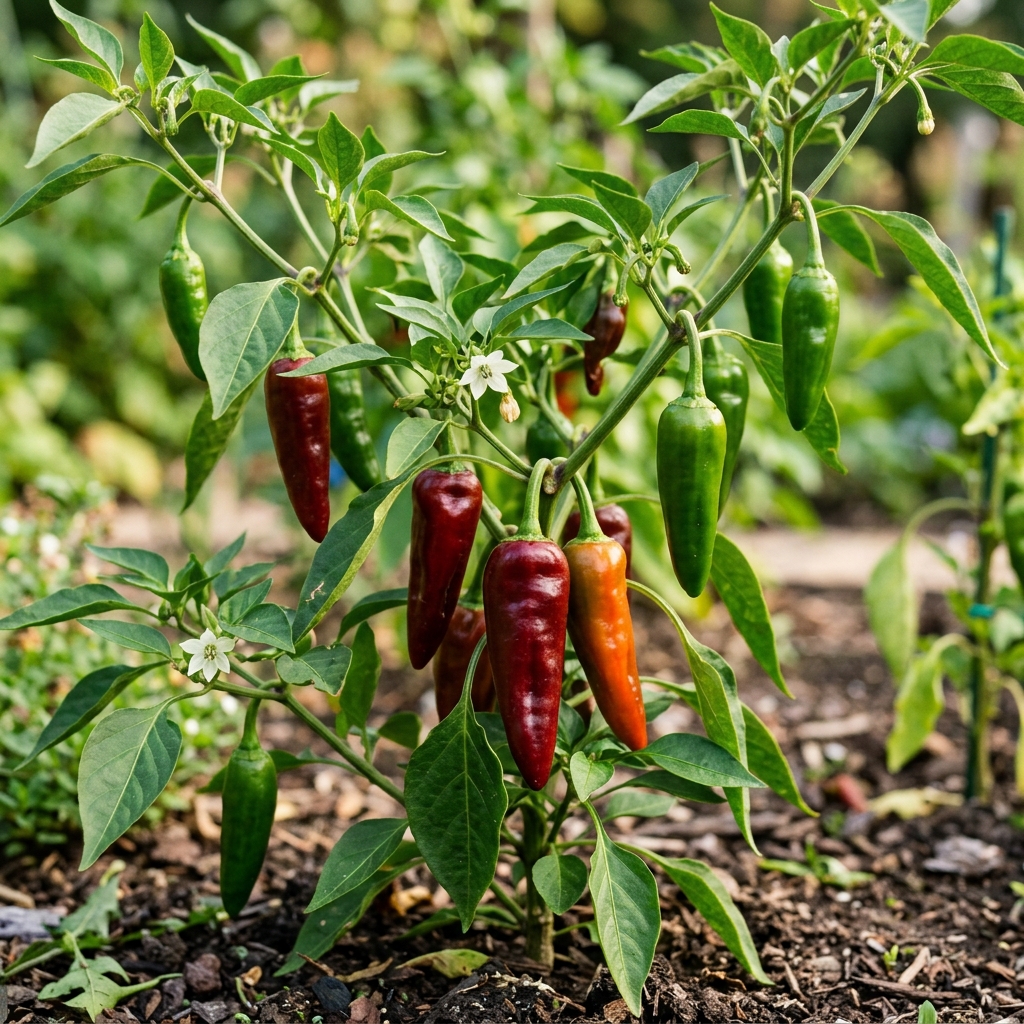
The Aleppo pepper is an open-pollinated Capsicum annuum cultivar hailing from the Aleppo Governorate of Syria and the surrounding southern border region of Turkey. Historically integrated into Silk Road trade, this stable landrace produces pendant, tapered conical pods that ripen from green to a deep burgundy-red, delivering a balanced medium heat that builds slowly along the tongue and throat.
Rather than overpowering pungency, the pepper is celebrated for its deep aromatic depth, pairing tangy, raisin-like sweetness with an earthy, subtle cumin undertone. Pods are traditionally dried, de-seeded, coarsely flaked, and lightly salted or oiled to yield the celebrated Middle Eastern condiment known as pul biber.
Origin and Genetics
Aleppo pepper originated in northern Syria’s Aleppo Governorate and the broader borderlands with southern Turkey. Cultivated for centuries as a prominent trade commodity along Silk Road routes, it is recognized under several regional names, including Halaby pepper and pul biber. In culinary and agricultural commerce, it is frequently conflated with neighboring Turkish cultivars such as Maraş and Urfa Biber due to shared geographic origins and traditional preparation as crushed flakes.
Botanical Profile
The plant exhibits a bushy growth habit supported by standard green foliage and solitary white blossoms. Its fruits are semi-fleshy, tapered conical pods with smooth to semi-wrinkled surfaces. As they develop, the pendant pods progress through a distinct color transition, changing from immature green to deep red and rich burgundy.
Heat Profile
Aleppo sits comfortably in the medium heat category. The warmth is characterized as slow-building and gentle, concentrating its sensation primarily across the tongue and throat rather than delivering an aggressive, sharp onset.
Flavor and Aroma
The sensory qualities of the Aleppo pepper are notably nuanced. It releases sweet, fruity, and mildly pungent aromas that carry over into its taste profile. The palate offers a multifaceted combination of tangy and raisin-like notes supported by an earthy foundation and a distinctive cumin-like undertone.
Cultivation
As an open-pollinated variety adapted to warm climates, Aleppo pepper performs best when planted in full sun and well-draining soil. These environmental conditions facilitate steady pod maturation and proper sugar development within the fruit walls.
Culinary Applications
While usable in various fresh contexts, Aleppo pepper is overwhelmingly utilized as a dried spice. The harvested pods are processed through drying and coarse flaking, often treated with light salt or oil to preserve moisture and enhance color. These flakes serve as a staple seasoning rub, table condiment, and marinade component throughout traditional Middle Eastern cuisine.



Leave A Comment