

Chiltepin
The Chiltepin (Capsicum annuum var. glabriusculum) is the wild progenitor of modern domesticated chili peppers, native to Mexico and the southwestern United States. Growing as a hardy perennial shrub throughout the Sonoran Desert and adjacent arid zones, the plant produces small, erect, pea-sized globose berries. It is recognized for its high pungency, rating between 50,000 and 100,000 Scoville Heat Units and delivering a sharp, piercing heat that strikes the palate immediately.
Ecologically adapted for avian seed dispersal, the ripe red fruit features a deciduous calyx that readily separates from the plant. Chiltepin is particularly notable for its distinct flash heat dynamic—an intense burst focused at the front of the mouth and tongue that dissipates far more rapidly than most other hot chiles. Supported by an earthy, smoky, and piquant flavor, it remains an essential component for authentic salsas, seasoning rubs, and dried table condiments.
Origin and Genetics
Chiltepin represents the ancestral wild botanical variety of Capsicum annuum (formally classified as Capsicum annuum var. glabriusculum). Native to North and Central America, thriving particularly in the Sonoran Desert and surrounding regions of Northern Mexico and the Southwestern United States, it is widely recognized as the wild progenitor from which modern domesticated annuum cultivars descend. Throughout its native range, it is known by several regional common names, including Tepin, Bird Pepper, Chile Bravo, and Chile Silvestre.
Botanical Profile
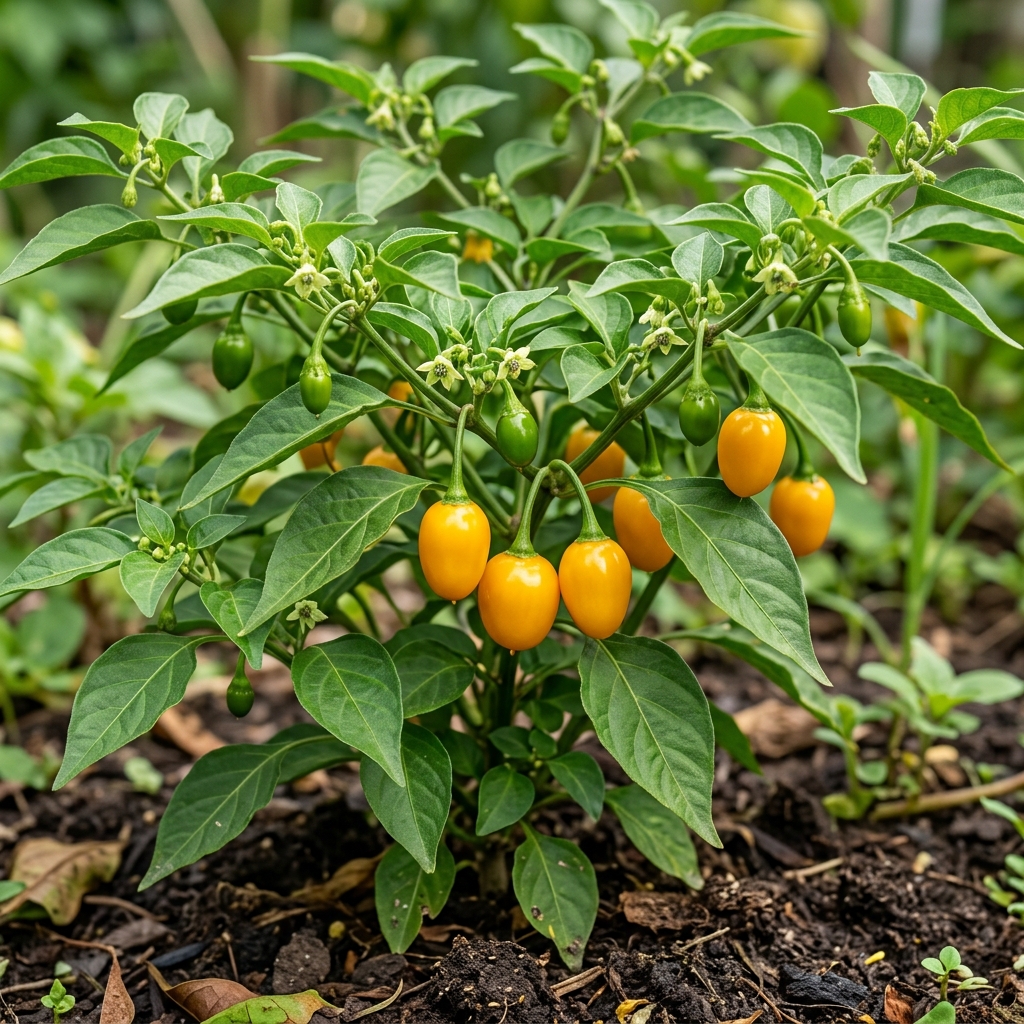
The plant grows as a perennial shrub featuring standard green foliage and small white flowers. Its fruits develop in an upright, erect orientation, forming small, smooth, globose berries with thin walls. As the pods mature, they transition from green to a vibrant red.
Botanically, chiltepin is distinguished from wild pequin peppers by its round berry shape, whereas pequin pods are typically elongated or conical. A key morphological trait is its deciduous calyx, which allows the ripe berry to separate cleanly and easily from the stem, a specialization that facilitates dispersal by wild birds.
Heat Profile
Measuring between 50,000 and 100,000 SHU, the chiltepin is classified as very hot. Its heat profile is defined by an immediate onset and a sharp, piercing flash heat centered on the front of the mouth and tongue. Unlike varieties with long-lingering burn profiles, the heat of the chiltepin subsides relatively quickly.
Flavor and Aroma
Chiltepin pairs its sharp pungency with a distinct flavor profile characterized by earthy, smoky, and piquant notes. Its aromatic profile is herbal and pungent, complementing its rapid, upfront heat without overwhelming underlying dish ingredients.
Cultivation
Adapted to arid environments, chiltepin exhibits notable drought tolerance and heat tolerance. In its native habitat, it frequently establishes in the understory of nurse plants, performing best in well-drained soil under partial shade to full sun. Because the species evolved for avian distribution, seeds naturally possess erratic or low germination rates unless subjected to scarification or gibberellic acid treatments.
Culinary Applications
Owing to its thin walls, chiltepin is exceptionally well-suited for sun drying and is widely crushed into a dry seasoning or ground into powder. It is heavily utilized in traditional salsas, soups, and dry rubs, and can also be preserved by pickling. Its quick heat dissipation makes it a staple finishing spice across Southwestern and Mexican cuisines.



Leave A Comment