
Biquinho Pepper
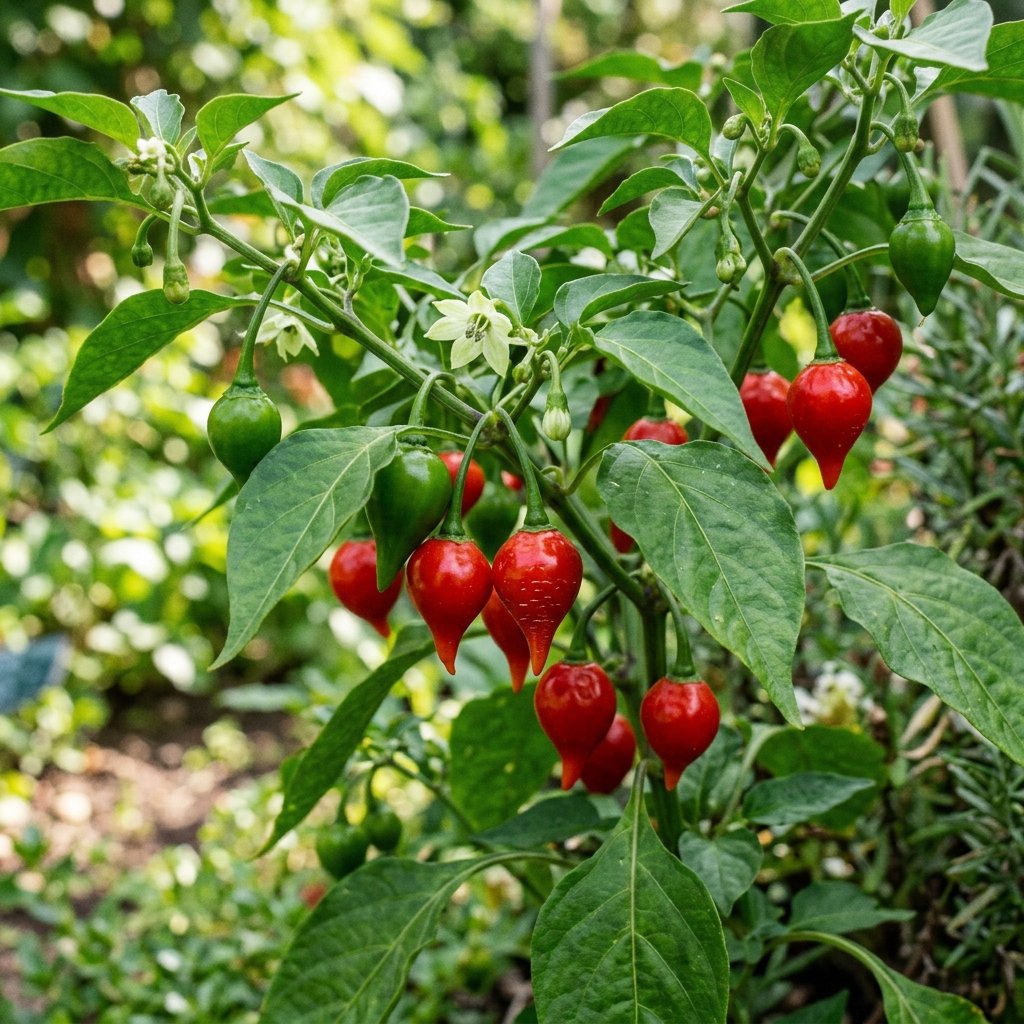
The Biquinho pepper is a traditional Brazilian cultivar of Capsicum chinense originating from the state of Minas Gerais. Known locally as Pimenta Biquinho or Little Beak, this open-pollinated variety is instantly recognizable by its compact, glossy teardrop pods that taper into a sharp, pointed tip. Unlike most members of its species, it registers an exceptionally mild heat range of 100 to 1,000 SHU.
What sets this cultivar apart is its ability to deliver the rich sweet, fruity, and floral aroma typical of tropical chinense peppers without intense pungency. The bushy, high-branching plants produce heavy sets of pendent fruit that transition from green to bright red, making the cultivar equally prized as an ornamental specimen and as a classic staple for pickling and charcuterie.
Origin and Genetics
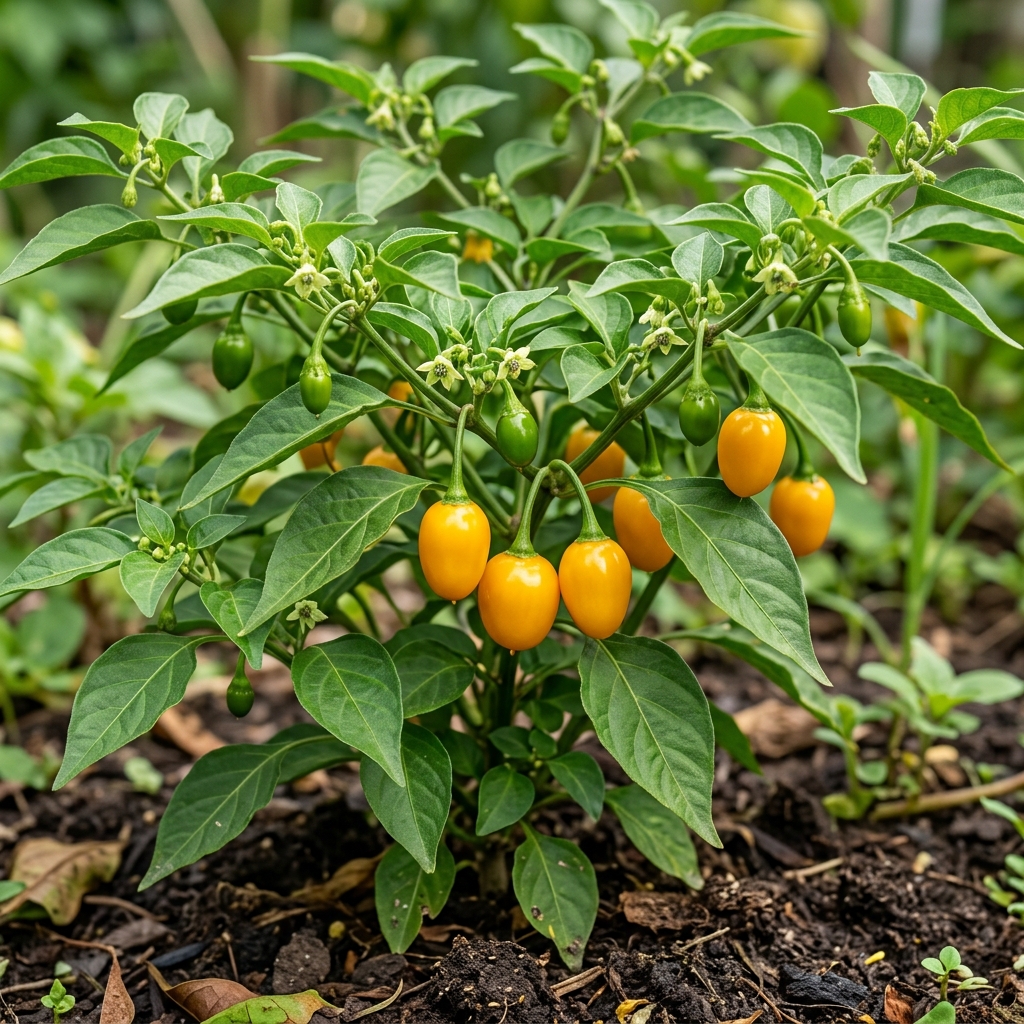
The Biquinho pepper originates from the Minas Gerais region of Brazil, where it has long been cultivated as a stable, open-pollinated landrace selection. Belonging to the species Capsicum chinense, it is known under several alternate names including Pimenta Biquinho, Chupetinho, and Sweety Drop. While yellow-fruiting selections exist under the name Biquinho Amarela, the standard cultivar matures to a vibrant red.
Botanical Profile
Plants display a bushy, compact growth habit with dense green foliage and white to greenish-white flowers. The high-branching structure supports a prolific yield of small, pendent pods. Each fruit is rounded at the calyx end and tapers rapidly into a distinctive pointed, tail-like beak. The pods feature smooth, glossy skins with medium wall thickness, transitioning from an immature green to a mature bright red upon ripening, housing straw-yellow seeds.
Heat Profile
With a Scoville rating spanning 100 to 1,000 SHU, Biquinho occupies the mildest tier of the Capsicum chinense spectrum. The pungency provides a subtle, gentle warmth that registers immediately on the front of the tongue and throat before dissipating quickly, without the lingering or harsh burn common to related chinense varieties.
Flavor and Aroma
Despite its minimal heat, Biquinho retains the signature tropical chinense bouquet. Its flavor profile is intensely sweet, fruity, and floral. This contrast between pronounced aromatic complexity and mild capsaicin levels makes it accessible for palates sensitive to high heat.
Cultivation
Biquinho thrives in warm climates under full sun and requires fertile, well-draining soil. Because of its compact frame and heavy fruiting canopy, it is well suited for both container culture and greenhouse production. Gardeners saving seed should note that the cultivar easily outcrosses with neighboring Capsicum chinense varieties if grown in close proximity without isolation.
Culinary Applications
The most famous preparation for Biquinho is pickling in vinegar or cachaça brine, a traditional Brazilian method that preserves the pod’s crisp texture and bright color. The whole pickled or fresh fruits are widely used as garnishes, mixed into fresh salads, and served on charcuterie boards. While moderately suitable for fresh sauces, their small size and medium walls make them poorly suited for stuffing or drying.



Leave A Comment