
Piquillo Pepper
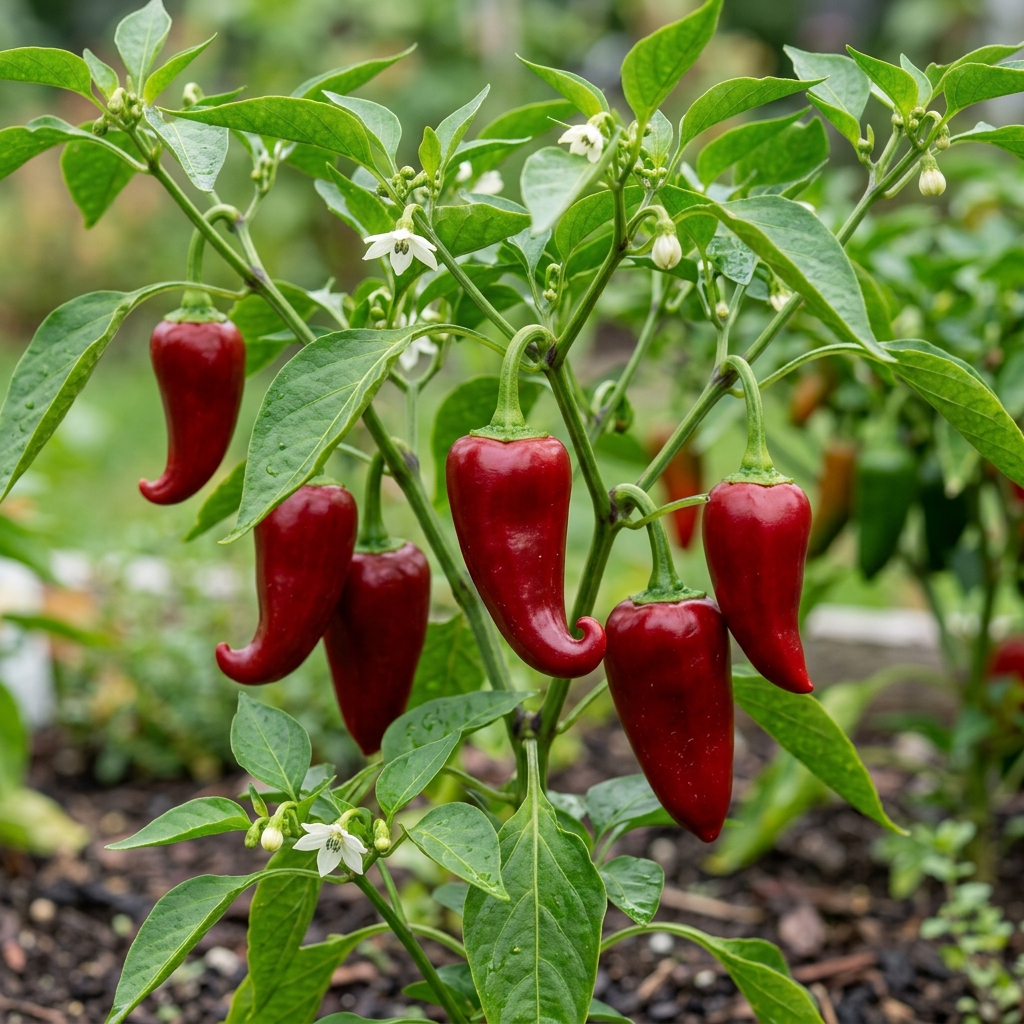
The Piquillo pepper is a celebrated Spanish cultivar of Capsicum annuum originating from the municipality of Lodosa in Navarre, Spain. Known formally in Spain as the Pimiento del Piquillo de Lodosa, it carries Protected Designation of Origin (PDO/DOP) status. The pepper derives its name from its distinctive conical, triangular shape that terminates in a curved, beak-like apex, presenting a recognizable silhouette among traditional European landraces.
Unlike pungent chili varieties, the cultivar is defined by its mild warming heat, which subtly supports an intensely sweet, rich, and fruity flavor profile. The medium-thick fruit walls turn from green to deep red upon maturity and are exceptionally well suited for fire-roasting, peeling, and preservation in jars or tins. It remains an essential component of Northern Spanish gastronomy, particularly within tapas and stuffed pepper dishes.
Origin and Genetics
The Piquillo pepper originated in Lodosa, Navarre, Spain, where it developed as a stable, open-pollinated cultivar tailored to the regional climate of the Ebro River valley. Its agricultural significance led to formal recognition under Spain’s Protected Designation of Origin system as the Piquillo de Lodosa, preserving the authenticity and traditional processing methods associated with the cultivar.
Botanical Profile
Plants display an upright, branching growth habit with green foliage and solitary white flowers typical of Capsicum annuum. The fruits develop in a pendant orientation, transitioning from an immature green to a uniform, vibrant deep red when fully ripe.
The pods are smooth and conical, characterized by thick, structural walls and an apex that bends slightly into a distinct beak shape. The Piquillo is botanically and culinarily distinct from other notable Spanish peppers; unlike the Pimiento de Padrón, which is harvested immature and green, or the Pimiento Choricero, which is typically dried, Piquillo peppers are harvested fully ripe at peak sweetness.
Heat Profile
Piquillo peppers reside firmly in the mild heat category. The pungency delivers a gentle, warming sensation concentrated at the front of the tongue. This minimal heat level serves primarily to balance and accentuate the cultivar’s natural sugars rather than produce assertive spice.
Flavor and Aroma
The flavor of the fresh, mature pod is distinctly sweet, earthy, and fruity, accompanied by a fresh, sweet, and peppery aroma. When subjected to traditional wood-roasting, the sugars caramelize, imparting a deep, smoky complexity that has cemented the pepper’s international culinary reputation.
Cultivation
The cultivar performs best in a warm climate with full sun exposure and well-drained soil. As an open-pollinated variety, seeds can be saved across generations when isolated from cross-pollinating Capsicum annuum lines.
Culinary Applications
Piquillo peppers are prized for roasting, stuffing, sauces, and canning. Because the pod walls retain structural integrity while softening under heat, they are routinely roasted over open flames, peeled, and stuffed with fillings such as salt cod, seafood, or cheese. Commercially and domestically, they are preserved by canning in their own juices or packing in oil, making them a ready-to-eat staple across Spanish tapas culture.



Leave A Comment