
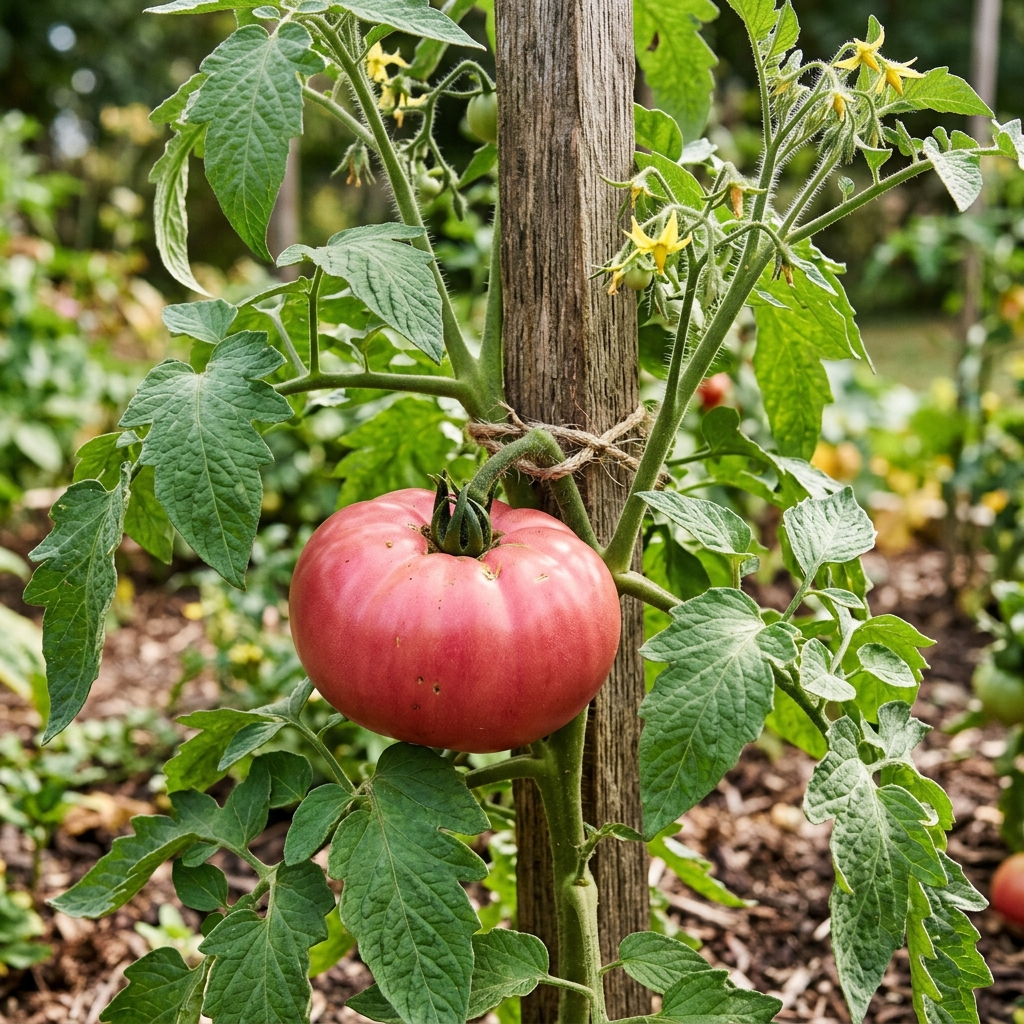
Brandywine
The Brandywine tomato is an open-pollinated heirloom cultivar of Solanum lycopersicum originating in Pennsylvania. First introduced commercially by Johnson & Stokes in 1889, the variety was preserved and broadly popularized through Seed Savers Exchange by preservationist Ben Quisenberry. It develops as a vigorous, indeterminate climbing vine distinguished from standard varieties by its broad, potato-leaf foliage.
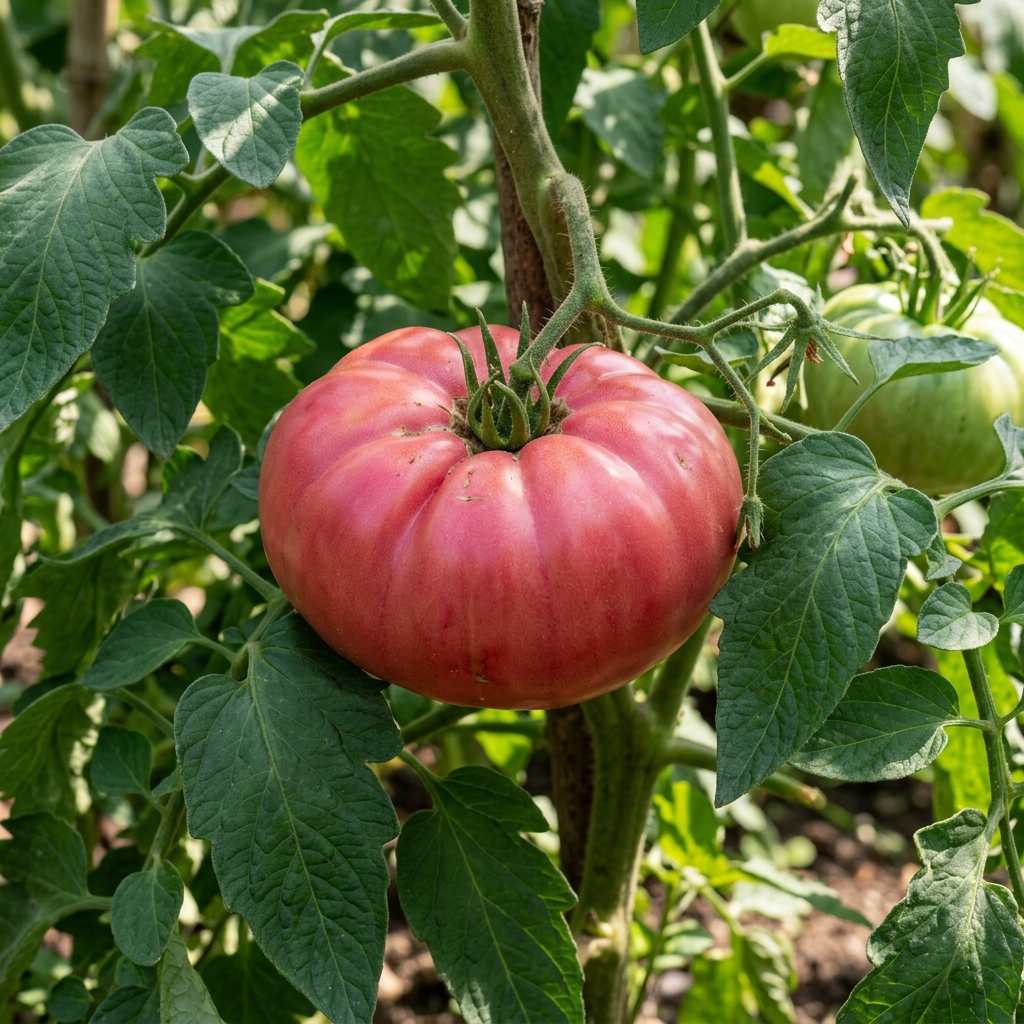
Renowned for exceptional eating quality, Brandywine produces large, oblate pink beefsteak tomatoes characterized by smooth to lightly ribbed shoulders and a thin, delicate skin. Inside, its dense, multi-locular pink flesh delivers a classic balance of sweet and acidic notes, making it an enduring benchmark among traditional heirloom cultivars.
Origin and Genetics
Brandywine represents one of the most celebrated stable heirloom selections in the United States. Traced back to Pennsylvania, the cultivar was formally released to the commercial seed trade in 1889 by the Johnson & Stokes company. It remained a cherished regional variety until Ben Quisenberry preserved and reintroduced the heirloom into wider circulation through Seed Savers Exchange. Today, the Sudduth’s strain is widely regarded as the archetypal Pink Brandywine, differentiating it from unrelated varieties that share the general Brandywine name.
Botanical Profile
Taxonomically classified as Solanum lycopersicum within the Solanaceae family, Brandywine exhibits a prominent potato-leaf foliage phenotype governed by the recessive c gene mutation. Plants produce yellow flowers and set large, oblate beefsteak-type fruit with slight to moderate ribbing. As the fruit develops, the surface transitions from immature green to deep pink, often retaining faint green shoulders near the stem. The internal flesh is solid, meaty, and pink, surrounded by a notably thin epidermis.
Growth and Performance
Due to its indeterminate climbing habit, Brandywine requires sturdy staking or trellising to support the weight of its heavy vegetative growth and large fruit clusters. The cultivar is well suited for open field cultivation. Because of its thin skin and large multi-locular structure, the fruit has low resistance to cracking and is naturally susceptible to both radial and concentric skin fissures under fluctuating environmental conditions.
Cultivation
Brandywine thrives when planted in full sun and rich, well-drained soil. Because it is an open-pollinated cultivar, growers saving seed must isolate Brandywine from other potato-leaf and regular-leaf tomato varieties to prevent cross-pollination and maintain genetic purity across successive generations.
Flavor and Aroma
The variety is celebrated for a rich, complex flavor that achieves a harmonious balance between sweetness and natural acidity. Its substantial flesh-to-gel ratio contributes to a robust mouthfeel, avoiding the overly watery texture common in commercial slicing hybrids.
Culinary Applications
With its large diameter and dense internal structure, Brandywine is ideally suited for fresh slicing. The meaty pink flesh holds together cleanly when cut, making it a favored choice for raw table consumption, composed summer salads, and sandwiches.



Leave A Comment