

Homestead
Homestead is an open-pollinated red slicing tomato (Solanum lycopersicum) developed by plant breeder C.F. Andrus at the USDA Southeastern Vegetable Breeding Laboratory in Charleston, South Carolina. Released in 1952 in cooperation with the Florida Agricultural Experiment Station, this heirloom cultivar features a determinate to semi-determinate bush habit bred specifically to overcome production hurdles in warm climates.
Renowned for its exceptional heat-setting ability, Homestead reliably sets medium to large globe-shaped fruit under elevated temperatures and humidity that typically cause blossom drop in other varieties. Its firm, meaty red flesh, uniform ripening shoulders, and genetic resistance to Fusarium wilt race 1 have established it as a dependable standard for warm-region field and garden cultivation.
Origin and Genetics
Homestead was bred in Charleston, South Carolina, by C.F. Andrus at the USDA Southeastern Vegetable Breeding Laboratory and officially introduced in 1952 in collaboration with the Florida Agricultural Experiment Station. Its pedigree derives from a multi-parent lineage involving Rutgers, Pan America, Victor, and Daland. Developed as a stable, open-pollinated variety, it was selected primarily to solve fruit-setting failures caused by summer heat stress. A prominent selection, Homestead 24 (also designated Homestead No. 24), offers a slightly more compact determinate bush habit with enhanced fruit uniformity.
Botanical Profile
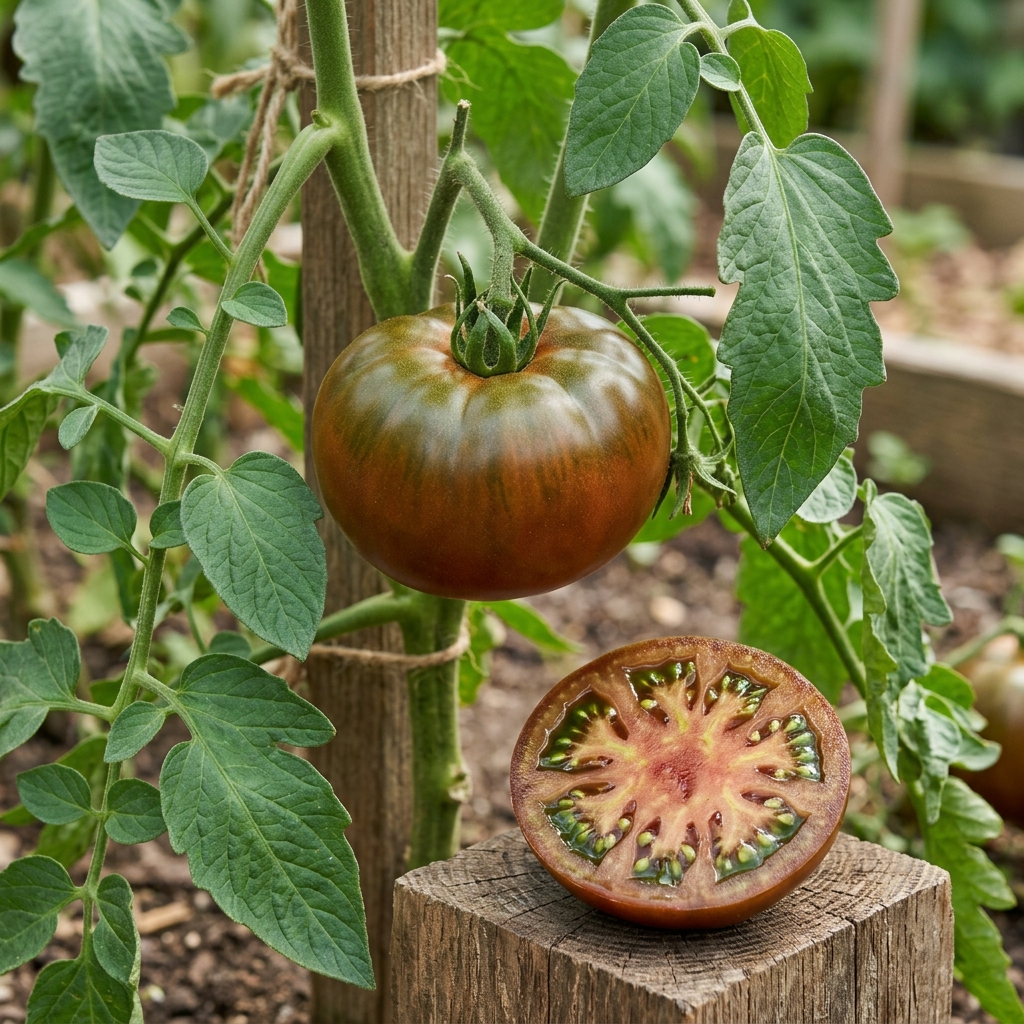
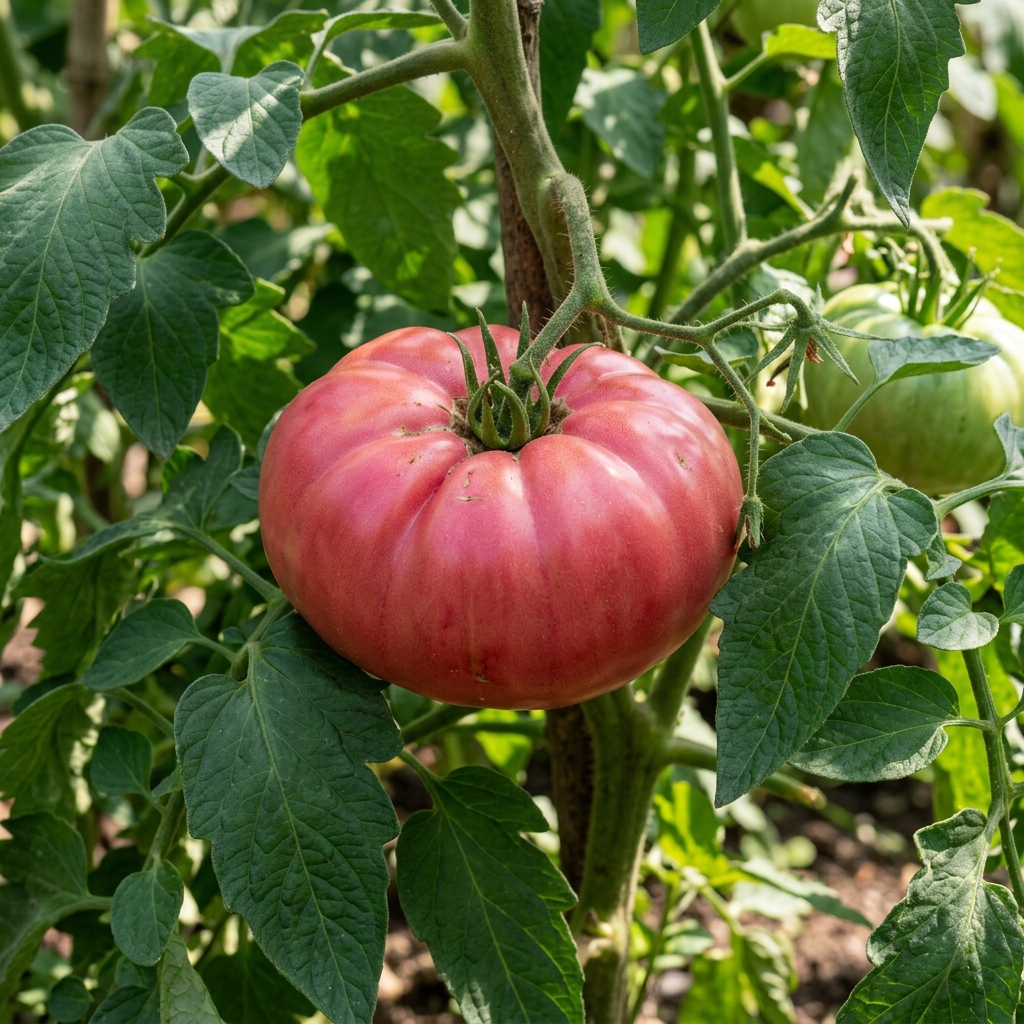
The plant exhibits a determinate to semi-determinate growth habit with regular green foliage and yellow flowers. Its dense vine canopy provides substantial shade, shielding developing fruit from sunscald in high-radiation environments. Fruits are medium to large smooth globes with minimal to no ribbing.
Homestead features a uniform ripening characteristic, where immature green fruit ripens completely to solid red without retaining green shoulders. The inner flesh is firm, red, and meaty, encased in a medium-thickness skin that provides moderate resistance to cracking.
Growth and Performance
Classified as a high-yielding variety, Homestead is distinguished by its high heat and humidity tolerance. When high temperatures cause standard tomato blossoms to drop, this cultivar continues to set fruit consistently, maintaining robust yields across extended warm seasons.
Disease Resistance
Homestead carries verified resistance to Fusarium wilt race 1 (Fusarium oxysporum f. sp. lycopersici race 1). This root-zone protection prevents vascular wilt disease, enabling stable plant health in soils where this fungal pathogen is present.
Flavor and Aroma
The culinary quality of Homestead is defined by a sweet, balanced flavor paired with mild tomato acidity. Its meaty texture and solid locular structure make it a dependable multi-purpose red tomato that avoids excessive watery breakdown when cut.
Cultivation
Homestead thrives in full sun and fertile, well-drained soil, specifically excelling in hot and humid climates. Due to its semi-determinate to determinate bush size, it is well suited for both open field production and container growing. Because it is an open-pollinated, true-breeding heirloom, growers can successfully save seed by maintaining proper isolation distances to prevent cross-pollination.
Culinary Applications
The firm texture and uniform globe shape make Homestead ideal for fresh slicing and salads. In addition to fresh table use, its high ratio of meaty flesh to juice makes it well suited for home canning and food preservation.



Leave A Comment