
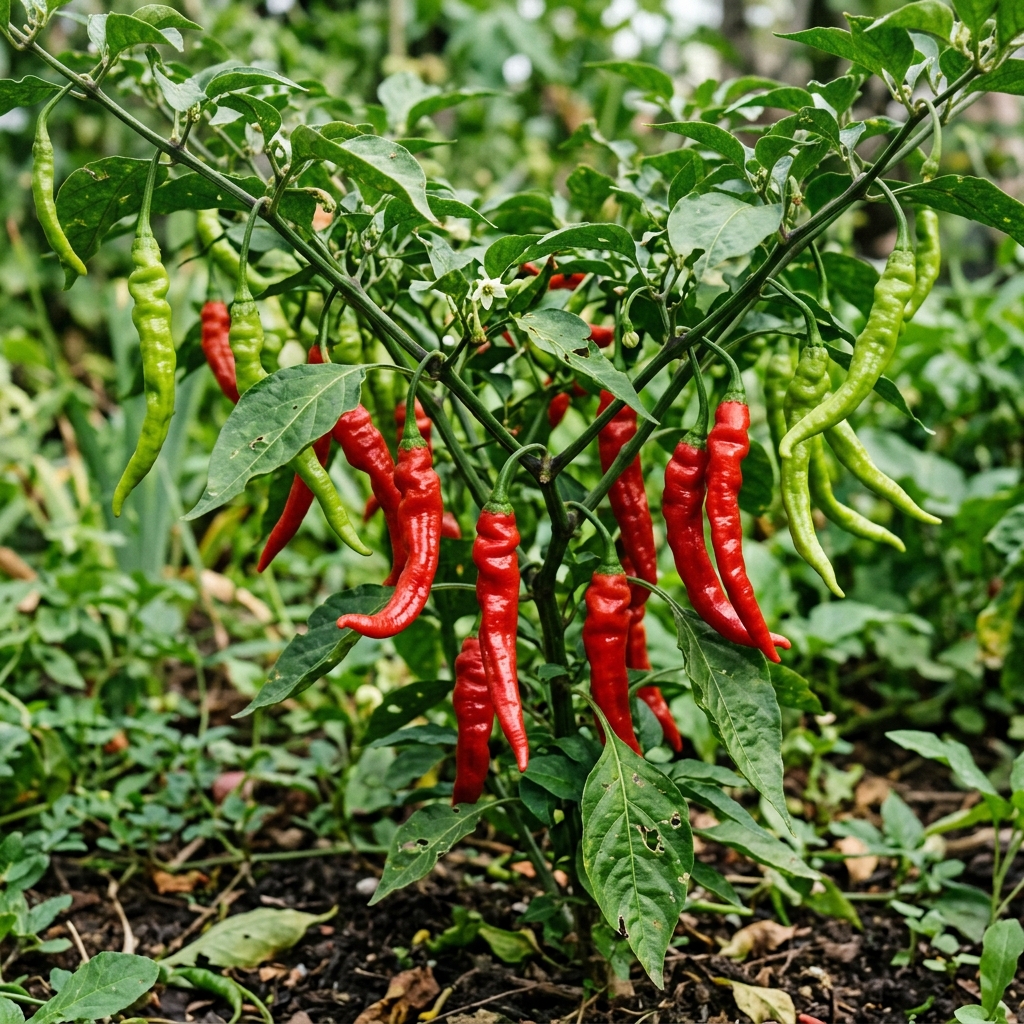
Jwala Pepper
The Jwala Pepper, also known as Pusa Jwala, is an open-pollinated Capsicum annuum cultivar bred by the Indian Agricultural Research Institute (IARI). Originating in India and widely cultivated across regions like Gujarat, it is recognized for its slender, finger-like pods that mature from light green to a bright red. Delivering an immediate pungency, Jwala serves as one of the fundamental hot chilies in traditional South Asian cooking.
Distinguished by its wrinkled, undulating skin and thin pod walls, the cultivar yields a sharp, upfront burn measuring between 20,000 and 50,000 Scoville Heat Units. Its rapid heat onset and grassy, peppery flavor profile make it exceptionally versatile across diverse culinary preparations. Because the fruits dry and temper efficiently, Jwala remains a defining agricultural and culinary staple throughout the Indian subcontinent.
Origin and Genetics
The Jwala chili, frequently cataloged as Pusa Jwala, was developed by the Indian Agricultural Research Institute (IARI). Bred as a stable, open-pollinated cultivar of Capsicum annuum, it became a cornerstone agricultural variety across India, particularly in Delhi and Gujarat. Its Hindi name translates to “flame” or “volcano,” reflecting its reputation for reliable pungency in traditional agriculture.
Botanical Profile
Plants exhibit a bushy growth habit with green foliage and solitary white flowers. The fruits develop in a pendant orientation, forming elongated, slender, finger-like pods characterized by a distinct wrinkled and undulating surface. As they mature, the thin-walled pods transition from light green to dark green before ripening to a bright red. Internally, the pods contain straw-colored seeds.
Heat Profile
Jwala ranks as a medium-hot chili with a Scoville rating spanning 20,000 to 50,000 SHU. The capsaicin delivery is defined by a quick, sharp onset that concentrates heat immediately across the tongue and the back of the throat, aligning with classic South Asian cayenne-type heat dynamics.
Flavor and Aroma
Beyond its upfront pungency, Jwala provides a crisp, grassy and peppery flavor complemented by a fresh, pungent aroma. The lack of thick flesh allows its sharp heat and green vegetable notes to integrate cleanly into hot preparations without altering the underlying texture of dishes.
Cultivation
As a warm-season crop, Jwala thrives under full sun in well-draining soil. It is a high-yielding cultivar suited for open field production as well as greenhouse and container cultivation. Due to its stable open-pollinated genetics, growers regularly cultivate it for dependable commercial harvests and home use.
Culinary Applications
Jwala is central to everyday Indian cooking, frequently utilized for tadka (tempering in hot oil), fresh chutneys, curries, and pickling. Its thin walls make the pepper exceptionally well suited for drying into whole dried chilies, as well as preserving through freezing and sauce preparation.



Leave A Comment