
Pimenta Cambuci
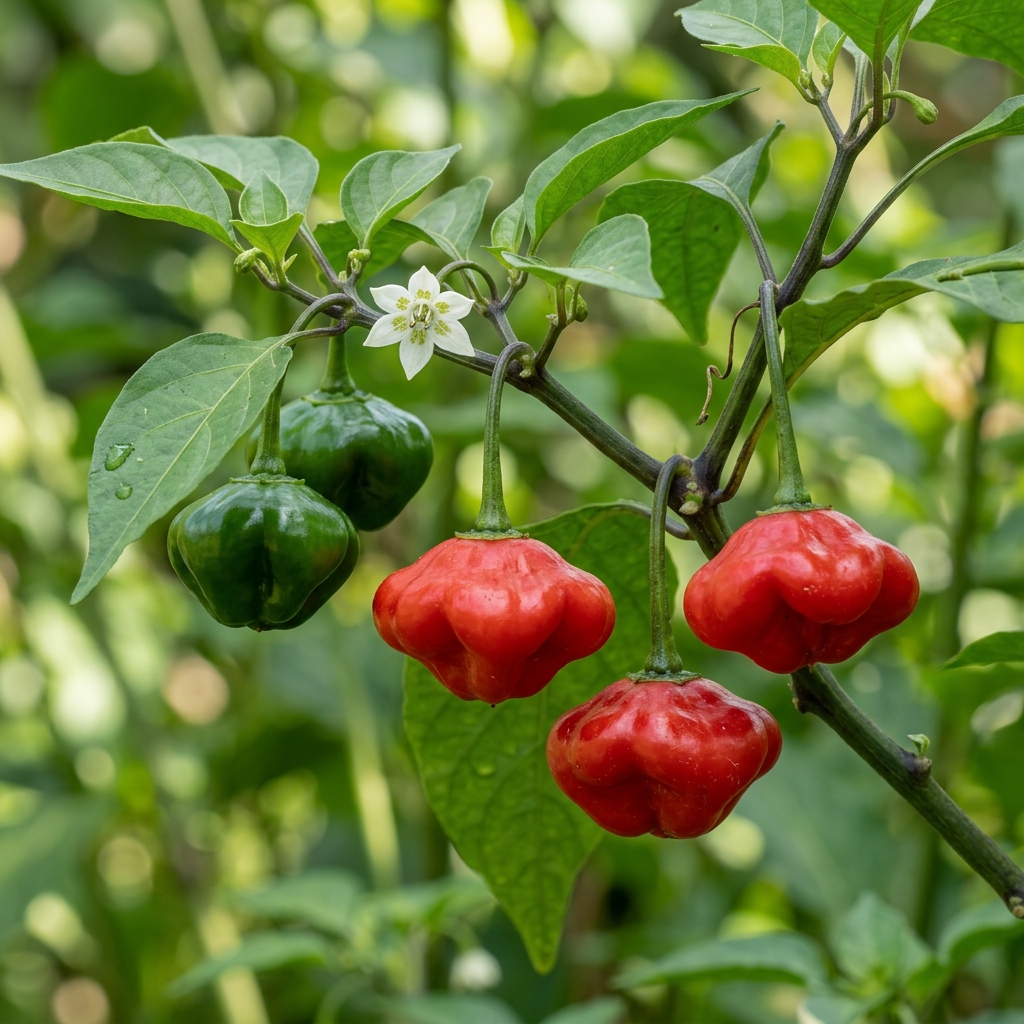
Pimenta Cambuci is a traditional open-pollinated cultivar of Capsicum baccatum var. pendulum originating from Southeast Brazil. Renowned for its distinctive flattened, disc-like pods with lobed margins, the pepper takes its name from its morphological resemblance to the native Brazilian cambuci fruit (Campomanesia phaea). Unlike many pungent baccatum varieties, Cambuci sits at the mildest end of the spectrum, rating between 0 and 500 SHU.
The plant exhibits classic species traits, including white blossoms accented with greenish-yellow corolla spots and pendent, medium-walled fruit that transition from green to bright red. Prized for its crisp, fruity, and sweet flavor with minimal pungency, Pimenta Cambuci serves as an exceptionally versatile vegetable pepper suited for stuffing, pickling, and raw culinary applications.
Origin and Genetics
Pimenta Cambuci is a stable, open-pollinated landrace cultivar originating in Southeast Brazil. Belonging to the species Capsicum baccatum (specifically C. baccatum var. pendulum), it is also known regionally by names such as Cambuci, Pimenta Chapéu de Bispo Doce, and Pimenta Pitanga.
Although frequently confused in naming or visual appearance with other bishop’s cap types—such as Bishop’s Crown (Chapéu de Frade) or Uba Tuba—Cambuci is morphologically distinguished by its significantly flattened, saucer-like shape and a genetic profile selected for sweetness rather than the moderate to high pungency typical of wilder baccatum accessions.
Botanical Profile
The plant grows as an erect, branching shrub with standard green foliage. In accordance with classic C. baccatum morphology, the flowers are white with prominent greenish-yellow spots on the corolla lobes. Its straw- to tan-colored seeds produce uniform offspring due to its genetic stability.
Fruits develop in a pendent orientation, hanging downward from the nodes. The pods display a campanulate to flattened disc shape with pronounced lobed margins and a smooth to slightly undulating surface. Encased in medium-thick walls, the fruit matures through a clear color transition, shifting from an immature green to a vibrant, glossy red. Due to its striking fruit shape and contrasting foliage, the cultivar holds notable ornamental value.
Heat Profile
Pimenta Cambuci is categorized as a sweet to mild pepper, ranging from 0 to 500 Scoville Heat Units (SHU). The pericarp flesh is typically free of heat, offering a crisp, refreshing bite. When capsaicin is detectable, the faint warmth is strictly localized around the placental tissue rather than diffused throughout the pod walls.
Flavor and Aroma
The aromatic and flavor profile of Pimenta Cambuci highlights the sweet, non-pungent qualities of domestic C. baccatum. It delivers a fresh and fruity aroma paired with a palate characterized by sweet, crisp, and mildly floral notes, avoiding the bitter undertones often present in immature bell peppers.
Cultivation
Adapted to warm climates, Pimenta Cambuci requires full sun exposure and well-drained soil to achieve optimal vegetative growth and heavy pod set. As an open-pollinated variety, true-to-type seed can be saved from isolated mature red pods.
Culinary Applications
With its broad, hollow interior and medium wall thickness, Pimenta Cambuci possesses high stuffing suitability, making it ideal for baking or frying when filled with cheeses, grains, or meats. Its crisp texture and sweet, fruity flavor also make it a popular ingredient for fresh consumption in salads, as well as for vinegar pickling and long-term preservation via freezing.



Leave A Comment